 AGreenNest
Succulent Care
String of Pearls Care Guide (Senecio rowleyanus)
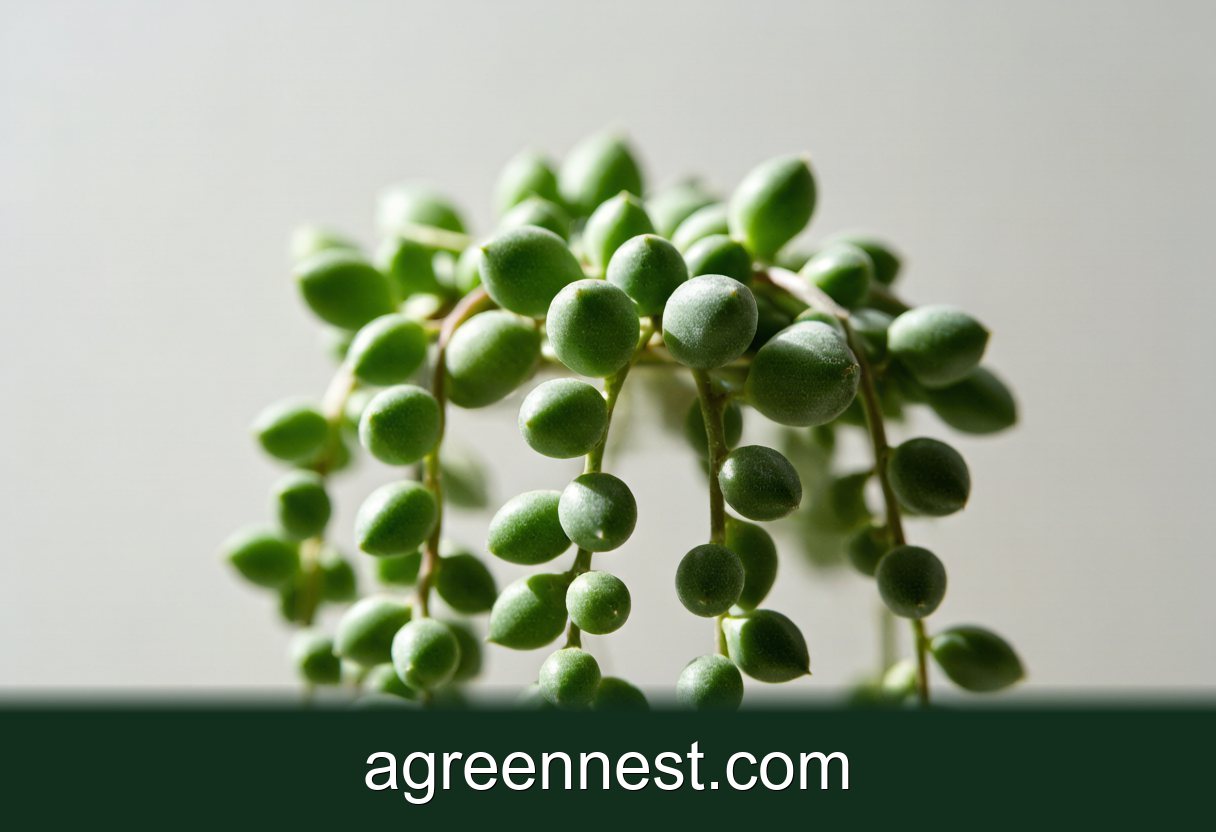
The secret to a happy String of Pearls Care Guide (Senecio Rowleyanus) is restraint. Place it in a few hours of direct sun, then wait until the soil is bone dry before watering (16 days between waterings). Use a lean, sandy soil and a porous pot so excess moisture escapes fast and rot never gets started.
Getting to Know String of Pearls
The first string of pearls I brought home dangled from a hanging hook in my kitchen, and within a month the strands had doubled in length. Senecio rowleyanus, sometimes listed by botanists as Curio rowleyanus, is a trailing succulent from southern Africa with round, bead like leaves that store water. Those little balls are actually modified stems, which is why the plant looks so unlike a typical leafy succulent.
Each pearl carries a faint window stripe that lets light into the leaf, a neat trick for a plant that grows in dappled shade. I find the curtain of green beads calming to watch while the kettle boils. It is a conversation piece too, and guests always ask whether the spheres are real.
What surprises new owners is how fast a healthy strand grows once it settles. With the right light and a careful hand on the watering can, the ropes can reach two feet or more, spilling beautifully from a shelf or a high pot.
What Kind of Light Does String of Pearls Need?
This plant wants lots of bright light and a few hours of gentle direct sun for the best colour. In my home it hangs near an east window where it catches soft morning rays. Too little light and the strands stretch, the beads shrink, and the whole curtain thins out.
Aim for at least 4 to 6 hours of bright light each day. If your spot is indirect only, a grow light placed 10 to 12 inches above the pot for 12 hours a day keeps the growth tight. Rotate the hanging pot every week so all sides receive equal sun and the strands trail evenly instead of leaning to one side.
How Often Should You Water String of Pearls?
Water the soil, never the beads, because wet pearls rot quickly. I soak the mix only when it has dried out completely, about every 16 days in spring and summer, then I slow to once every 4 to 6 weeks in winter. The pot feels light when it is ready, and that simple lift tells me more than any schedule.
Pour until water exits the drainage hole and empty the saucer soon after. A brief wrinkle in the beads between drinks is normal, but beads that stay shrivelled mean you should water a little sooner. Overwatering is the main enemy here, so when in doubt I wait another day.
Because the round leaves hold moisture, this succulent can forgive a missed week far better than it survives a soggy rootball. I would always rather underdo it.
Soil, Pots, and Drainage
String of pearls hates to sit wet, so the mix must be open and sandy. I combine roughly 1 part cactus soil with 1 part pumice and a scoop of coarse sand, which drains within moments of a watering. That gritty bed keeps the crowns from stewing.
A shallow pot with a real drainage hole suits the shallow roots. Hanging baskets lined with sphagnum stay too damp for my taste, so I prefer terracotta. Repot every two to three years in spring, and resist a much larger container, because extra soil stays cold and wet long after the plant needs it.
Keeping the Temperature Right
This succulent is happiest between 55 and 85°F (13 and 29°C). It enjoys a warm room but dislikes a cold draft, so I keep it away from an open window in winter. A brief dip to 50°F (10°C) is tolerated, yet prolonged chill damages the strands.
Average indoor humidity, about 30% to 50%, is perfectly fine. No misting required. In fact, damp beads invite rot, so dry air with gentle movement is the safer choice. A low fan nearby during muggy weeks helps keep the foliage healthy.
How Do You Propagate String of Pearls?
Propagation is wonderfully easy with this one. Lay a few inches of stem on the soil surface, pin it down lightly, and keep the mix barely moist. New roots grab the soil at the leaf nodes within two to three weeks, and the strand keeps growing from there.
You can also take a stem cutting, let the end callus for 24 to 48 hours, then set it on damp soil. I often coil a long strand into a single pot to make a fuller plant instantly. Share the offcuts with friends, since a jar of rooted pearls makes a lovely, zero cost gift.
Common Problems and Easy Fixes
- Beads shrivelling from the top down usually means too little water or too much sun. Soak the soil and move the pot to slightly gentler light.
- A soft, blackened crown signals overwatering. Cut away the rot and let the healthy strands reroot in dry soil.
- Pale, stretched strands want more brightness. Shift the plant to a sunnier window or add a grow light.
Frequently Asked Questions
Can string of pearls grow in low light?
It survives in bright indirect light but loses its tight beads and full look. Give it at least 4 to 6 hours of bright light for the best trailing curtain.
Is string of pearls safe around pets?
No. The sap can irritate cats and dogs if chewed, so hang the pot well out of reach or use a closed terrarium.
Why are the strands going bald in the middle?
That bare centre is normal as old growth woody at the top. Lay fresh strands over the soil to cover the gap and refresh the look.
String of pearls rewards a light touch and a bright corner with a waterfall of green beads that few other plants can match. Master the dry soil rule, give it sun, and it will spill happily for years. For a routine tuned to your home, try our free watering calculator and the light calculator to find its ideal hanging spot.
Sources & further reading
GreenNest authors research and write every guide independently. The external links below are reputable references we recommend for deeper reading — they are not the sources we copied from.
- Clemson Home & Garden Information Center — Clemson Extension
- Royal Botanic Gardens, Kew — Kew Gardens
- Royal Horticultural Society — Houseplant care — RHS
Recommended Tools for Succulent Care
Free, no-signup helpers matched to this guide.
Free Ebooks to Explore
Downloadable handbooks — no email required.
Free Ebook
The AGreenNest Succulent Care Handbook
The complete, beginner-to-confident guide to growing fat, happy succulents — 10 chapters and a 20-plant directory.
Free Ebook
Haworthia & Haworthiopsis Care Handbook
A focused guide to the striped, forgiving Haworthia clan.
Share Your Plant Story
Grown something tricky, or found a trick that finally worked? Tell us in the comments, or see what other readers are sharing on our Community page. The best reader tips get folded back into our guides.
Join the Conversation
Have a tip or a question about String of Pearls Care Guide (Senecio rowleyanus)? Share it below — comments are saved on our server.