 AGreenNest
Succulent Care
Donkey Tail Care Guide (Sedum morganianum)
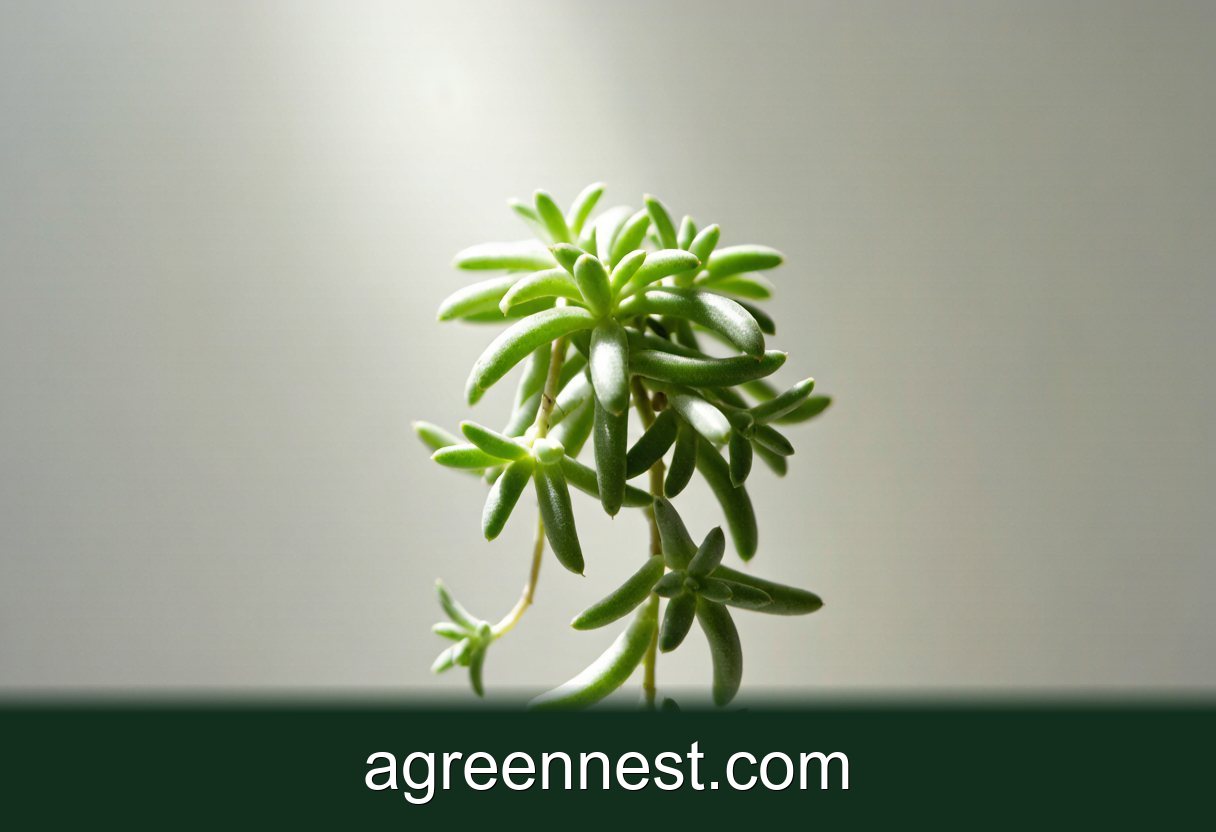
If you are new to Donkey Tail Care Guide (Sedum Morganianum), keep it simple: a few hours of direct sun, and water sparsely. These plants hate wet feet, so always let the soil dry completely between drinks (16 days between waterings). A shallow terracotta pot with gritty soil is the safest setup, and a bright windowsill does the rest.
My Long Love for the Donkey Tail
The first time I saw a Sedum morganianum trailing over a neighbour's fence, I thought someone had strung green pearls on a string. That was twelve years ago, and I have kept at least one of these in my home ever since. Donkey tail comes from the rocky cliffs of southern Mexico, where its fleshy beads store water against long dry spells. Each trailing stem can grow two feet long and seems to pour out of the pot like a slow green fountain. People worry that it looks fragile, yet mine has survived a cross country move and a forgotten watering or two. The trick is to respect its one true fear, which is sitting in wet soil.
What Makes a Donkey Tail So Special?
Few succulents offer such drama with so little effort. The overlapping leaves form plump little beads that catch the light and show a faint blue sheen. Close relatives like Sedum burrito produce rounder, tighter strands, while the classic morganianum keeps its teardrop shape. I love how a single pot can soften a bare corner or dress up a high shelf. Because the stems drape, the plant wants to be seen from below, so a hanging basket or a tall plant stand does it justice. Give it that stage and it rewards you with a living curtain that grows longer every season.
How Much Light Does Donkey Tail Need?
Bright light keeps those beads fat and the colour vivid. Mine hangs about three feet from an east facing window, where it catches two to three hours of soft morning sun and bright indirect light the rest of the day. Too little light makes the strands thin and pale, and the spacing between beads grows wide. A spot with hot afternoon sun, on the other hand, can scorch the tips to a brown crisp. If your room runs dim, a grow light on a nine hour timer placed roughly eighteen inches above the plant keeps it happy. Rotate the pot a quarter turn each week so all sides reach for the light evenly.
How Often Should You Water a Donkey Tail?
This is where most beginners go wrong, and I speak from a few sad early losses. During the warm months I water about every sixteen days, but only after the soil has gone completely dry right to the bottom of the pot. Winter brings a long rest, and I drop to a single careful watering every five to seven weeks. The beads tell the truth. When they look slightly wrinkled and feel soft, the plant is thirsty. When they are firm and glossy, leave it be. I always water from below by setting the pot in a shallow tray for ten minutes, then I tip away whatever remains. Wet crowns rot faster than dry ones, so I keep the strands themselves untouched by the stream.
Where Should You Hang a Donkey Tail?
Location is more than a decoration choice, because these stems break at a touch. I learned that lesson when a visiting toddler brushed past mine and a whole tail dropped to the floor. Hang the plant where people and pets will not brush it, ideally against a wall rather than in a walkway. A sturdy bracket and a shallow terracotta pot keep the weight manageable. The room should stay between 50 and 80 degrees Fahrenheit, or about 10 to 27 degrees Celsius, and normal dry air suits it perfectly. Avoid the kitchen windowsill above a steamy sink, since constant humidity encourages the few pests this plant attracts.
Why Are My Donkey Tail Leaves Falling Off?
A few scattered beads on the floor are normal, especially after you move the plant or after a dry spell. Real trouble shows when beads drop in handfuls and the stem beneath looks bare and soft. That pattern almost always means overwatering, and the cure is to let the soil dry for a full three weeks before the next drink. Mealybugs are the other common villain. I check the joints between beads each month and dab any white fluff with a cotton swab dipped in rubbing alcohol. Catch them early and the plant shrugs them off within a fortnight. A strand that sheds from the tip downward usually just needs a drink, so read the beads before you panic.
Frequently Asked Questions
Can I grow a new donkey tail from a fallen strand?
Absolutely. Lay a healthy tail on dry cactus soil and mist it lightly every few days. Roots form along the beads in three to five weeks, and you can then pin it down gently with a hairpin.
Is donkey tail safe for my pets?
It is not. The leaves and sap can upset cats and dogs if chewed, so I keep mine high on a hook and well out of reach of both.
How do I make the strands longer and fuller?
Patience first, then light. Bright indirect sun and a spring feed of quarter strength succulent fertilizer once a month pushes the longest growth. Do not overpot, because a snug container keeps the roots eager.
A donkey tail asks for so little and gives back a cascade of green that never fails to make guests smile. Start with one hanging pot, learn its dry-loving rhythm, and soon you will be swapping cuttings with friends. For a schedule built around your own home, try our free watering calculator and the light calculator to find the brightest safe spot.
Sources & further reading
GreenNest authors research and write every guide independently. The external links below are reputable references we recommend for deeper reading — they are not the sources we copied from.
- Aggie Horticulture (Texas A&M) — Texas A&M AgriLife
- Clemson Home & Garden Information Center — Clemson Extension
- NC State Extension — Plant Toolbox — NC State Extension
Recommended Tools for Succulent Care
Free, no-signup helpers matched to this guide.
Free Ebooks to Explore
Downloadable handbooks — no email required.
Free Ebook
Sedum, Graptopetalum & Graptosedum Care Handbook
Easy trailing and rosy succulents for shelves and wreaths.
Free Ebook
The AGreenNest Succulent Care Handbook
The complete, beginner-to-confident guide to growing fat, happy succulents — 10 chapters and a 20-plant directory.
Share Your Plant Story
Grown something tricky, or found a trick that finally worked? Tell us in the comments, or see what other readers are sharing on our Community page. The best reader tips get folded back into our guides.
Join the Conversation
Have a tip or a question about Donkey Tail Care Guide (Sedum morganianum)? Share it below — comments are saved on our server.