 AGreenNest
Succulent Care
Sedum Care: 2 Species for Beginners
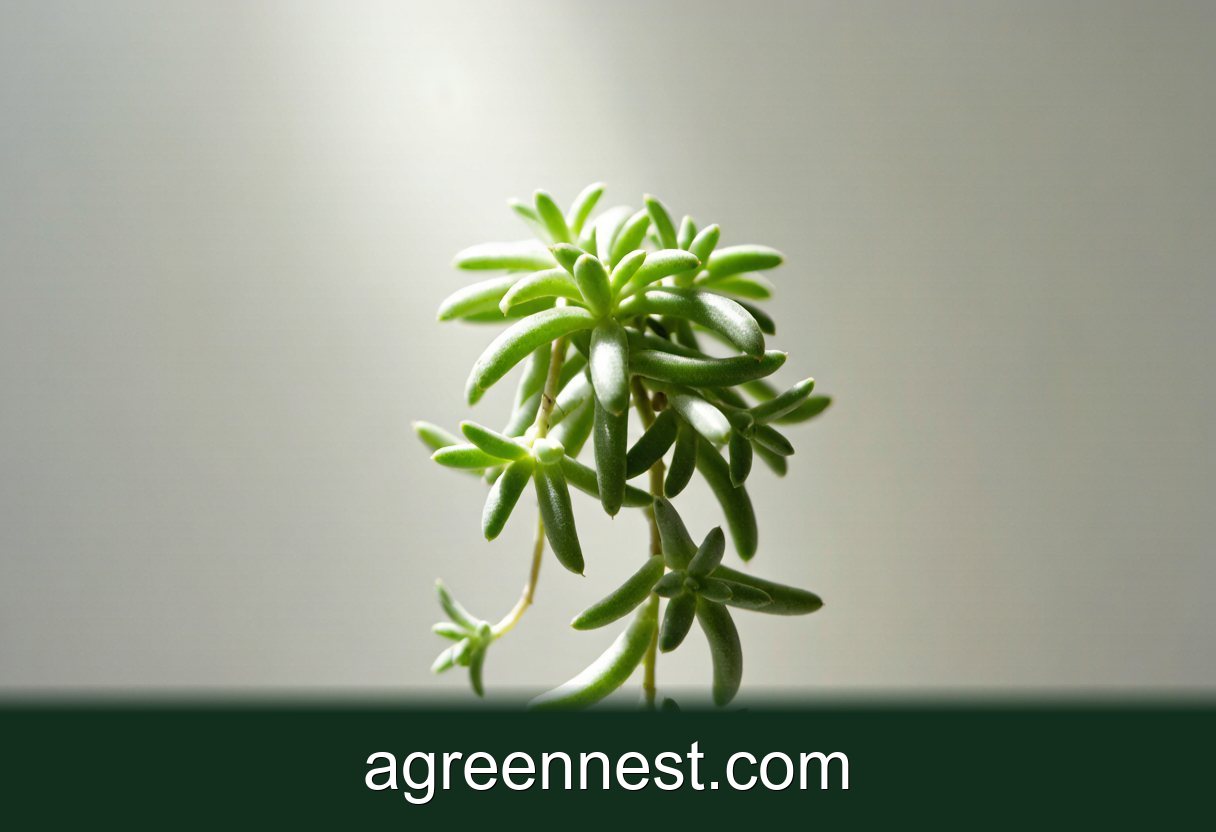
The secret to a happy Sedum is restraint. Place it in a few hours of direct sun, then wait until the soil is bone dry before watering (every 2-3 weeks in summer, less in winter). Use a lean, sandy soil and a porous pot so excess moisture escapes fast and rot never gets started.
The Quiet Charm of Sedum
A Sedum crept into my collection almost by accident, a cutting from a friend's windowsill that rooted in a week and asked for nothing. Since then I have learned that this genus, also called stonecrop, is one of the easiest paths into succulent keeping. The two I recommend most often are Sedum morganianum and Sedum pachyphyllum, and both reward restraint more than effort.
Sedum stores water in its leaves the way a camel stores it in a hump, which means it shrugs off a forgotten watering without complaint. The trade off is a low tolerance for sitting wet, so the whole game is letting the soil run bone dry before you reach for the can. Once you accept that dry is safe and damp is risky, the plant becomes almost care free.
Why Does Sedum Prefer Lean Soil?
In the wild these plants grow on rocky, poor ground where rain drains away in minutes. Rich potting soil holds moisture far longer than their roots ever evolved to handle, and that lingering wetness is what rots them. A lean, sandy mix mimics the cliff edge or gravel bed they came from.
I blend four parts coarse sand with three parts cactus soil and a scoop of fine gravel, a ratio near 4 to 3 that drains fast yet holds a little life. The goal is a mix that feels gritty between your fingers and never clumps into mud after a soak. A quick squeeze test tells you everything: it should fall apart the moment you open your hand.
Two Species I Keep Coming Back To
Donkey Tail, Sedum morganianum, is the show stopper, with trailing stems of overlapping beads that can spill two feet from a hanging pot. The catch is fragility, because those stems snap at a touch, so I handle the pot itself and never the strands. Bright light keeps the beads plump and the trails tight.
Jelly Bean Plant, Sedum pachyphyllum, is the playful one, with chubby leaves that blush red at the tips when thirsty and round out green when content. It is the plant I hand to nervous beginners, since it signals its needs with colour and forgives a missed week. Both species share the same light and water appetite, so they happily share a wide, shallow bowl on my kitchen shelf.
How Much Sun Does a Sedum Need?
Plan for a few hours of direct sun each day, ideally in the morning, with bright indirect light the rest of the time. A south or west windowsill in summer can be too hot at noon, so I slide the pots back a foot from the glass during July and August. Morning sun builds colour without the scorch that afternoon glare can bring.
Colour is your gauge. A Sedum pachyphyllum that stays plain green wants more light, while one tipping red is perfectly happy. Temperatures between 65 and 80°F (18 and 27°C) suit them through the growing season, and a cool 50 to 55°F (10 to 13°C) rest in winter keeps the spring flush strong. A Sedum morganianum tolerates the same range but prefers a little less intense noon sun.
Watering on a Tight Leash
Wait until the soil is bone dry, then water until liquid runs from the drainage hole, and stop. In summer that rhythm lands around every two to three weeks for a small pot, stretching to every four to six weeks in the dim winter months. I use a moisture probe once a month just to confirm the lower soil is truly dry.
A porous pot speeds the exit of any extra water. I favour unglazed terracotta, which pulls moisture from the root ball so the edge of the soil dries in a day or two. That fast dry down is the cheapest insurance against rot you will ever buy. When in doubt, I wait an extra three days, because a thirsty Sedum bounces back faster than a soggy one. Rainwater or filtered water suits these plants better than hard tap, since the leaves spot less and the soil stays sweet. A light feed of diluted cactus fertilizer once a month in summer is plenty, because too much nitrogen makes the stems weak and the colours pale.
Potting and Propagation Notes
Sedum propagates almost too easily. A single leaf of Sedum morganianum laid on dry grit sprouts tiny roots within three to four weeks at room temperature near 70°F (21°C). Stem pieces of Sedum pachyphyllum callus in a day, then root in barely damp sand with no fuss.
Keep new cuttings out of direct sun for the first week so they do not scorch before roots form. Once you see resistance when you tug gently, move them into the bright routine the mother plants enjoy, and let the next generation begin. Within a season a single healthy plant can supply a dozen gifts for friends who admire the trailing beads. Spring is the natural window for this work, when warmth speeds rooting and the risk of rot stays low. Label each new pot with the date, because a month later the tiny sprouts all look the same to a busy gardener.
Frequently Asked Questions
Q: Which Sedum is best for a first timer?
A: The Jelly Bean Plant, Sedum pachyphyllum, because its colour tells you when it is thirsty and it forgives a missed week.
Q: Can Sedum grow outdoors in summer?
A: Yes, most thrive on a sheltered patio with morning sun, as long as the pot drains and nights stay above 50°F (10°C).
Q: Why are my Donkey Tail leaves dropping?
A: Usually handling or overwatering. Let the soil dry fully, and move the pot rather than the strands to avoid snapping them.
Sedum proves that the best houseplants are often the ones that ask the least. The two species here will teach you restraint with water and generosity with light, the same lessons every succulent wants you to learn. Pair your picks with the light calculator to place them well, and enjoy a plant that quietly gets on with the business of growing.
Sources & further reading
GreenNest authors research and write every guide independently. The external links below are reputable references we recommend for deeper reading — they are not the sources we copied from.
- Cornell Garden-Based Learning — Cornell University
- Clemson Home & Garden Information Center — Clemson Extension
- Aggie Horticulture (Texas A&M) — Texas A&M AgriLife
Recommended Tools for Succulent Care
Free, no-signup helpers matched to this guide.
Free Ebooks to Explore
Downloadable handbooks — no email required.
Free Ebook
Sedum, Graptopetalum & Graptosedum Care Handbook
Easy trailing and rosy succulents for shelves and wreaths.
Free Ebook
The AGreenNest Succulent Care Handbook
The complete, beginner-to-confident guide to growing fat, happy succulents — 10 chapters and a 20-plant directory.
Share Your Plant Story
Grown something tricky, or found a trick that finally worked? Tell us in the comments, or see what other readers are sharing on our Community page. The best reader tips get folded back into our guides.
Join the Conversation
Have a tip or a question about Sedum Care: 2 Species for Beginners? Share it below — comments are saved on our server.