 AGreenNest
Succulent Care
Jelly Bean Plant Care Guide (Sedum pachyphyllum)
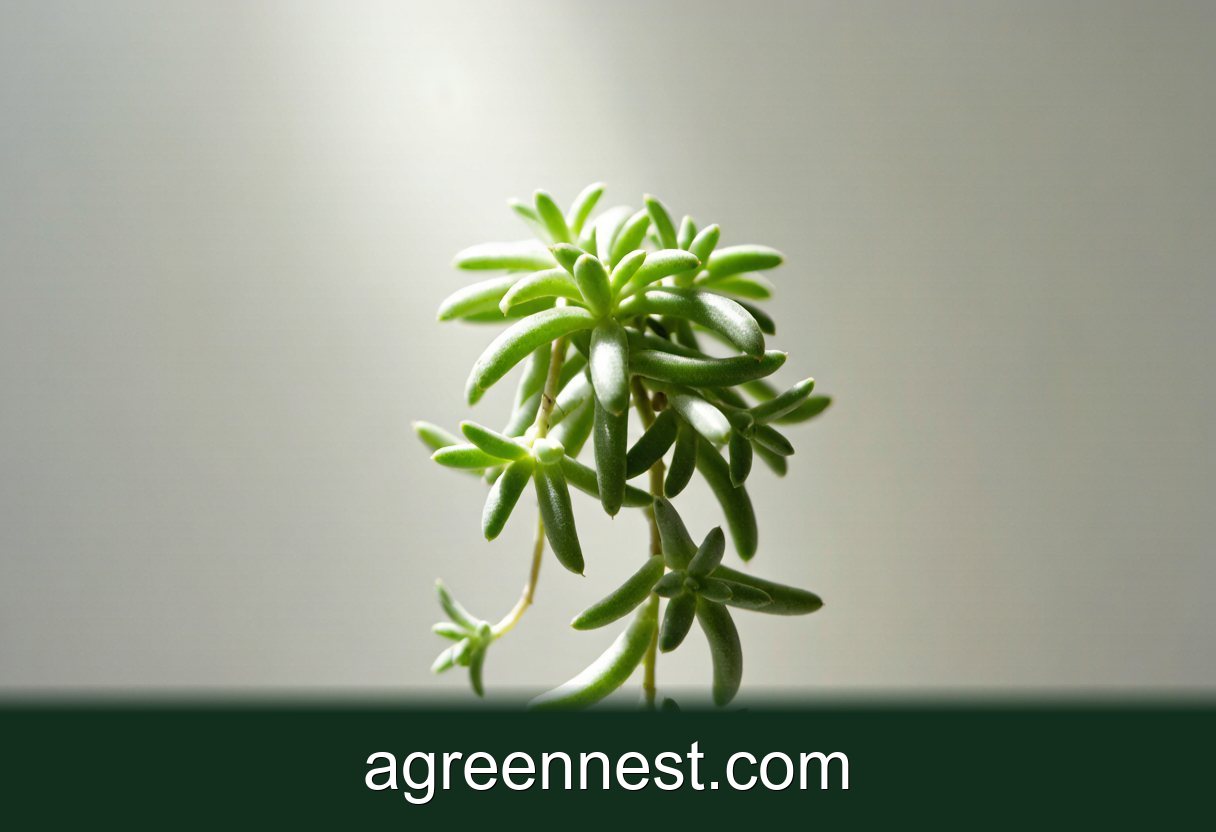
If you are new to Jelly Bean Plant Care Guide (Sedum Pachyphyllum), keep it simple: a few hours of direct sun, and water sparsely. These plants hate wet feet, so always let the soil dry completely between drinks (16 days between waterings). A shallow terracotta pot with gritty soil is the safest setup, and a bright windowsill does the rest.
Meet the Jelly Bean Plant
My first Sedum pachyphyllum arrived in a tiny mail order pot, looking like a handful of green jelly beans glued to a stem. Nearly every new owner waters it too soon, and that impulse nearly killed mine. This chubby leaved succulent stores water like a camel, so it shrugs off neglect that would finish a fern. Watch the tips turn reddish, and you will know the plant could use a drink. Plump green beads mean you are doing fine, so relax.
Three winters have passed with one plant on my south facing sill. Two fussy orchids died while it thrived nearby. Beginners often overthink this species because it looks delicate. Bright light, a dry rest between drinks, and distance are the whole secret. Step back, and the reward is a trailing mound of beads that blush red in strong sun.
Friends often ask why mine looks so happy with so little care. Sunlight through the kitchen window does most of the work.
What Light Does It Really Want?
Bright light is non negotiable for the famous colour. A few hours of direct morning or evening sun bring out red tips on Sedum pachyphyllum. My plant gets roughly four hours of direct sun plus bright indirect light daily. Stretched, pale leaves signal a search for the window. They lean like sun worshippers when light runs short.
Dim homes need a small grow light to fix the problem. Hang the lamp about 30 cm above the plant for 12 hours each day. Tighter growth appears within three weeks of steady use. Consistency beats intensity for this species. A weak regular light outperforms a strong one you forget.
How Often Should You Water?
Wait about 16 days between waterings during the growing season. That interval keeps soil fully dry, which the roots demand. Deep watering until liquid runs from the hole, then a two week pause, suits it perfectly. Winter rest stretches the gap to roughly 28 days in my home.
Calendars mislead more than they help here. Lift the pot to feel its weight instead. A dry container feels hollow and light in your hand. Heavy pots still hold moisture in the gritty mix. Three extra days of waiting never hurt a jelly bean plant. Soggy bases, however, end them quickly.
Signs of thirst show clearly on the leaves before the soil looks dry. Most beginners drown this plant, not the other way around.
Soil, Pot, and Drainage
Gritty, free draining succulent mix is the safest home for this species. Three parts coarse sand join two parts potting soil in my blend. That 60 percent mineral ratio lets water escape fast. Peat heavy mixes rot the crown through trapped moisture.
Shallow terracotta with one drainage hole is my standard choice. Terracotta wicks side moisture, suiting a plant that hates wet feet. Deep glazed pots trap humidity at the bottom and should be avoided. Sitting water remains the fastest route to loss.
Roots need air as much as they need moisture to stay alive. Repot only every two years, since the plant prefers to stay snug.
Temperature and Humidity
Comfortable temperatures run from 50 to 82°F, equal to 10 to 28°C. Normal dry indoor air causes no complaint from this plant. Drafty January windows get avoided by mine at the low end. A steady 68°F (20°C) room keeps it content through the year.
Last summer a balcony hit 95°F (35°C) during a heat wave. Wrinkled leaves recovered after shade returned the next day. Cold poses the greater danger, not heat. Tissue damages below 40°F (4°C), so move outdoor pots inside early. Dry air, warm rooms, and bright sills complete the recipe.
Humidity trays add little value for this dry loving species. Spring growth resumes once nights stay above 55°F (13°C) again.
How Do You Propagate It?
Propagation brings the most fun and the least effort. A single leaf laid on dry soil sprouts roots within about 20 days. Gently twist one leaf from the stem, then let the wound dry for two days. Set it on the gritty mix without water at first. Light misting begins only after roots show.
Stem cuttings follow the same calm routine. Cut a piece and rest it on the counter for 48 hours until callused. Lay it on soil and keep the surface barely moist afterward. A cloned parent appears within a month from that simple step. Dozens of these have traveled to friends as gifts. Faster than pot hunting, the plant multiplies on its own.
Common Problems and Easy Fixes
Leaning growth means the plant wants more light. Brighter sills or a grow light tighten new shoots within weeks. Mushy yellow bases shout overwatering to any careful owner. Dry the soil fully and trim black soft roots you find.
Brown crispy edges trace to low humidity or fertilizer salt build up. Flush the pot with plain water every third watering to clear excess. Sap and leaves irritate pets when chewed, so shelves stay high. Cats and dogs never reach my specimen by design.
Pests stay rare on this succulent because the leaves stay so firm. Mealybugs occasionally appear, though, in the leaf joints near the soil.
Frequently Asked Questions
How often should I water a Jelly Bean Plant?
Deeply every 16 days in the growing season, far less in winter at around 28 days. Always let soil dry first.
Is the Jelly Bean Plant safe for pets?
No. Sap irritates cats and dogs if chewed, so keep it on a high shelf.
What light gives the best colour?
Four hours of direct morning or evening sun plus bright indirect light daily produces red tipped beads.
Sedum pachyphyllum rewards patience with years of easy beauty. Try our free watering calculator and pair it with the light calculator to choose the perfect spot. Start one plant on a bright sill, water it sparingly, and let it teach the calm succulents bring indoors.
Small wins with easy plants build the confidence new gardeners need most.
Sources & further reading
GreenNest authors research and write every guide independently. The external links below are reputable references we recommend for deeper reading — they are not the sources we copied from.
- Royal Horticultural Society — Houseplant care — RHS
- Royal Botanic Gardens, Kew — Kew Gardens
- NC State Extension — Plant Toolbox — NC State Extension
Recommended Tools for Succulent Care
Free, no-signup helpers matched to this guide.
Free Ebooks to Explore
Downloadable handbooks — no email required.
Free Ebook
Sedum, Graptopetalum & Graptosedum Care Handbook
Easy trailing and rosy succulents for shelves and wreaths.
Free Ebook
The AGreenNest Succulent Care Handbook
The complete, beginner-to-confident guide to growing fat, happy succulents — 10 chapters and a 20-plant directory.
Share Your Plant Story
Grown something tricky, or found a trick that finally worked? Tell us in the comments, or see what other readers are sharing on our Community page. The best reader tips get folded back into our guides.
Join the Conversation
Have a tip or a question about Jelly Bean Plant Care Guide (Sedum pachyphyllum)? Share it below — comments are saved on our server.