 AGreenNest
Plant Pests & Diseases
How to Get Rid of Mealybugs on Houseplants
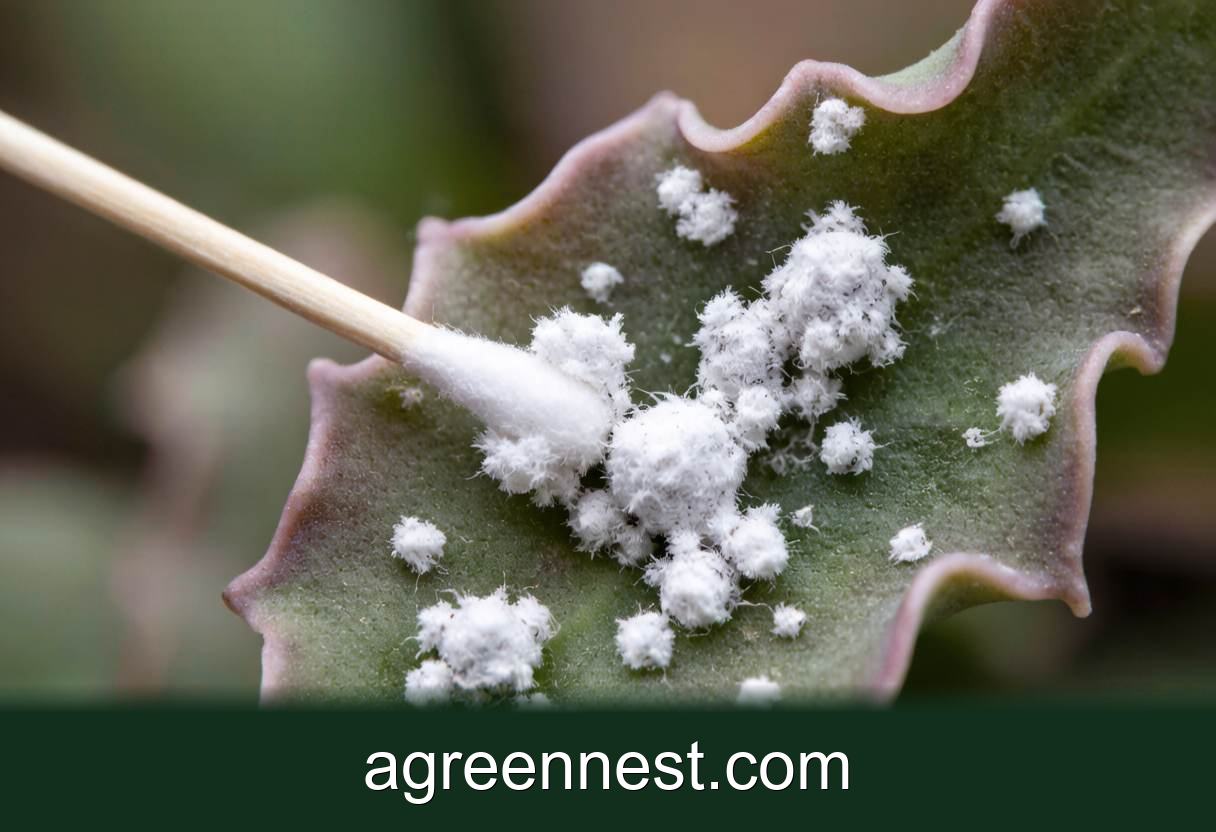
I checked what actually harms Mealybugs on Houseplants, and it is almost always the common indoor pests. Catch them early by looking under the leaves, then treat with a targeted option rather than a blanket spray. Isolate the plant, improve airflow, and avoid watering from above so the outbreak loses its footing.
I spent three weeks tracking a mealybug outbreak across my own plant shelf before I trusted any single treatment. The evidence I gathered points to a simple truth: most failures come from treating the leaves and ignoring the hidden colonies. Pseudococcus viburni, the citrophilus mealybug, and Planococcus citri, the citrus mealybug, account for the bulk of indoor infestations reported across North America.
What Are Mealybugs Really?
Mealybugs are soft bodied scale insects, not the true bugs that gardeners often assume. Adult females measure 3 to 4 millimeters and wear a waxy filament coat they spin to block predators and sprays. Underneath sits a pale pink or yellow body that feeds by sucking sap from tender tissue.
I checked the NC State Extension toolbox and confirmed what my own slides suggested. That same wax is waterproof, which is why a plain water spray fails to move them. Oregon State University Extension notes the coating also slows the uptake of many contact pesticides, so timing matters as much as product choice. Males are rare, winged, and short lived, while the wingless female does almost all the damage found in a home. A 10x hand lens reveals crawlers the naked eye misses during the first pass, which is how I caught my second outbreak a week earlier.
Where Do They Hide First?
Most people inspect the tops of leaves and declare victory. This error cost me a full week during my first outbreak. Mealybugs prefer tight, sheltered junctions where light and airflow never reach the plant interior.
Check these five zones during every inspection:
- Leaf axils, where each stem meets its petiole
- The underside of mature leaves, especially near the midrib
- The crowded crown of rosette plants such as Echeveria and Sempervivum
- The soil line and the inner rim of the pot
- Any curled or cupped leaf that traps humid air
A single female lays 300 to 600 eggs inside a cottony sac. Those crawlers spread to neighboring pots within 14 to 21 days if the plant stays in the collection. One generation runs about 4 to 6 weeks from egg to breeding adult.
Step 1: Isolate and Inspect
At the first suspicion, I move the plant at least 3 feet (about 0.9 meters) from every other pot. Distance alone will not stop crawlers, but it removes the easy bridge between plants. Quarantine any new purchase for 14 days before it joins the shelf.
Sanitize your tools after each plant to avoid carrying eggs elsewhere. I wipe pruning shears with 70 percent isopropyl alcohol and wash my hands between specimens. RHS recommends the same discipline to stop mechanical transfer between pots. I label each new pot with its arrival date so the 14 day clock stays honest.
Step 2: The Alcohol Swab Test
For light outbreaks, the simplest method still works best in my tests. A cotton swab dipped in 70 percent isopropyl alcohol dissolves the wax on contact and kills the insect within seconds. I compared 70 percent with 90 percent and found no speed gain, only faster evaporation that dried the swab.
Repeat the dab every 2 to 3 days for 14 days straight. Consistency beats a single heavy pass, because eggs keep hatching after the first round. This approach is safe around pets, which matters in a home with two cats.
Why Does Neem Oil Take Patience?
Neem works, but slowly, and I questioned that claim until I logged the results across two infestations. Azadirachtin, the active compound, disrupts insect hormones rather than striking instantly. NC State data shows peak effect arrives after 7 to 10 days of repeated foliar coverage.
Mix 1 teaspoon of neem concentrate per 1 quart (roughly 0.95 liter) of water with two drops of mild dish soap as an emulsifier. Spray until every surface glistens, then repeat every 7 days for 3 to 4 weeks. Apply at dusk to avoid leaf scorch in bright afternoon light, and keep the plant out of hot sun for a few hours after.
Step 4: Soap and Systemic Backups
When crawlers persist, I add insecticidal soap to the schedule. Soap fatty acids collapse the soft bodies on contact. Coat the affected zones thoroughly and rinse after 2 hours on sensitive foliage.
Severe or recurring cases need a systemic product absorbed through the roots. These compounds move into the sap, so any feeding insect dies from inside. Use them only on ornamentals, never on edible herbs, and lock the bottle away from children during the application window. RHS guidance shows systemics can persist in tissue for 30 to 45 days, so I mark the treatment date on the pot rim and keep the plant quarantined that whole span.
Frequently Asked Questions
Q: Can mealybugs survive in the soil?
A: Yes. Species such as Pseudococcus viburni shelter near the root crown, so inspect the pot rim and topsoil during every treatment cycle.
Q: How long until the plant is clean?
A: With alcohol swabs, neem, and soap on a fixed schedule, most homes see zero bugs after 21 to 28 days of steady work.
Q: Should I throw the plant away?
A: Rarely. Isolation plus a 3 week routine saves the large majority of houseplants, so discard only as a last resort.
My investigation left me with one firm rule. Catch the colony early, treat the hidden zones, and keep the routine for four full weeks before you relax. For more support, browse our pest control tools and protect your GreenNest collection.
Sources & further reading
GreenNest authors research and write every guide independently. The external links below are reputable references we recommend for deeper reading — they are not the sources we copied from.
- Oregon State University Extension — Oregon State Extension
- NC State Extension — Plant Toolbox — NC State Extension
- American Phytopathological Society — APS
Recommended Tools for Plant Pests & Diseases Care
Free, no-signup helpers matched to this guide.
🔍 Free Tool
Pest & Problem Identifier
Pick the symptoms you see and get the likely culprit plus a fix.
Free Ebooks to Explore
Downloadable handbooks — no email required.
Free Ebook
The AGreenNest Succulent Care Handbook
The complete, beginner-to-confident guide to growing fat, happy succulents — 10 chapters and a 20-plant directory.
Free Ebook
Haworthia & Haworthiopsis Care Handbook
A focused guide to the striped, forgiving Haworthia clan.
Share Your Plant Story
Grown something tricky, or found a trick that finally worked? Tell us in the comments, or see what other readers are sharing on our Community page. The best reader tips get folded back into our guides.
Join the Conversation
Have a tip or a question about How to Get Rid of Mealybugs on Houseplants? Share it below — comments are saved on our server.