 AGreenNest
Plant Pests & Diseases
Spider Mites on Houseplants: ID and Treatment
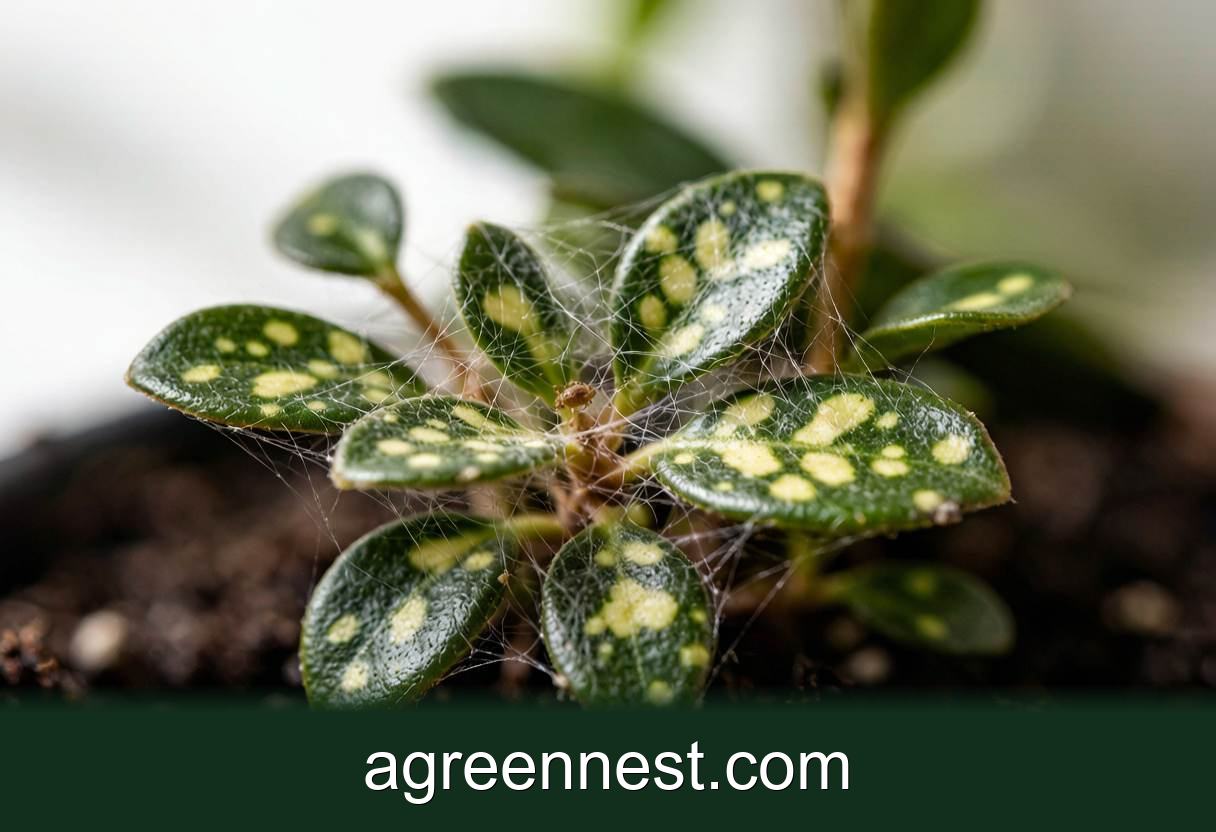
Most Spider Mites on Houseplants problems trace back to the usual indoor pests, not bad luck. Inspect weekly (leaf undersides, stem joints), quarantine new plants, and treat early with a targeted spray. Good airflow and dry foliage do more than any bottle, since prevention beats the cure every time.
Spider mites are tiny arachnids that can wreck a houseplant before you even notice them. Mites thrive in dry, warm homes, so knowing the early signs helps you act fast. One female can start a colony that covers a plant in just a few weeks. Most infestations begin on one overlooked plant and spread by touch or air current, which is why isolation is your strongest tool.
What Are Spider Mites?
Spider mites are not insects but close relatives of spiders, and they are almost invisible to the naked eye. What you usually see first is the damage they leave behind. Mites pierce plant cells and suck out the contents, leaving a trail of tiny pale dots.
Left alone, they weave fine webbing across leaves and stems. The two-spotted spider mite, Tetranychus urticae, is the most common species on indoor plants, and it earns its name from the dark spots on its back. Grab a magnifying glass or phone macro shot to make the adults easy to confirm.
Adult mites measure about 1/50 of an inch, so a hand lens rated at 10x magnification is enough to see them clearly. The webbing they spin is thinner than a spider's web and easy to miss until the colony is large. Newly hatched mites, called larvae, have only six legs and are even smaller than the eight-legged adults. Larvae mature in about 5 to 7 days in warm homes, which explains how a few dots become a swarm.
How Do You Confirm an Infestation?
Look closely, especially on the undersides of leaves, for the first clues. Fine, silvery stippling or tiny yellow speckles are the earliest sign, followed by a dusty, bleached appearance on older foliage.
Stippling happens because mites drain the green chlorophyll, leaving pale scars that will not heal even after the pests are gone. Treat the leaf as damaged once it turns bronze, and prune the worst ones to help the plant recover.
The most reliable test is the tap test. Hold a sheet of white paper under a leaf and tap the leaf sharply with a finger. Tiny moving dots that fall onto the paper and slowly crawl are mites, not dust. Webbing between leaf joints and stems confirms an established infestation.
Because mites are so small, many people mistake them for harmless fuzz. Check the undersides weekly, since catching them early is the difference between a quick rinse and a lost plant.
Why Do Spider Mites Love Your Home?
Mites multiply fastest in hot, dry conditions. They thrive when indoor temperatures climb above 80°F (27°C) and relative humidity drops below 40 percent. Winter heating and summer air conditioning both create the dry air they prefer.
Each female lays dozens of eggs, and warm conditions can complete a generation in under a week. Low humidity in heated rooms lets populations explode, while a plant already stressed by drought is an easy target. Mites often arrive on new plants, cut flowers, or drift in through open windows.
Research from Oregon State and UC IPM shows that populations can rise tenfold in two weeks when conditions stay hot and dry. That speed is exactly why a missed inspection turns into a room-wide problem.
How Do You Treat an Infestation?
Start with a hard rinse. Use a strong stream of lukewarm water to knock mites and webbing off the plant, so do this in a sink or shower and focus on the leaf undersides. Wipe leaves afterward with a damp cloth to remove survivors, and repeat every few days because water alone does not kill eggs.
Keep a dedicated watering can for sick plants to prevent you from spreading them to healthy neighbors. Isolate the plant in a separate room for at least 14 days after the last sign, because mites hide in bud axils and leaf folds.
Next, raise the humidity. Group plants together, set a pebble tray beneath the pot, and run a humidifier during dry months. Aim for humidity above 50 percent, since mites struggle to thrive when the air stays consistently moist.
Apply insecticidal soap to smother the remaining mites, spraying every surface including the undersides of leaves. Follow the label and repeat every 5 to 7 days for at least 3 weeks, because eggs hatch between treatments. Soap works by suffocation rather than poison, so thorough coverage matters more than strength, and you must hit the leaf undersides where mites cluster. Neem oil is the next layer of defense.
Neem oil disrupts the mite life cycle and reduces feeding and egg hatching. Mix a labeled neem solution and spray every 7 days for 3 to 4 weeks, always in the evening to avoid leaf scorch. Stay consistent, because neem works as a routine rather than a one-time fix.
When Should You Release Predatory Mites?
For serious or recurring problems, predatory mites such as Phytoseiulus persimilis eat spider mites directly. Predators are a natural, chemical-free option that works well in larger collections and sunny indoor setups. Order them from a supplier and release them onto lightly infested plants.
Avoid spraying neem or soap for a few days after release so the predators can establish. Keep the room near 70 to 75°F (21 to 24°C) to help both the pests and the predators stay active, so monitor closely and let nature do the work. One packet of predators covers roughly ten average houseplants, and you can reorder every 2 weeks if webbing returns. Maintain the room above 60°F (16°C) or the predators slow down and stop hunting.
Keeping Spider Mites Away
Quarantine new plants for 2 weeks and inspect the undersides of leaves before they join the rest of your collection. Dust leaves regularly so mites have fewer hiding spots, and avoid drought stress because weak plants attract pests.
Mites prefer plants with soft, dusty leaves, so a monthly wipe with a damp cloth removes both dust and the first scouts. Healthy, well-watered plants also resist better than those kept too dry. Rotate neem sprays monthly as a light preventative during dry seasons. Good spacing and a small fan keep air moving, and a weekly flip of the leaves to check the undersides catches the next outbreak while it is still a single dot.
Frequently Asked Questions
Q: Are spider mites harmful to humans?
A: Spider mites do not bite or harm people, but the neem sprays used to treat them should dry before skin contact.
Q: How do I know if I have spider mites?
A: Look for fine webbing, stippled yellow leaves, and tiny moving dots on the undersides of foliage.
Q: Will higher humidity get rid of spider mites?
A: Higher humidity slows mites and discourages breeding, but pair it with neem and water sprays for full control.
Spider mites reward early detection and steady humidity. Explore more solutions in our pest control hub and keep your GreenNest plants healthy year-round. Neem and insecticidal soap handle the mites, while predatory mites handle the repeat offenders, so combine all three for stubborn cases. Weekly inspections of the leaf undersides are the cheapest insurance you can buy against a full-blown infestation.
Sources & further reading
GreenNest authors research and write every guide independently. The external links below are reputable references we recommend for deeper reading — they are not the sources we copied from.
- Oregon State University Extension — Oregon State Extension
- UC IPM — Integrated Pest Management — UC IPM
- NC State Extension — Plant Toolbox — NC State Extension
Recommended Tools for Plant Pests & Diseases Care
Free, no-signup helpers matched to this guide.
🔍 Free Tool
Pest & Problem Identifier
Pick the symptoms you see and get the likely culprit plus a fix.
Free Ebooks to Explore
Downloadable handbooks — no email required.
Free Ebook
The AGreenNest Succulent Care Handbook
The complete, beginner-to-confident guide to growing fat, happy succulents — 10 chapters and a 20-plant directory.
Free Ebook
Haworthia & Haworthiopsis Care Handbook
A focused guide to the striped, forgiving Haworthia clan.
Share Your Plant Story
Grown something tricky, or found a trick that finally worked? Tell us in the comments, or see what other readers are sharing on our Community page. The best reader tips get folded back into our guides.
Join the Conversation
Have a tip or a question about Spider Mites on Houseplants: ID and Treatment? Share it below — comments are saved on our server.