 AGreenNest
Plant Care Accessories
How to Use a Soil Moisture Meter (and Read It Right)
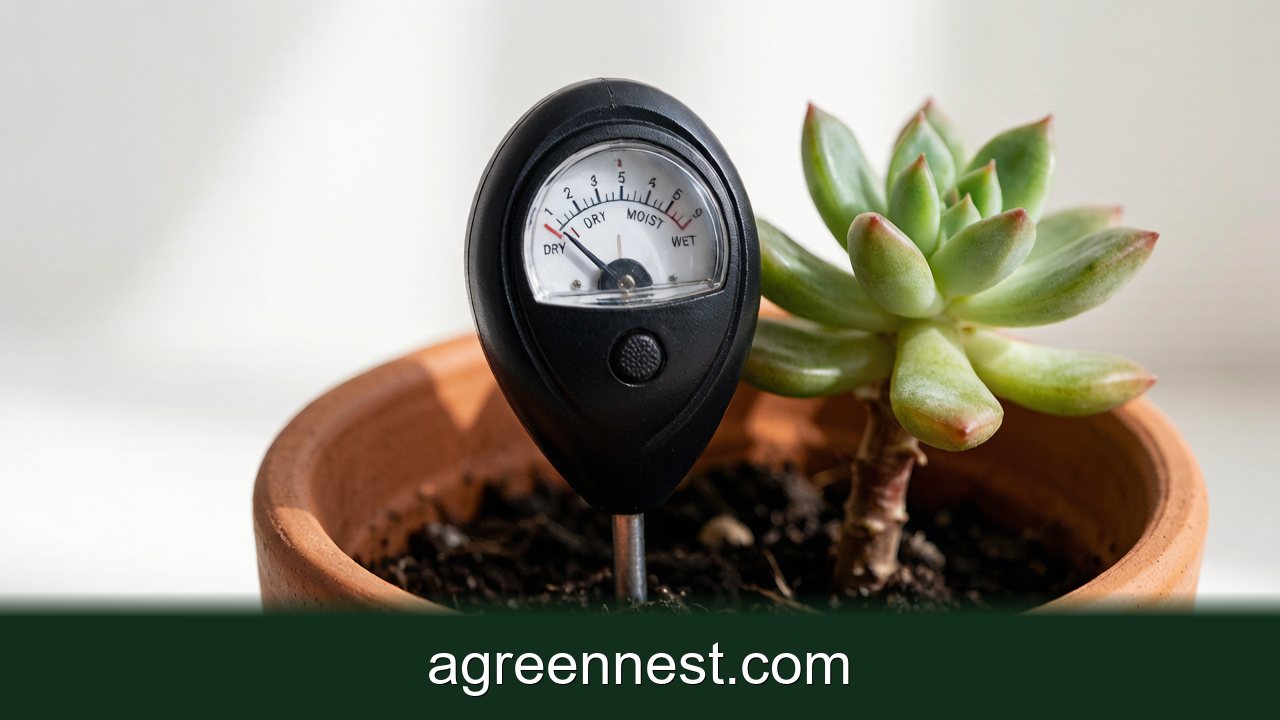
Pick the accessory that matches the job: for A Soil Moisture Meter (and Read It Right), a calibrated tool removes the guesswork. Calibrate it once (most read low out of the box), then measure at the root zone, not the air.
A soil moisture meter is the single cheapest gadget that saves the most plants. It removes the guesswork from watering by telling you in numbers how wet the root zone actually is. Your finger only feels the top inch. The meter reads where the roots live.
If you have ever stood over a pot wondering whether today is water day, this probe answers it in seconds. Here is the method that gives an honest reading every time.
What a Moisture Meter Actually Measures
Most home meters are resistance probes. Two metal prongs pass a tiny current between them. Wet soil conducts electricity better than dry soil, so the meter converts conductivity into a 1 to 10 scale, or a 0 to 100 percent scale on digital models.
The tool does not measure how much water the plant needs. It measures how much water the soil currently holds. That is the number you want before you reach for the can. A reading of 3 in a gritty succulent mix means something different from a reading of 3 in dense peat, so always learn the baseline for each pot.
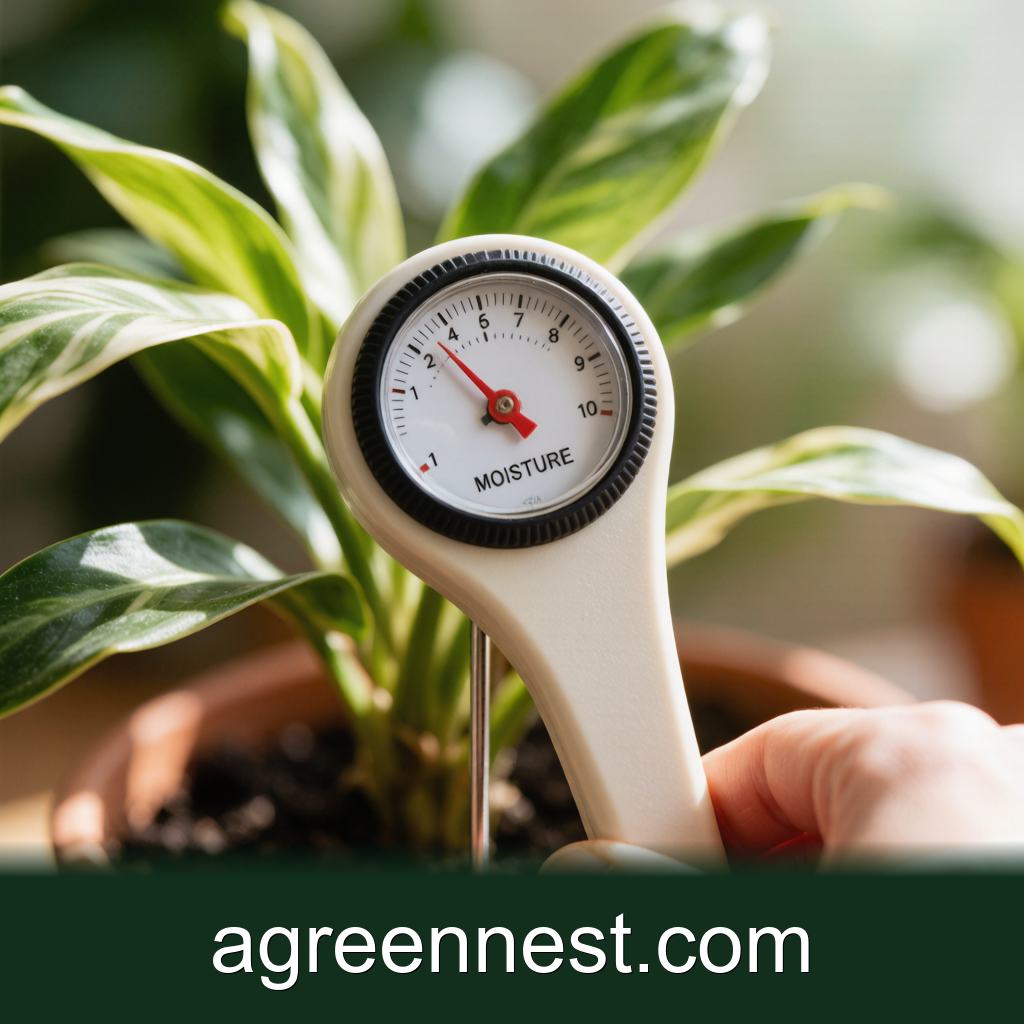
Most budget meters ship uncalibrated and read between 2 and 4 points low in dry mixes. Confirm yours by pushing the probe into a pot you know is saturated, then into one you know is bone dry, and note the gap. A 2 cm to 3 cm dip into the soil is enough for a stable number, so you do not need to bury the whole shaft. Mark the dial with a sticker once you know the offset, and you will save 10 seconds on every future check.
Analog or digital
Analog meters show a needle on a dial. Digital meters show a number. Both work. Digital is easier to read at a glance, but a good analog meter runs for years with no battery. Pick whichever you will actually keep near the plant shelf.
Where Should You Insert the Probe?
Depth and placement decide whether the reading is useful or misleading. Follow three rules.
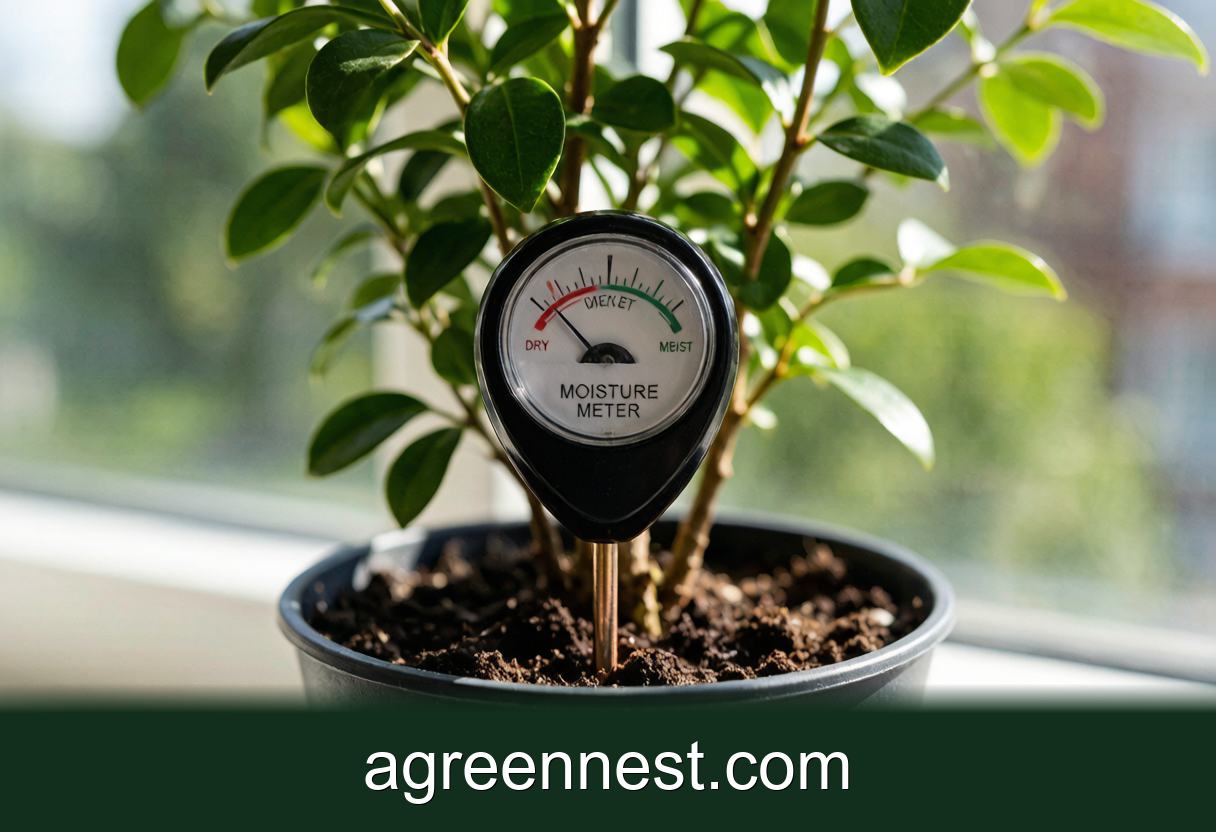
Push the probe all the way to the root zone, not just the surface. For most houseplants that means roughly two thirds of the way down the pot. Keep it away from the pot wall and measure through the centre of the root ball. The dry edge of a terracotta pot always lies. For deep pots, take two readings, one upper and one lower, and trust the lower number for watering decisions.
A reading near the surface only tells you the top is dry, which is almost always true and says nothing about the roots that matter.
What Do the Numbers Mean?
On a typical 1 to 10 dial the bands run like this.
Dry, from 1 to 3, means time to water for succulents and cacti. For thirsty plants this is already overdue. Moist, from 4 to 6, is the hold off zone for most plants and the sweet spot for ferns and calatheas. Wet, from 7 to 10, means do not water. Let it dry down before the next drink.
The trick is learning your plant comfort zone, not chasing a universal number. A Sansevieria trifasciata is happiest watered at 2 to 3, while a Spathiphyllum wallisii sulks below 4. Our how to water indoor plants correctly guide pairs well with a meter because it explains the target moisture each species wants.
Which Plants Need the Meter Most?
Different plants want different targets, and a meter makes that easy to enforce.
Succulents and cacti should be watered at 1 to 2. Our how often to water succulents schedule explains why erring dry is almost always safer. Aroids such as pothos and philodendron prefer water around 3 to 4. Calathea and ferns like to sit near 5 to 6 because they hate drying out. Seedlings and cuttings need gently moist soil at 5 to 7, but watch for rot.
A gritty mix of three parts mineral grit to one part soil dries fast and gives sharp, repeatable readings. Dense peat holds water in pockets, so expect numbers to swing by two points between two spots in the same pot. A meter also settles arguments about thirsty versus drought tolerant species. In a 12 cm pot a Crassula ovata can sit dry for 18 days, while a Spathiphyllum wallisii in the same size pot wants water within 7 days.
How Do You Avoid False Readings?
Even a good meter lies if you use it wrong. Watch these four traps.
Never leave the probe buried between readings. The metal corrodes and salts build up, throwing off future results. Insert, read, pull out, wipe clean. Water pools unevenly, so if you check five minutes after a drink you may hit a dry pocket and think the plant is thirsty when it is saturated. Wait a few hours, or read the lower root zone.
Bone dry soil reads near 0 even if a little life remains, and fertilizer heavy mixes conduct oddly. A fertilizer solution above 1.5 grams per litre can push a dry reading up by two full points, so flush the soil before you trust the dial. When in doubt, cross check with weight. A dry pot is dramatically lighter than a wet one.
How Should You Care for the Tool?
Wipe the prongs after every use with a soft cloth. Once a month, rub them lightly with a pencil eraser to remove the oxide film. If readings drift even in known wet soil, replace the meter. They cost little and a fresh probe restores trust in the numbers.
Keep the probe dry in storage and never wash it in running water, which forces moisture into the seam where the cable meets the case. A simple hook near the potting bench keeps it from rolling onto the floor and bending the prongs. Store the meter between 40 and 95°F (4 and 35°C) so the internal coil does not drift between seasons.
Frequently Asked Questions
Q: Do I need a moisture meter for every plant?
A: No. Use one for plants where overwatering is the main risk, such as succulents, cacti, and anything in a terracotta pot. For thirstier plants it is still handy but less critical.
Q: Why does my meter read 10 right after watering but the soil looks dry?
A: Water distributes unevenly and air pockets form. Wait a few hours and recheck the lower root zone for a steadier reading.
Q: Can a moisture meter replace the finger test?
A: It improves on it. The finger test only feels the top two inches, while a meter reads where the roots actually sit, which is what matters.
A moisture meter turns watering from a guess into a habit. Pair it with a clear target for each species and you will lose far fewer plants to root rot. When you are ready to go deeper, try our free watering calculator to build a custom schedule, or browse all of our plant care articles for species specific guidance.
Recommended Tools for Plant Care Accessories Care
Free, no-signup helpers matched to this guide.
Free Ebooks to Explore
Downloadable handbooks — no email required.
Free Ebook
The AGreenNest Succulent Care Handbook
The complete, beginner-to-confident guide to growing fat, happy succulents — 10 chapters and a 20-plant directory.
Free Ebook
Haworthia & Haworthiopsis Care Handbook
A focused guide to the striped, forgiving Haworthia clan.
Sources & further reading
GreenNest authors research and write every guide independently. The external links below are reputable references we recommend for deeper reading — they are not the sources we copied from.
- Oregon State University Extension — Oregon State Extension
- Michigan State University — Gardening — Michigan State University
- Aggie Horticulture (Texas A&M) — Texas A&M AgriLife
Share Your Plant Story
Grown something tricky, or found a trick that finally worked? Tell us in the comments, or see what other readers are sharing on our Community page. The best reader tips get folded back into our guides.

Join the Conversation
Have a tip or a question about How to Use a Soil Moisture Meter (and Read It Right)? Share it below — comments are saved on our server.