 AGreenNest
Hydroponic Growing
Grow Tomatoes Hydroponically: A Beginner's Indoor Crop
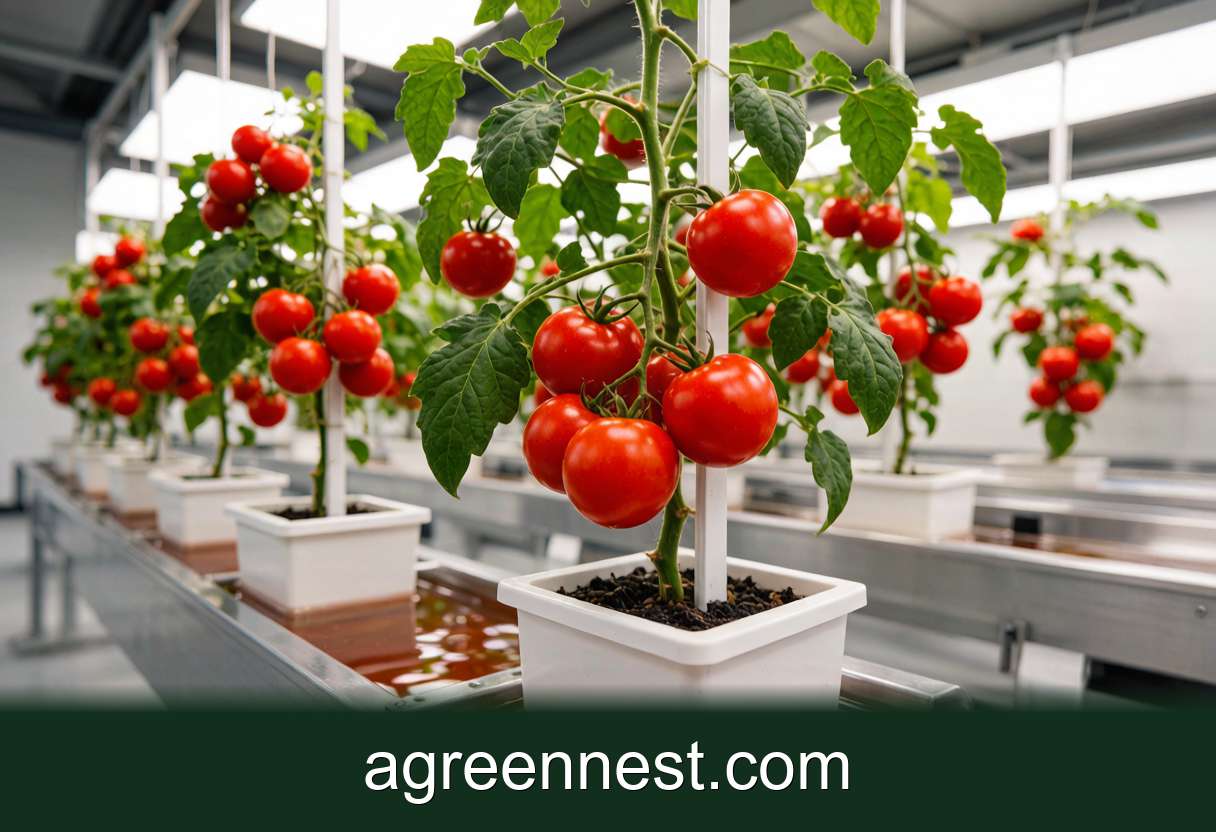
Run Grow Tomatoes Hydroponically at steady strength: 1.5-2.0 EC, pH 5.8-6.2, reservoir 18-22 C. Provide low to medium light for 14-16 hours a day. The only common failure is stale solution, so top up daily and swap the reservoir every 7-14 days so roots stay white and active.
The best plants for hydroponics list is mostly herbs and greens. Safe, mild, and a bit boring. Dwarf tomatoes are the crop that makes people believe the system works, because you get real fruit from a bucket on the counter. Tomatoes are Solanum lycopersicum, and the dwarf forms were bred to fruit in tight spaces about 30 to 45 cm tall. Plan on 30 to 50 dollars for a full countertop rig in year one, then almost nothing after. This guide covers the setup, the numbers, and the one mistake that drops your yield to zero, so you eat a tomato instead of growing a bush.
What You Need
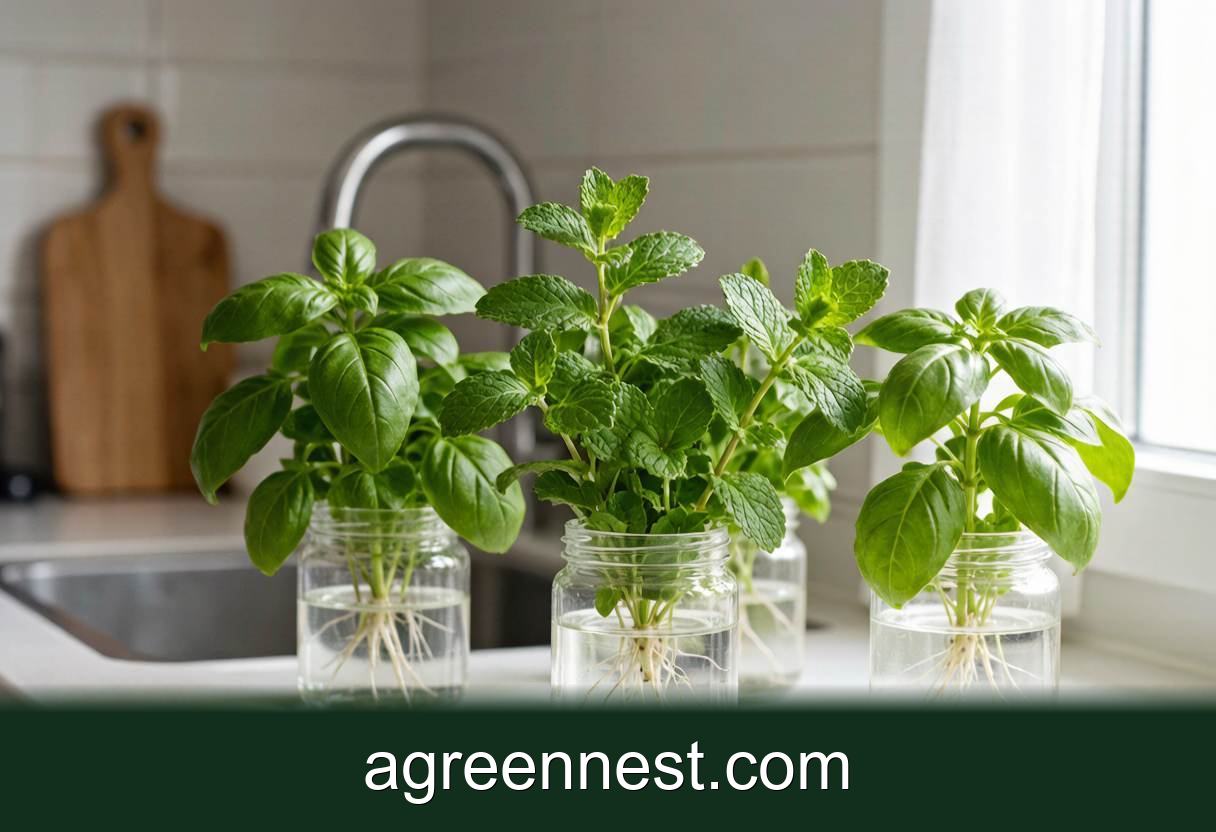
A deep water culture or Kratky bucket holds the plant in a net pot above a 10 to 20 L reservoir. Net pots of 12 to 15 cm suit one dwarf plant, and the bucket costs 5 to 10 dollars at a hardware store. Choose a dwarf or determinate variety such as 'Tiny Tim', 'Balconi', or 'Micro Tom'. Full-size types do not fit indoors and will disappoint you. Buy hydroponic nutrients A and B, never soil fertilizer, because soil mixes clog and burn roots within days. Light is required, since tomatoes are sun hungry and want 12 to 16 hours at 300 to 500 µmol from a 20 to 40 W bar. Finish with a small fan for airflow, because it prevents fungus while strengthening stems. Many growers tuck a basil Ocimum basilicum cutting into the same reservoir, since both share the 5.8 to 6.2 pH band and the herb uses the spare nitrogen. Use tap water left to sit overnight, since chlorine off-gasses and the roots dislike it fresh from the tap.
Starting From Seed
Sow 2 to 3 seeds per cell about 0.5 cm deep in a peat plug, then keep the plug at 21 to 24°C, which is 70 to 75°F, for 5 to 10 days until they sprout. Thin to one seedling per pot once the first true leaves appear, usually at day 14. Move the seedling under the light at 16 hours a day and let it reach 10 to 15 cm tall before you transplant into the net pot. Bottom heat from a 10 dollar mat speeds sprouting by two days, though it is optional. Buying a rooted seedling skips this stage and fruits about two weeks sooner, so beginners should buy one and save seed starting for year two.
How Do You Set Up the System?
Mix nutrients at half the label strength to start. That lands near EC 1.5 to 2.0 with pH 5.8 to 6.2, and the pH guide explains the test kit and the buffer. Hang the light 15 to 25 cm above the plant and run it 14 hours a day, raising it as the plant grows. Wipe the leaves monthly so dust does not block light. Top up the reservoir with plain water as the level drops, then change the whole solution every 2 to 3 weeks so salts never build past 2.5 EC. Pollinate by hand, because indoor tomatoes have no bees. Tap the flower clusters daily or wipe them with a soft brush. Skip this and you get flowers with no fruit, which is the mistake that makes people think hydroponic tomatoes do not work. Keep the reservoir between 18 and 22°C, equal to 64 to 72°F, so the roots stay white and active.
What Numbers Decide Your Yield?
Light under 200 µmol keeps the plant alive but sets few fruit, so aim for 300 or more at the canopy, measured with a 15 to 30 dollar meter. pH outside the 5.5 to 6.5 band locks out calcium and the tips rot, a condition called blossom-end rot. Run the nutrient between 1000 and 1400 ppm once the plant is fruiting, then back off if the leaf edges burn. Temperature should sit between 18 and 26°C, which is 64 to 79°F. Keep humidity near 50 to 60 percent so the flowers do not stick and the pollen moves. Above 30°C, equal to 86°F, pollination fails even with hand help. Too much nitrogen grows big leaves and few flowers, so switch to a bloom formula once flowering starts.
Why Does Hand Pollination Matter?
Indoor air is still and bee free, so pollen never reaches the stigma on its own. Without your finger or a brush, the flowers open, close, and drop with zero fruit set. The habit takes ten seconds a day and is the single biggest difference between a bush and a harvest. Make it part of your morning round along with the water top-up, and the yield climbs within two weeks of starting. Miss a week and you lose every flower that opened in that window. Commercial greenhouses rent bumblebee hives, but a finger costs nothing and works just as well.
Common Mistakes That Drop Yield
No hand-pollination means flowers drop and yield goes to zero. Not enough light makes plants leggy, flowering but barren, and a south window alone is rarely enough, so add a light bar. Overfeeding causes tip burn and salt buildup, so stay at half-strength and watch the leaves for brown edges. Still air weakens stems and invites powdery mildew, and a 10 dollar fan fixes both problems at once. Letting the reservoir fall below 4 L starves the roots, so check the level every morning. Cold drafts below 15°C, equal to 59°F, stall the plant for a week and drop the lower leaves.
Can You Grow Full-Size Tomatoes Indoors?
No, not indoors. Use dwarf determinate varieties because full-size types need more root volume and more light than a countertop system can give. The dwarf forms were selected exactly for this constraint, and they fruit reliably in a 10 to 20 L bucket. Determinate types stop at 30 to 45 cm and ripen in one flush, which suits a bucket far better than a sprawling vine. If you want beefsteak, grow it outside where the root run is unlimited and the sun is free.
Frequently Asked Questions
How long until I get tomatoes?
From a rooted seedling, expect flowers in 3 to 4 weeks and the first ripe fruit around week 7 to 9. Low light stretches that timeline, and a heat wave that pushes the room above 30°C will add another week, so measure your µmol before you blame the variety.
Why are the flower ends black?
Blossom-end rot from calcium lockout, almost always caused by pH drifting above 6.5 or by wild daily swings. Stabilize pH with the buffer in your nutrient kit and the black tips stop.
Do I need a pump for DWC or can I go passive?
Either works. Kratky is simpler and fine for one or two plants, while a pump keeps nutrient evenly mixed for bigger crops.
Dwarf tomatoes are the crop that turns hydroponics from interesting into actual food. Get the light up to 300 µmol, hand-pollinate daily, and hold pH at 5.8 to 6.2. Those three habits decide whether you eat a tomato or just grew a bush. Start from the beginner setup if you have not built a system yet, and the first ripe fruit will arrive within about 9 weeks of a rooted seedling going into the bucket.
Recommended Tools for Hydroponic Growing Care
Free, no-signup helpers matched to this guide.
Free Ebooks to Explore
Downloadable handbooks — no email required.
Free Ebook
The AGreenNest Succulent Care Handbook
The complete, beginner-to-confident guide to growing fat, happy succulents — 10 chapters and a 20-plant directory.
Free Ebook
Haworthia & Haworthiopsis Care Handbook
A focused guide to the striped, forgiving Haworthia clan.
Sources & further reading
GreenNest authors research and write every guide independently. The external links below are reputable references we recommend for deeper reading — they are not the sources we copied from.
- Michigan State University — Gardening — Michigan State University
- Oregon State University Extension — Oregon State Extension
- UA Controlled Environment Agriculture Center — U Arizona CEAC
Share Your Plant Story
Grown something tricky, or found a trick that finally worked? Tell us in the comments, or see what other readers are sharing on our Community page. The best reader tips get folded back into our guides.
Join the Conversation
Have a tip or a question about Grow Tomatoes Hydroponically: A Beginner's Indoor Crop? Share it below — comments are saved on our server.