 AGreenNest
Hydroponic Growing
pH for Hydroponics Made Simple
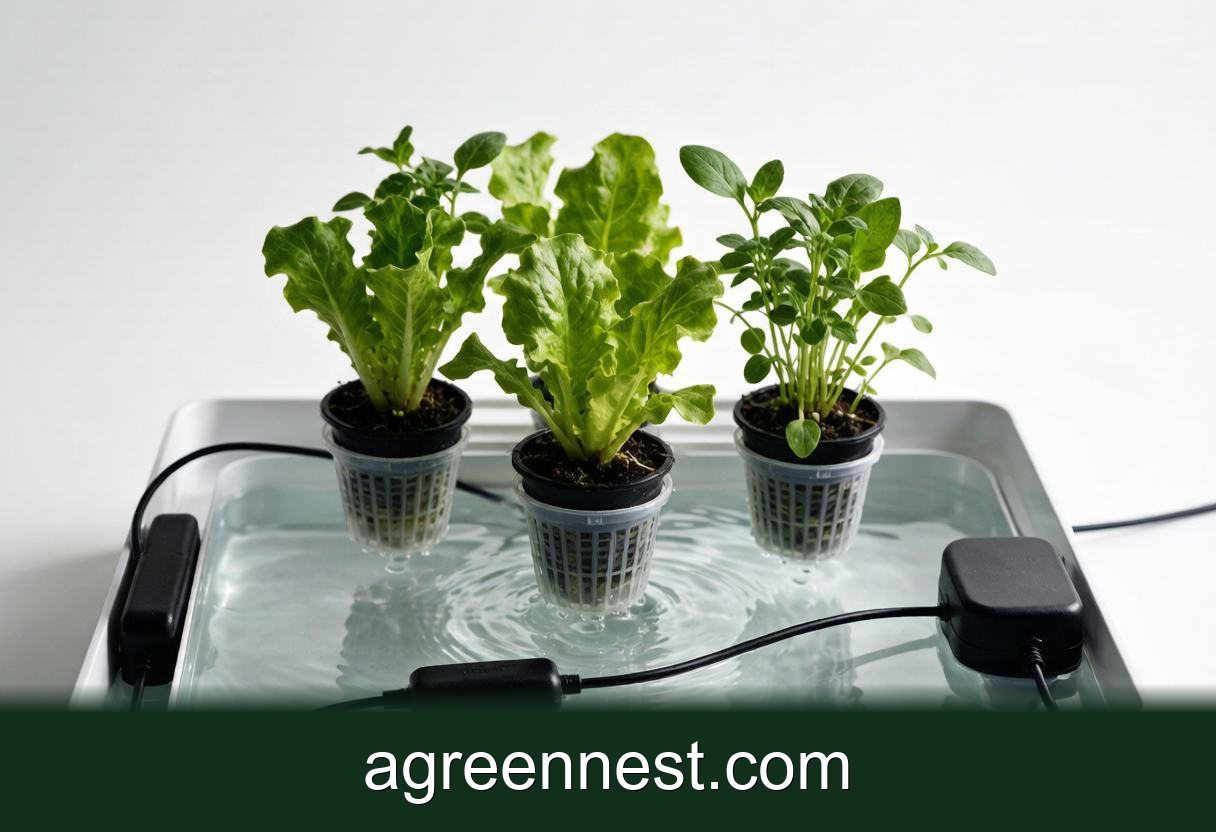
PH for Hydroponics Made Simple grows fastest with a 1.5-2.0 EC nutrient solution at 18-22 C. Aim for 1.5-2.0 EC and pH 5.8-6.2, and give 13-16 hours of grow-light or bright supplemental light (14-16 hours daily). Keep roots dark and aerated, and change the reservoir every 1-2 weeks to avoid salt buildup.
The Short Version
Plants can only eat what their roots can absorb, and that depends on pH. In hydroponics the sweet spot sits near 5.8 to 6.2 for most crops, with a safe outer band of 5.5 to 6.5. Outside it, nutrients lock out and leaves go pale even in a full tank.
You do not need a degree to manage this. A pen meter costing 15 to 30 dollars reads pH to 0.1, and a bottle of pH down costs less than a coffee. Spend two minutes each visit and the whole system stays balanced.
Most failures trace back to one skipped reading. A tank at 18 to 22 C (64 to 72 F) holds pH steadier than a warm one, so cool the reservoir and the corrections get easier. Treat the meter as the most important tool you own.
Why Does pH Matter So Much?
Each nutrient element has a pH window where it dissolves into a form roots can take up. Iron, for example, drops out of solution above 6.5 and the new growth turns yellow. Calcium and magnesium follow their own windows a little lower.
When the pH drifts, the plant starves while the tank looks rich. A lettuce crop at pH 7.0 shows the same pale signs as one with no food at all. The fix is rarely more nutrient, and it is almost always a correction back toward the target band.
Roots trade protons for nutrients at their surface, and the exchange rate doubles with every full point of pH drop. That is why a reading of 6.0 feeds far better than 7.0 even with identical food. The chemistry is simple once you see it as a gate, not a switch.
Lockout is sneaky because the tank still reads full of food. You might add more nutrient and make it worse, pushing EC past 2.5 while the plant starves. The first response to pale leaves is always a pH test, never a bigger dose.
What pH Range Should I Target?
Leafy greens such as Lactuca sativa and Spinacia oleracea like 5.8 to 6.2. Fruiting crops such as tomatoes prefer 5.5 to 6.0 during heavy feeding. Herbs sit comfortably at 5.5 to 6.5, which is why they tolerate beginner error.
Set one target per reservoir and hold it. A swing of more than 0.3 in a day stresses the roots and slows uptake. Pick the middle of your crop's band, mark it on the lid, and correct toward it every time you test.
Seedlings need the lower end because their tiny roots accept less per pass. Mature plants tolerate the top of the band during cool weather. Write the target on the reservoir lid so visitors and forgetful mornings both stay honest.
How Do I Adjust pH Safely?
Test the mixed solution first, never the concentrated A/B. Add pH down or up one drop at a time, stir for 10 seconds, then read again. Small steps prevent overshoot, since a single extra drop can move a small tank by 0.2.
Raise the strength only after the pH is steady, because acid and salt interact. Keep the adjustment bottles away from the nutrient jugs so you never confuse them. A dedicated syringe for each bottle removes the guesswork.
Phosphoric acid works as pH down for most greens and adds a little phosphorus as a bonus. Citric acid is gentler for herbs but fades faster, needing a recheck within 48 hours. Avoid vinegar, since it swings the tank and feeds microbes you do not want.
When Should I Test the Solution?
Test at every top up, which for most home units means daily. A full weekly check misses the midweek drift that pins pH to 6.8 while plants eat. Young seedlings shift the tank faster because their roots are small and the volume is low.
Log each reading with the date and the EC value. Patterns show up after two weeks, and you will learn your room's natural drift direction. Catch a bad reading early and a single correction resets the crop.
A 500 ml sample in a clear cup shows color and clarity that the tank hides. Cloudy water often means a pH problem feeding bacteria. Smell the sample too, because a sour note means the reservoir is already past saving and needs a full change.
What If the pH Keeps Drifting Up?
Rising pH usually means the nutrient is alkaline or the water is hard. Switch to a fresher A/B batch and recheck the source. If it climbs more than 0.2 daily, add down in the morning and again at the evening top up until the pattern settles.
Hard water above 200 ppm of calcium pushes pH up on its own, fighting your down bottle all day. Test your source once and subtract its buffer from the recipe. RO water near 6.0 removes that fight but needs a calcium add at 80 to 100 ppm.
Common pH Mistakes
The biggest error is adjusting the concentrated A/B before dilution, which gives a false number. Another is chasing pH with more nutrient, which raises EC and burns tips. A third is trusting a meter that has not been calibrated in months, so calibrate it every 4 to 6 weeks with fresh buffer solution at pH 4.0 and 7.0.
Old solution also drifts as salts build past 2.5 EC, so change the reservoir every 1 to 2 weeks. A clean tank is easier to balance than a tired one.
Frequently Asked Questions
My nutrient says complete, why pale leaves?
Almost always pH. Test before you add more food, because the lockout hides a full tank.
Do I adjust A and B separately?
No. Dilute each, then adjust the mixed solution, never the concentrates.
How often should I test?
Weekly at minimum, but daily at every top up keeps drift from pinning the pH.
pH is the quiet secret of hydroponic success. Keep a pen, a buffer, and a log card by the tank, and the numbers will tell you what the leaves cannot. Log it in the care schedule tool and grow with confidence. Aim for 5.8 to 6.2, test at every top up, and calibrate the pen every month. The plant will repay the habit with color and yield.
Recommended Tools for Hydroponic Growing Care
Free, no-signup helpers matched to this guide.
Free Ebooks to Explore
Downloadable handbooks — no email required.
Free Ebook
The AGreenNest Succulent Care Handbook
The complete, beginner-to-confident guide to growing fat, happy succulents — 10 chapters and a 20-plant directory.
Free Ebook
Haworthia & Haworthiopsis Care Handbook
A focused guide to the striped, forgiving Haworthia clan.
Sources & further reading
GreenNest authors research and write every guide independently. The external links below are reputable references we recommend for deeper reading — they are not the sources we copied from.
- Aggie Horticulture (Texas A&M) — Texas A&M AgriLife
- UA Controlled Environment Agriculture Center — U Arizona CEAC
- Oregon State University Extension — Oregon State Extension
Share Your Plant Story
Grown something tricky, or found a trick that finally worked? Tell us in the comments, or see what other readers are sharing on our Community page. The best reader tips get folded back into our guides.
Join the Conversation
Have a tip or a question about pH for Hydroponics Made Simple? Share it below — comments are saved on our server.