 AGreenNest
Succulent Care
10 Easy Succulents for First-Timers
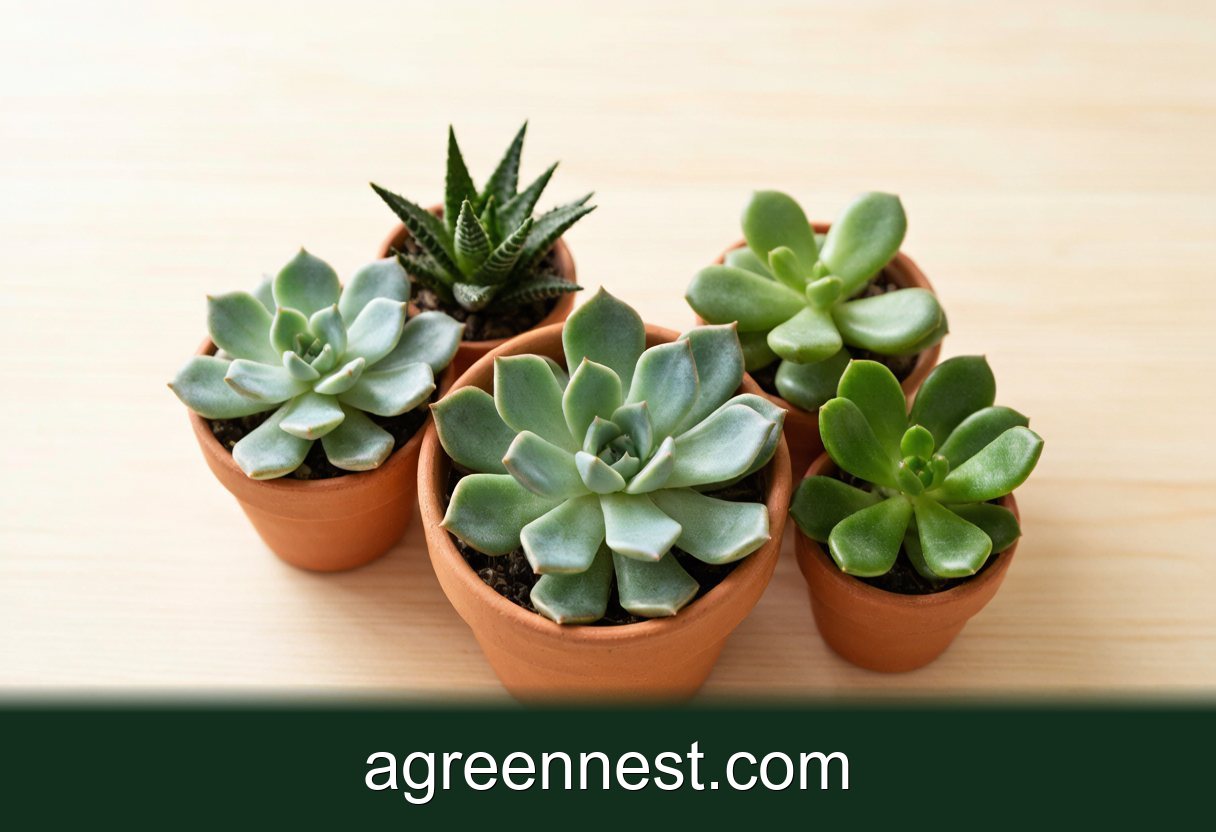
10 Easy Succulents for First-Timers stores moisture in its leaves, so it tolerates some neglect. Give it a few hours of direct sun and water only when the potting mix has fully dried out (every 2-3 weeks in summer, less in winter). Plant it in a gritty, fast-draining mix and a terracotta pot to keep the roots healthy and rot-free.
Why Do Succulents Forgive Neglect?
My first Crassula ovata survived a three-week vacation with no water and no complaint. That resilience is why I hand these plants to nervous beginners. Most succulents store moisture inside thick leaves, so a missed watering becomes a minor event rather than a crisis. The trade is simple: they hate wet feet far more than they hate thirst. Give them a bright windowsill and a forgetful owner, and they often outlive the enthusiasm that bought them. New growers relax once they see one recover from a dry spell. I still keep that first jade on my kitchen sill as a quiet teacher. Beginners panic at the first wrinkled leaf, yet the plant simply pauses and waits. Store bought succulents often arrive bone dry, which actually protects them on the trip. A windowsill in the kitchen gave me my earliest wins as a nervous grower. Friends borrow my extras because these plants survive a forgetful house sitter. A south facing ledge turned my failed herbs into thriving succulents within a month.
Which Ten Should You Start With?
Echeveria elegans forms a pale rosette that blushes pink in strong light. Haworthiopsis attenuata stays tiny and tolerates a dim corner better than most. Aloe vera earns its place with soothing gel and easy pups. Kalanchoe tomentosa, the panda plant, shows fuzzy leaves that beg a touch. Sansevieria trifasciata stands nearly upright and shrugs off low light. Graptopetalum paraguayense trails rosy rosettes over a shelf edge. Sedum morganianum spills beads that look like a gentle waterfall. Crassula perforata stacks coin-like leaves in a tidy column. Haworthia cooperi hides translucent tips that glow in morning sun. Lithops species pretend to be pebbles until they bloom. Two of these, the haworthia and the lithops, barely notice a forgotten watering for a month. Pick three from this list and you already have a varied, hardy shelf. Most of these cost less than a coffee, which lowers the fear of a first mistake.
How Much Sun Do They Really Want?
Bright indirect light suits the shy ones like haworthia and sansevieria. Rosette types such as Echeveria elegans want four to six hours of direct morning sun to keep their shape tight. Too little light stretches the stems and flattens the rosette into a sad, reaching form. A south or east window usually delivers the right balance through spring and autumn. Rotate the pot a quarter turn each week so all sides meet the light evenly. Leaf tips turning red often signal happy, sunbathed stress rather than damage. They shrug off normal homes held near 65 to 75°F (18 to 24°C) without complaint. South facing windows in winter sit lower, so move pots closer to the glass then. Etiolation, the stretch, cannot be undone, only prevented by more light. Morning sun through a sheer curtain gives the safest, gentlest dose. Window glass filters some rays, so a plant right on the pane gets more than one a foot back.
What Pot and Mix Keep Roots Happy?
Terracotta breathes, which pulls excess water from the soil after a soak. Mix three parts coarse grit to one part standard potting soil for fast drainage. A pot with a single drainage hole beats a pretty, sealed bowl every time. Repot only when roots circle the base, usually after eighteen to twenty-four months. Skip the decorative pebbles on top if they trap humidity against the crown. Healthy roots smell clean and feel firm, never brown and slimy. I learned this the hard way after losing a beloved plant to a sealed pot. Unglazed clay wicks moisture faster than glossy ceramic in a humid kitchen. A layer of grit on the surface keeps the crown dry after you water. Rescue a rotting plant by moving it to dry grit the same day you spot the mush.
When Should You Actually Water?
Wait until the top two inches of mix feel dry to the knuckle. In summer that means every fourteen to twenty-one days; in winter, stretch it to five or six weeks. Water until liquid runs from the hole, then stop and walk away. Misting does more harm than good because it wets leaves without reaching roots. A kitchen scale that shows the pot is lighter by two hundred grams is a better cue than any calendar. Roots drink, then rest, then drink again. Beginners often ask me for a single rule, and the dry-knuckle test is it. Winter dormancy means the plant sips almost nothing from December through February. Yellow, translucent leaves usually mean too much water, not too little. A weekly glance at the pot weight teaches more than any printed chart. Bottom watering, soaking the pot in a tray, trains roots to grow downward for strength. A forgotten plant in a cool room can go six weeks between drinks with no harm.
Frequently Asked Questions
Q: What kills most beginner succulents?
A: Overwatering, almost every time. Let the soil go bone dry before the next soak.
Q: Do they need fertilizer?
A: Feed at one-quarter strength once a month in spring and summer, and never in winter dormancy.
Q: Can I grow them from a single leaf?
A: Yes. Lay a Graptopetalum paraguayense leaf on dry soil and wait three to four weeks for roots.
Master these ten and you can grow almost anything green. Build your rhythm with the watering calculator and the care schedule tool.
Sources & further reading
GreenNest authors research and write every guide independently. The external links below are reputable references we recommend for deeper reading — they are not the sources we copied from.
- Clemson Home & Garden Information Center — Clemson Extension
- Cornell Garden-Based Learning — Cornell University
- Missouri Botanical Garden — Missouri Botanical Garden
Recommended Tools for Succulent Care
Free, no-signup helpers matched to this guide.
Free Ebooks to Explore
Downloadable handbooks — no email required.
Free Ebook
The AGreenNest Succulent Care Handbook
The complete, beginner-to-confident guide to growing fat, happy succulents — 10 chapters and a 20-plant directory.
Free Ebook
Haworthia & Haworthiopsis Care Handbook
A focused guide to the striped, forgiving Haworthia clan.
Share Your Plant Story
Grown something tricky, or found a trick that finally worked? Tell us in the comments, or see what other readers are sharing on our Community page. The best reader tips get folded back into our guides.
Join the Conversation
Have a tip or a question about 10 Easy Succulents for First-Timers? Share it below — comments are saved on our server.