 AGreenNest
Succulent Care
Senecio Care: 2 Species for Beginners
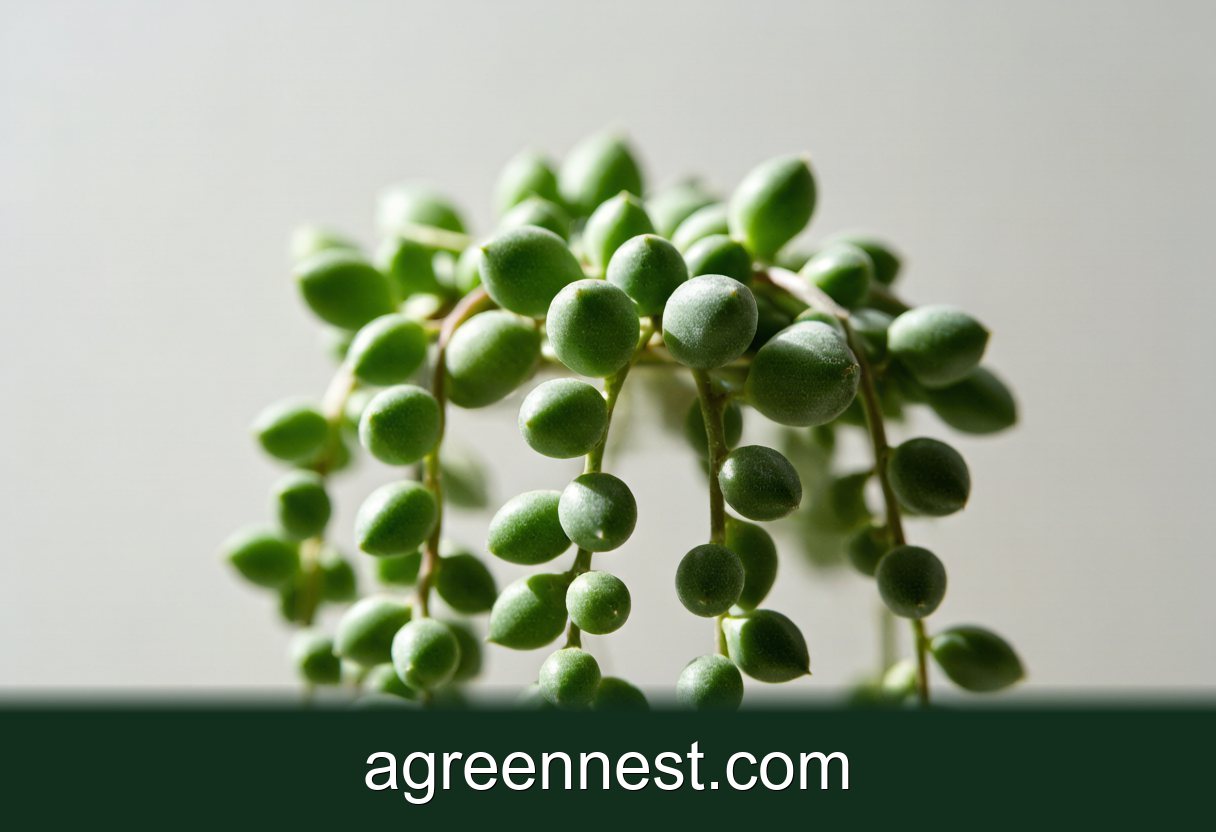
The secret to a happy Senecio is restraint. Place it in a few hours of direct sun, then wait until the soil is bone dry before watering (every 2-3 weeks in summer, less in winter). Use a lean, sandy soil and a porous pot so excess moisture escapes fast and rot never gets started.
Senecio Care: 2 Species for Beginners
Some plant families feel like a hobby all on their own, and Senecio is exactly that kind of group. I first fell for these trailing succulents on a friend's shelf, where a single pot spilled over the edge like a green waterfall. The two species below are the ones I recommend most often to new growers. Both belong to the same genus, Senecio, yet each brings its own personality to a windowsill.
This round-up collects just two members of a large family so you can learn the basics without feeling overwhelmed. Growing a small set of close relatives teaches you the rhythm of one plant family faster than buying one of everything. You will quickly notice what these succulents share and where they gently diverge. A quiet shelf near bright glass is often all the stage they need.
Meet the Senecio Family
Warm, dry air and plenty of light are the backbone of Senecio culture. These are not thirsty houseplants, and they resent a damp root zone more than almost any other condition. Most growers succeed simply by doing less, by watering rarely and placing the pot where the sun actually reaches the leaves. The two species we cover trail from baskets or shelves, which makes them ideal for small apartments.
Collecting a genus is a fun way to learn one plant family in depth. You begin to predict behaviour after tending just two species. A single failed watering teaches more than a shelf of untouched books. With Senecio, the lessons arrive gently because the plants forgive short dry spells. Often the hardest part is resisting the urge to water too often.
Senecio rowleyanus: The String of Pearls
The beads of Senecio rowleyanus look like a strand of green pearls, and that is where the common name comes from. Each little ball stores water, so the plant shrugs off neglect better than most. Give it four to six hours of bright light each day, with some gentle morning sun if you can manage it. South or west windows work well in most homes during the cooler months.
Water this species only after the soil has gone completely dry. In summer that means a drink every 14 to 21 days, while in winter you may wait 28 to 42 days between waterings. Always wet the soil, never the beads, because moisture sitting on the round leaves invites rot. A gritty mix of two parts cactus soil to one part pumice keeps the roots safe. Temperature comfort sits between 60 and 85°F (16 and 29°C) for steady growth.
Few pests bother these beads, though mealybugs sometimes hide where the strands meet the soil. Check the crown every 14 days and dab any white fluff with a cotton swab dipped in rubbing alcohol. Repot only when the roots crowd the container, usually every two to three years.
Senecio radicans: The String of Bananas
Senecio radicans earns its name from leaves shaped like tiny bananas. It grows a touch faster than the pearls and fills a hanging pot within a single season. The same bright, sunny routine suits it, though it tolerates slightly less direct sun without complaint. Place it where it can trail, since the stems stretch three to five feet when happy.
Keep the watering rule identical to its cousin. Wait until the top three inches of soil feel dry, then soak and let it drain. Temperatures between 60 and 85°F (16 and 29°C) keep both species content through the year. If the tips shrivel, that is usually a cry for water rather than a disease. Bright light preserves the plump banana shape, while dim corners make the leaves thin and floppy.
Propagation is wonderfully easy with this one. Lay a healthy stem on dry soil, and within 21 to 28 days small roots appear at the nodes. Snip the cutting with clean scissors, let the wound dry for a day, then press it gently into the mix.
How do these two differ in care?
Honestly, the care overlap is huge, which is why they sit well together in one guide. The clearest difference is growth speed, because Senecio radicans fills a pot faster than Senecio rowleyanus. Pearl beads also rot more readily if you splash water on them, so the bananas are marginally more forgiving for a forgetful waterer. Light needs line up almost exactly, and so does the soil recipe.
Choose the pearls if you love a tidy, sculptural look. Choose the bananas if you want quick, leafy coverage for a bare shelf. Either way the maintenance burden stays light. Both bounce back from a missed watering with no lasting harm.
What light makes them happiest?
Bright, indirect sun is the sweet spot, with a few hours of softer direct morning light as a bonus. East facing windows are reliable, and a sunny south sill works from late autumn through early spring. Avoid the harsh midday summer sun, which can scorch the beads within a day or two. If the strands stretch and the spacing between leaves widens, the plant is asking for more light.
Rotate the pot a quarter turn every 7 to 10 days so growth stays even. A simple shelf near a bright window beats a fancy grow light for these particular succulents. Sometimes a sheer curtain is enough to tame a too strong south window.
Which species should you start with?
New collectors do best with Senecio radicans, since its faster growth gives quicker rewards and its leaves are more forgiving. That said, the pearls make a stunning first plant if you are patient and careful with water. Both are sold cheaply at most garden centers, so you can try one of each without much risk. Start with the look you love most, because you will care for it more attentively.
Watch for the telltale signs of a happy plant before you buy. Plump, firm beads or bananas mean the specimen was watered on schedule. Skip any pot with yellow, translucent leaves, since that points to rot already underway.
Frequently Asked Questions
Q: Can these two share a single pot?
A: Yes, they can, because their light and water needs match closely. Just give the combined planting a pot with a drainage hole and a gritty mix.
Q: Why are the leaves losing their colour?
A: Too little light is the usual cause, so move the plant to a brighter spot. Pale or yellowing beads can also signal overwatering, so check the soil before you reach for the watering can.
Q: When is the best time to repot?
A: Early spring is ideal, just before the active growing season begins. Repot only when the roots fill the container, and let any damaged roots dry for a day before replanting.
Collecting a genus is a fun way to learn one plant family deeply, and Senecio rewards that curiosity with very little fuss. Pair your favourites with the light calculator to place them well, then step back and enjoy the show.
Sources & further reading
GreenNest authors research and write every guide independently. The external links below are reputable references we recommend for deeper reading — they are not the sources we copied from.
- Cornell Garden-Based Learning — Cornell University
- Missouri Botanical Garden — Missouri Botanical Garden
- UF/IFAS Gardening Solutions — UF/IFAS
Recommended Tools for Succulent Care
Free, no-signup helpers matched to this guide.
Free Ebooks to Explore
Downloadable handbooks — no email required.
Free Ebook
The AGreenNest Succulent Care Handbook
The complete, beginner-to-confident guide to growing fat, happy succulents — 10 chapters and a 20-plant directory.
Free Ebook
Haworthia & Haworthiopsis Care Handbook
A focused guide to the striped, forgiving Haworthia clan.
Share Your Plant Story
Grown something tricky, or found a trick that finally worked? Tell us in the comments, or see what other readers are sharing on our Community page. The best reader tips get folded back into our guides.
Join the Conversation
Have a tip or a question about Senecio Care: 2 Species for Beginners? Share it below — comments are saved on our server.