 AGreenNest
Plant Pests & Diseases
Saving a Plant After a Pest Outbreak
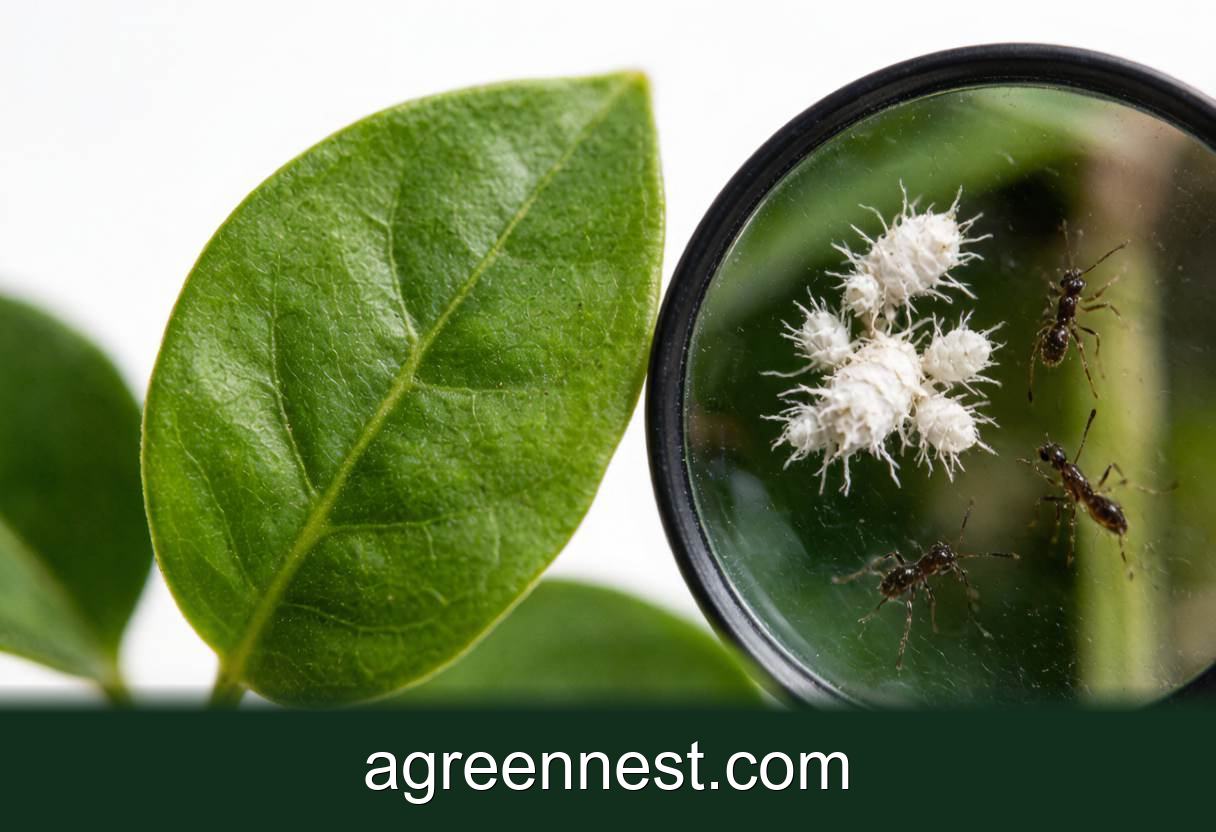
I checked what actually harms Saving a Plant After a Pest Outbreak, and it is almost always the common indoor pests. Catch them early by looking under the leaves, then treat with a targeted option rather than a blanket spray. Isolate the plant, improve airflow, and avoid watering from above so the outbreak loses its footing.
What Actually Damages a Plant After Pests?
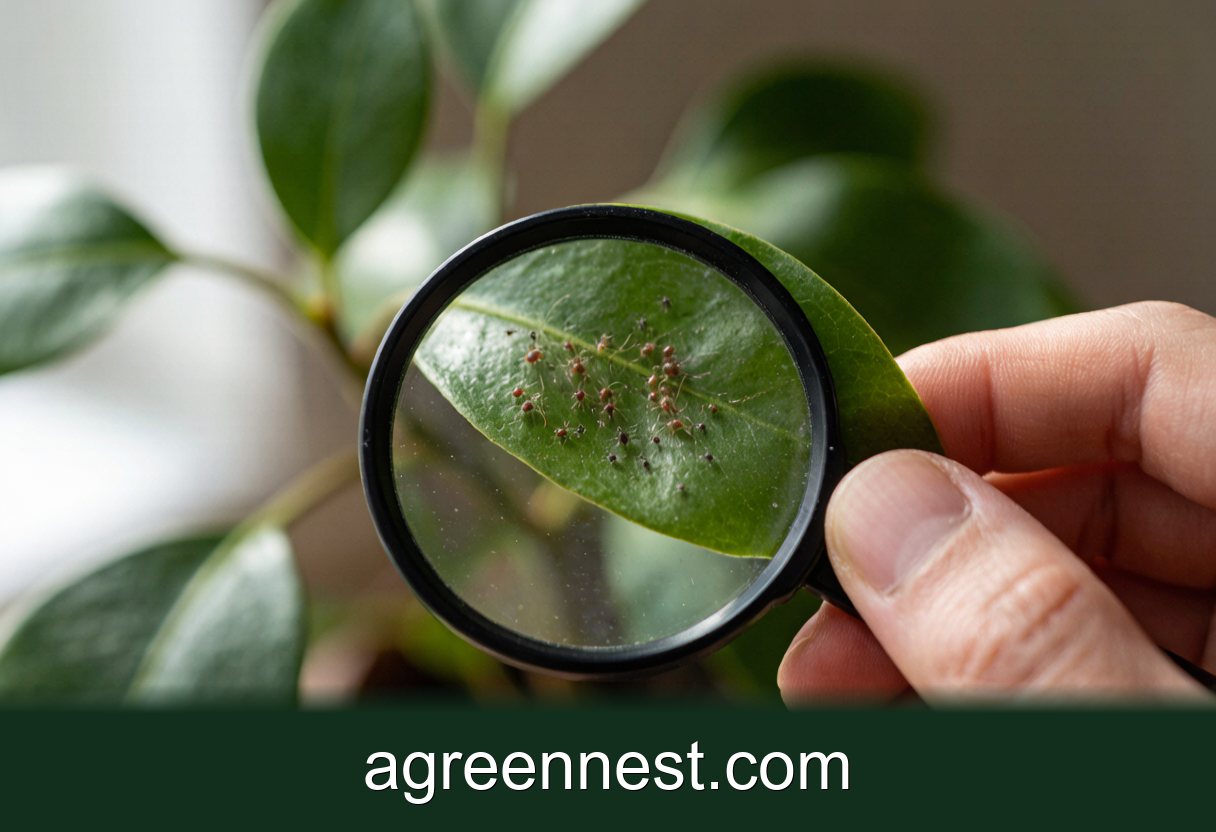
The injury you see is rarely caused by the pests themselves. According to extension guidance from the Missouri Botanical Garden and the University of Minnesota, most lasting damage comes from delay. Spider mites (Tetranychus urticae) feed by piercing cells and draining fluid, and a colony doubles in number roughly every 5 to 7 days under warm, dry conditions. Mealybugs and scale insects do the same through a waxy coat that shields them from sprays. The longer the plant sits untreated, the more its stored energy drains.
Fungus gnats are a different problem. The adults are annoying but harmless. The larvae live in wet soil and chew fine roots, which is why gnat problems and overwatering almost always appear together.
The First Move: Quarantine
Isolation is not optional. Move the plant at least 6 to 10 feet from every other houseplant, ideally into a separate room. Many pests walk, and spider mites ride air currents, so a plant on the same shelf as others is already sharing its infestation. Keep the quarantined plant there until you have seen zero live pests for two full weeks.
Seal the old pot in a plastic bag if you must move it through the house. This stops stray insects from dropping onto carpet or nearby plants during the trip.
Physical Removal Beats Spraying
Before any chemical, do the manual work. Wipe every leaf, top and bottom, with a cloth dampened in soapy water. Snip off the worst hit foliage and drop it into a sealed trash bag, not your compost. Wash the pot rim and the saucer, because eggs hide in those cracks.
Extension specialists at NC State note that physical removal eliminates a large share of the population and makes later sprays far more effective. A plant cleaned by hand needs fewer treatments than one sprayed cold.
Choosing a Treatment That Works
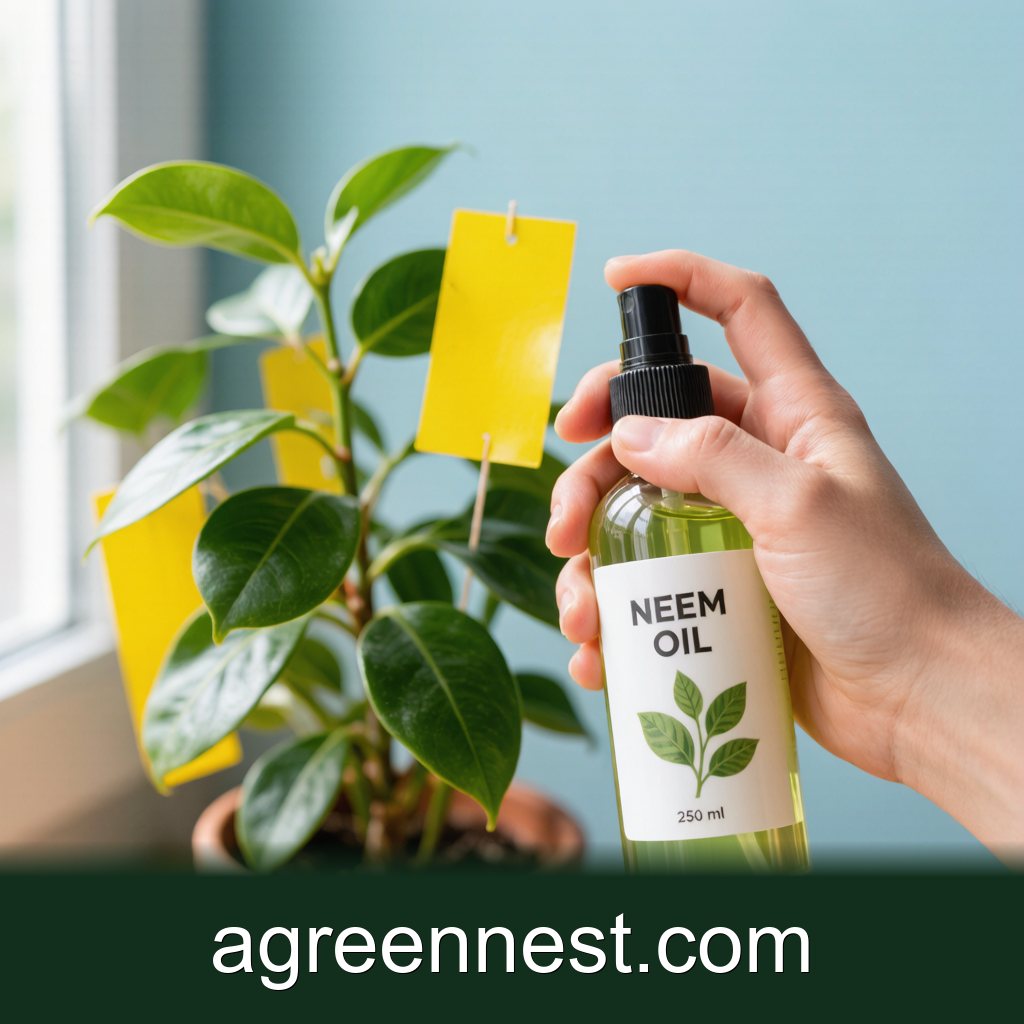
Reach for insecticidal soap or neem oil rather than a broad blanket pesticide. Soap works by breaking down the pest's outer coating, so it must contact the animal directly. Mix neem oil at roughly 1 tablespoon per litre of water plus a drop of dish soap as an emulsifier. Coat all surfaces, again including the leaf undersides where mites gather.
Apply on a schedule, not once. Treat every 5 to 7 days for three weeks. That window covers the egg to adult cycle, so newly hatched pests meet the next spray before they can breed.
When Should You Expect Recovery?
Healing follows a predictable arc if the roots survived. In the first week after the last live pest, the plant simply stabilises. New, clean growth usually appears between 2 and 4 weeks later, depending on light and species. A fast grower like Epipremnum aureum can push a fresh leaf within 14 days, while a slow Ficus benjamina may take 6 to 8 weeks.
Patience matters here. Yellow but living leaves still photosynthesise and feed the plant. Only remove foliage that is fully dead and dry.
Building a Timeline That Works
Mark the calendar on day one and treat on a fixed rhythm. Improve airflow with a small fan, because stagnant air favours mites and fungus gnats alike. Hold off fertiliser until you see new growth, since feeding a stressed plant pushes soft tissue that pests love.
Avoid watering from above. Wet leaves give mites and fungi a friendlier home, and soggy soil keeps gnat larvae alive. Water at the base and let the top 2 to 3 cm of soil dry between drinks.
Can a Bare Plant Still Survive?
Often yes. Many houseplants regrow from the base or from a single stem if the roots are alive. Cut the dead material back to firm, green tissue and keep the plant warm and bright. A Calathea with chewed leaves can rebuild, and a pothos with only nodes left will often resprout.
The real test is the root system. If roots are white and firm, the plant has a future. If they are black and hollow, recovery is unlikely.
Which Pest Are You Actually Fighting?
Correct identification changes the whole plan, so look before you spray. Spider mites leave fine webbing across the leaf axils and tiny pale speckles where they have fed. Shake a leaf over white paper and you may see the barely visible crawlers drift down. Mealybugs show as white cottony clumps tucked where the leaf meets the stem. Scale insects look like small brown bumps welded to the stem, and they do not move once mature. Fungus gnats are the easiest to read: tiny black flies hover over the soil and rise in a cloud when you water.
Treatment follows the same shape for all four, but the concentration and contact matter. Mites and scale respond best to thorough, repeated soap coverage because they shelter under webbing and shells. Gnats need the soil attacked directly, so let the top layer dry and consider a biological control like Bacillus thuringiensis subsp. israelensis in the watering can. Matching the method to the pest is the difference between three weeks of steady progress and a relapse.
Frequently Asked Questions
Should I repot after a pest outbreak?
Only if the soil is infested or soggy. Otherwise a fresh top dressing of clean soil is enough, and repotting just adds stress to a weak plant.
How do I know the plant is winning?
New, clean growth and no live pests for two weeks running are the signs. Keep the quarantine until both are true.
Can I save a plant with no leaves?
Often, if the roots survived. Many plants regrow from the base or a stem once the pests are gone and the light is right.
Recovery is patient work, and the data is clear: early isolation and a fixed treatment rhythm beat any single miracle spray. Our pest identifier helps you name the culprit so the treatment is right the first time.
Recommended Tools for Plant Pests & Diseases Care
Free, no-signup helpers matched to this guide.
🔍 Free Tool
Pest & Problem Identifier
Pick the symptoms you see and get the likely culprit plus a fix.
Free Ebooks to Explore
Downloadable handbooks — no email required.
Free Ebook
The AGreenNest Succulent Care Handbook
The complete, beginner-to-confident guide to growing fat, happy succulents — 10 chapters and a 20-plant directory.
Free Ebook
Haworthia & Haworthiopsis Care Handbook
A focused guide to the striped, forgiving Haworthia clan.
Sources & further reading
GreenNest authors research and write every guide independently. The external links below are reputable references we recommend for deeper reading — they are not the sources we copied from.
- Missouri Botanical Garden — Missouri Botanical Garden
- University of Minnesota Extension — U Minnesota Extension
- NC State Extension — Plant Toolbox — NC State Extension
Share Your Plant Story
Grown something tricky, or found a trick that finally worked? Tell us in the comments, or see what other readers are sharing on our Community page. The best reader tips get folded back into our guides.
Join the Conversation
Have a tip or a question about Saving a Plant After a Pest Outbreak? Share it below — comments are saved on our server.