 AGreenNest
Succulent Care
Moonstone Care Guide (Pachyphytum oviferum)
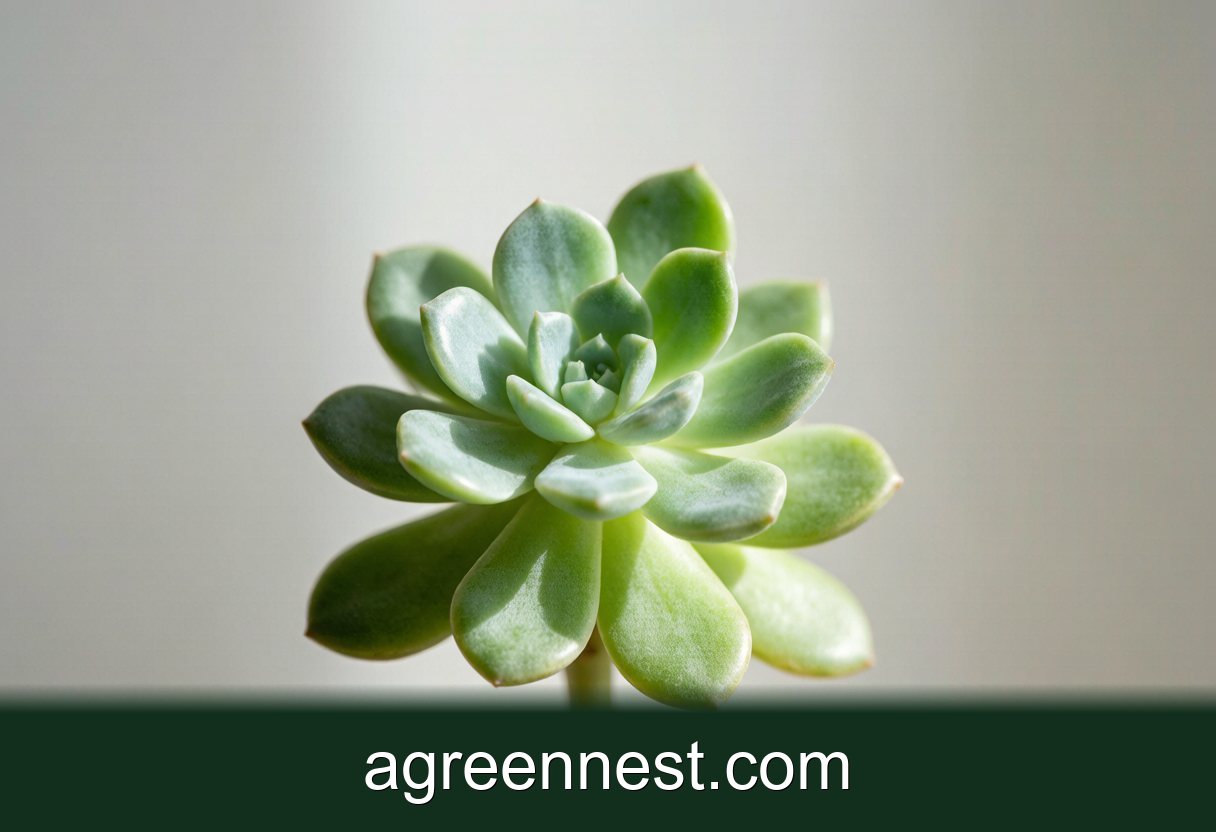
The secret to a happy Moonstone Care Guide (Pachyphytum Oviferum) is restraint. Place it in a few hours of direct sun, then wait until the soil is bone dry before watering (16 days between waterings). Use a lean, sandy soil and a porous pot so excess moisture escapes fast and rot never gets started.
Getting to Know Moonstone
When my friend Lena handed me a small pot wrapped in newspaper three winters ago, I had no idea that little lump of grey blue beads would become my favourite desk companion. Pachyphytum oviferum, the plant we call Moonstone, is a Mexican native that stores water in fat, rounded leaves. Those leaves wear a powdery white coat known as farina, and that coating acts as the plant's natural sunscreen. Please resist the urge to rub it off, because the farina does not grow back once you touch it.
What makes Moonstone so appealing to me is its calm, almost sculptural look. The leaves stack along short stems and catch the light like polished stones. A happy plant blushes from chalky blue to soft pink at the tips, especially when it gets a little direct sun. I find it endlessly forgiving, which is exactly what a busy indoor gardener needs on a rainy Monday.
The genus name Pachyphytum comes from Greek words meaning thick plant, and the description fits perfectly. Close relatives such as Pachyphytum hookeri share the same care and the same powdery charm, so anything you learn for one transfers neatly to the other. Each leaf feels like a smooth pebble, and the whole rosette stays compact for years. Unlike fussier houseplants, this one asks for very little, and it quietly tolerates the occasional missed watering without complaint.
What Kind of Light Does Moonstone Need?
Moonstone wants more light than most people assume. In my home it sits on a south facing sill where it receives at least 4 to 6 hours of direct morning sun. That intensity is what keeps the leaves plump and the colour strong. Without enough light the stems stretch and the rosette opens up, leaving gaps that look awkward.
If you only have a bright, indirect spot, the plant will survive, but it will stay a flat green rather than the pink tinged beauty you saw in the shop. A simple LED grow light set for 12 hours a day works well through the dim months. I watch the spacing between leaves as my guide. Tight, crowded growth means the light is right, while stretched gaps tell me to move the pot closer to the window.
How Often Should You Water Moonstone?
The quickest way to lose a Moonstone is to love it with too much water. I water mine about every 16 days during spring and summer, and then I stretch that to once every 4 to 6 weeks in winter when growth slows. Rather than counting days, I lift the pot. When it feels light and the soil is bone dry an inch down, that is the moment to soak it.
Pour until water runs from the drainage hole, then empty the saucer within ten minutes. Never let the pot sit in a puddle. On very hot afternoons the leaves may soften slightly, which is normal, but a permanently wrinkled leaf means you waited a touch too long. Adjust by a day or two and the plant recovers fast.
Some gardeners mist their succulents, but I skip that step entirely. Moonstone prefers dry air around its crown, and a damp leaf surface only invites rot. A deep, infrequent soak trains the roots to reach downward and builds a sturdier plant over time.
Soil, Pots, and Drainage
A standard bag of potting soil will hold far too much moisture for this species. I mix my own blend at a ratio of about 1 part cactus soil to 1 part coarse pumice, with a handful of horticultural sand thrown in. The goal is a gritty, open texture where water disappears in seconds rather than pooling.
Terracotta pots are my go to because the clay wicks moisture from the rootball. Whatever material you choose, a real drainage hole is not optional. A pot without one is a slow trap for rot. I repot only every two to three years, in early spring, and I never size up more than one inch at a time. Fresh soil once in a while is plenty.
Keeping the Temperature Right
Moonstone is comfortable in a range from 45 to 80°F (7 to 27°C). It tolerates a cool bedroom in winter better than a stuffy, heated corner. I keep mine away from the radiator and the drafty window alike, because sudden swings stress the leaves and can trigger drop.
Humidity is barely a concern. Average household air, often around 30% to 50% relative humidity, suits it perfectly. You do not need a pebble tray or a humidifier. In fact, damp, still air around the base is precisely what invites fungal trouble, so good airflow matters far more than misting ever could.
How Do You Propagate Moonstone?
Propagation is the part that feels like a small miracle. Gently twist a healthy leaf from the stem, making sure the base comes away clean. Lay it on dry soil and forget about it for a week or two. A callus forms, then a tiny root and a miniature rosette appear at the scar.
Stem cuttings work too. I let the cut end dry for 24 to 48 hours before setting it on barely damp soil. Mist lightly every few days, and within three to four weeks you should see roots. Share the extras with friends, because that is how my original plant multiplied across three windowsills and two households without costing a penny.
Common Problems and Easy Fixes
- Stretched, leaning growth usually means the light is too weak. Move the pot to a brighter place or add a grow light.
- A soft, yellow base is a classic sign of overwatering. Let the soil dry fully and check the roots for black, mushy sections.
- Faded or plain green colour tells you the plant wants more sun, while brown scorched patches mean it got too much at once.
Frequently Asked Questions
Can Moonstone grow under a grow light?
Yes. A full spectrum LED kept about 12 inches above the plant for 12 hours a day keeps the colour and shape tidy through winter.
Is Moonstone safe around pets?
No. Like many succulents it can upset a cat or dog if chewed, so place it on a high shelf or in a closed terrarium away from curious mouths.
Why do the leaves look wrinkled?
Mild wrinkling between waterings is normal water use. Deep, permanent wrinkles mean you should water a little sooner next time.
Moonstone taught me that the best succulent care is mostly restraint. Give it bright light, a gritty pot, and the patience to wait until the soil is truly dry, and it will reward you with years of quiet, sculptural beauty. If you would like a personal schedule, try our free watering calculator and pair it with the light calculator to find the perfect windowsill spot.
Sources & further reading
GreenNest authors research and write every guide independently. The external links below are reputable references we recommend for deeper reading — they are not the sources we copied from.
- NC State Extension — Plant Toolbox — NC State Extension
- Clemson Home & Garden Information Center — Clemson Extension
- Royal Horticultural Society — Houseplant care — RHS
Recommended Tools for Succulent Care
Free, no-signup helpers matched to this guide.
Free Ebooks to Explore
Downloadable handbooks — no email required.
Free Ebook
The AGreenNest Succulent Care Handbook
The complete, beginner-to-confident guide to growing fat, happy succulents — 10 chapters and a 20-plant directory.
Free Ebook
Haworthia & Haworthiopsis Care Handbook
A focused guide to the striped, forgiving Haworthia clan.
Share Your Plant Story
Grown something tricky, or found a trick that finally worked? Tell us in the comments, or see what other readers are sharing on our Community page. The best reader tips get folded back into our guides.
Join the Conversation
Have a tip or a question about Moonstone Care Guide (Pachyphytum oviferum)? Share it below — comments are saved on our server.