 AGreenNest
Succulent Care
Lipstick Echeveria Care Guide (Echeveria agavoides)
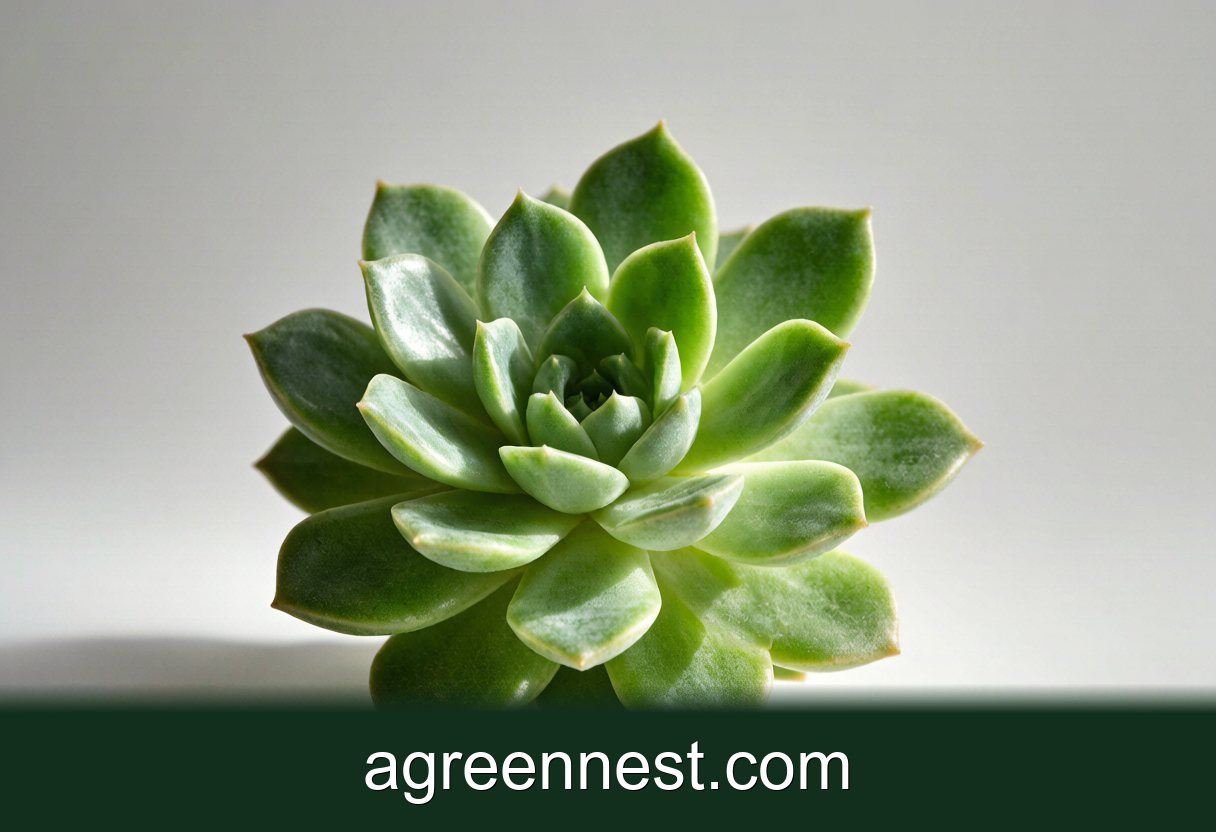
The secret to a happy Lipstick Echeveria Care Guide (Echeveria Agavoides) is restraint. Place it in a few hours of direct sun, then wait until the soil is bone dry before watering (14 days between waterings). Use a lean, sandy soil and a porous pot so excess moisture escapes fast and rot never gets started.
Lipstick Echeveria at a Glance
| Care factor | What Lipstick Echeveria wants |
|---|---|
| Light | bright light with several hours of direct sun |
| Water | water deeply when the soil is bone dry, roughly every 14 days in the growing season |
| Temperature | comfortable from 50 to 82°F (10 to 28°C) |
| Humidity | dry air is fine |
| Soil | a gritty, free-draining succulent mix |
| Difficulty | very easy, great for beginners |
| Pet safe | no, keep it away from cats and dogs |
Echeveria agavoides earns its common name from the red margin that looks painted along each leaf edge. The species name means agave-like, though it is a true echeveria and not an agave at all. My own plant sits on a south-facing shelf, and every autumn the red tips deepen to a vivid crimson as the nights cool. That colour shift is one of the reasons I keep coming back to this succulent.
A few years ago a friend gave me a single rosette in a tiny pot. It is now the parent of three more on my windowsill. The plant asks for restraint more than anything else, which is a relief after the fussier specimens in my collection.
What kind of light does this succulent need?
Bright light with several hours of direct sun keeps the form tight and the colours strong. A south or west window is ideal. An unshaded east window also works, as long as the plant gets those direct morning rays. Without enough light, the rosette stretches and the leaves spread apart in a search for brightness.
I learned this the hard way with a plant I tucked into a shady corner. Within two months it had grown tall and leggy, with visible gaps between the leaves. A move back to the bright window slowly corrected the shape, though the stretched stem never shortened.
How often should you water it?
Wait until the soil is bone dry, then water deeply. During the growing season that usually means every 14 days. In winter, when the plant rests, cut back to every 28 to 35 days or even less. The exact rhythm depends on your pot, your home, and the season.
The risk with this plant is always too much water, never too little. A simple rule helps when you are unsure. Wait another week. The sap and leaves can irritate pets if chewed, so keep the pot clear of cats and dogs.
Soil, pots, and drainage
A gritty, free-draining succulent mix is essential. Drainage is everything. A pot with a real drainage hole is non-negotiable, because standing water is the fastest way to lose a Lipstick Echeveria. I favour shallow terracotta pots, since they let the soil dry quickly and match the plant's flat root system.
Mixing your own takes minutes. Combine three parts coarse sand or grit with two parts peat-free compost and one part perlite. That lean blend drains within a day and keeps the crown dry. Repot every two to three years in spring, moving up only one pot size, since slightly crowded roots keep the rosette compact and encourage steady growth. Top dressing with a thin layer of grit prevents water from pooling around the crown after a soak.
Temperature and seasonal colour
Lipstick Echeveria stays comfortable from 50 to 82°F (10 to 28°C). It dislikes damp cold, so if you grow it outdoors in summer, bring it in before temperatures drop below 45°F (7°C). Dry air suits it perfectly, and average household humidity is more than enough.
Cooler autumn nights are what intensify the red leaf tips. If your plant looks plain green through summer, a few weeks of cooler evening temperatures will often bring the colour back without any change to care. Spring feeding with a half-strength cactus fertiliser once a month keeps the leaf colours vivid and supports steady new growth.
How do you propagate Lipstick Echeveria?
Two methods work well. The easiest is a single healthy leaf laid flat on dry soil. The second is an offset pup pulled from the base of the mother plant. Let any cut surface dry for a day or two before it touches soil or water, then keep it barely moist until roots appear.
I now keep a shallow tray of leaves on my shelf as a kind of living savings account. Most callus and root within three to four weeks, and a tiny rosette forms at the base of the leaf a month or so later.
Common problems and easy fixes
- Stretched, pale growth means it wants more light. Move it brighter or add a small grow light.
- Mushy, yellow base signals overwatering. Let the soil dry out and check the roots for rot.
- Wrinkled, soft leaves point to underwatering or damaged roots. Water lightly and watch for plumpness to return.
Frequently Asked Questions
Q: How often should I water Lipstick Echeveria?
Water deeply when the soil is bone dry, roughly every 14 days in the growing season and far less in winter.
Q: Is Lipstick Echeveria safe for pets?
No. The sap and leaves can irritate cats and dogs if chewed, so keep the pot out of reach.
Q: Why do the leaf tips turn red?
Cooler autumn nights intensify the red margin, which is normal and a sign of good light and seasonal change.
Lipstick Echeveria rewards restraint with tight rosettes and glowing red edges, and it asks for very little in return. For a personalised schedule, try our free watering calculator and pair it with the light calculator to pick the perfect spot.
Sources & further reading
GreenNest authors research and write every guide independently. The external links below are reputable references we recommend for deeper reading — they are not the sources we copied from.
- Clemson Home & Garden Information Center — Clemson Extension
- NC State Extension — Plant Toolbox — NC State Extension
- Missouri Botanical Garden — Missouri Botanical Garden
Recommended Tools for Succulent Care
Free, no-signup helpers matched to this guide.
Free Ebooks to Explore
Downloadable handbooks — no email required.
Free Ebook
The AGreenNest Succulent Care Handbook
The complete, beginner-to-confident guide to growing fat, happy succulents — 10 chapters and a 20-plant directory.
Free Ebook
Haworthia & Haworthiopsis Care Handbook
A focused guide to the striped, forgiving Haworthia clan.
Share Your Plant Story
Grown something tricky, or found a trick that finally worked? Tell us in the comments, or see what other readers are sharing on our Community page. The best reader tips get folded back into our guides.
Join the Conversation
Have a tip or a question about Lipstick Echeveria Care Guide (Echeveria agavoides)? Share it below — comments are saved on our server.