 AGreenNest
Succulent Care
Ghost Echeveria Care Guide (Echeveria lilacina)
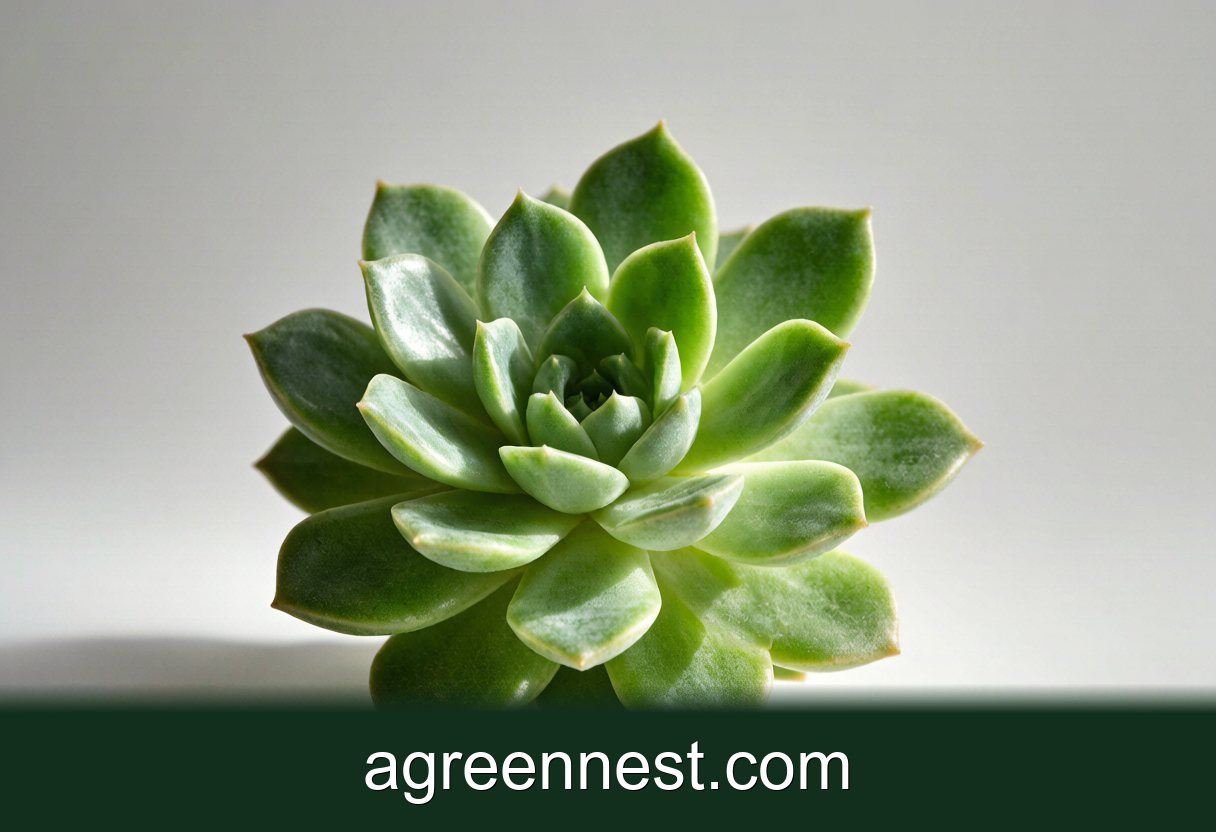
The secret to a happy Ghost Echeveria Care Guide (Echeveria Lilacina) is restraint. Place it in bright, indirect light, then wait until the soil is bone dry before watering (16 days between waterings). Use a lean, sandy soil and a porous pot so excess moisture escapes fast and rot never gets started.
Ghost Echeveria at a Glance
| Care factor | What Ghost Echeveria wants |
|---|---|
| Light | bright indirect light with a little gentle morning sun |
| Water | a deep drink only when the soil is bone dry, about every 16 days |
| Temperature | steady comfort between 50 and 78°F (10 and 26°C) |
| Humidity | ordinary dry room air is perfectly fine |
| Soil | a gritty, free draining succulent blend |
| Difficulty | straightforward once the basics are right |
| Pet safe | no, keep it away from cats and dogs |
Ghost Echeveria looks as though someone dusted each leaf with pale grey flour. Echeveria lilacina forms a tight rosette of fleshy spoon shaped leaves in soft lilac grey. My own plant arrived tiny in a two inch pot and doubled in width within a single summer. That powdery coating, called farina, is the feature collectors love most about it. The ghost name comes from this ghostly bloom that catches low evening light beautifully. Nearby Echeveria elegans shares the same care and makes a pretty companion with its softer green tone.
What light does Ghost Echeveria need?
Bright indirect light keeps the rosette compact and the colour at its best. A south or east window with a sheer curtain gives the right balance through the day. Pale stretching between leaves means the plant wants more light than it receives. Move it nearer the glass, or run a grow light for twelve hours daily. A little direct morning sun is welcome, but hot afternoon rays scorch the farina. Shield the rosette from the harshest west light that burns tender tissue. Good airflow around the pot also keeps the leaves firm and unmarked.
How often should you water Ghost Echeveria?
Restraint matters more than routine with this particular succulent. Wait until the soil is completely dry, then soak the pot thoroughly at the sink. During spring and summer, a drink every 14 to 18 days keeps it thriving. Cooler months slow everything, so water roughly every five weeks instead. A weigh test helps: a dry pot feels markedly lighter than a fresh one. Pour off any water left in the saucer after twenty minutes without fail. Wrinkled lower leaves show thirst, while translucent yellow ones show harm from too much moisture.
Soil and pot choice
Dense soil is the quickest way to lose a Ghost Echeveria to rot. Mix two parts succulent blend with one part pumice for a lean open home. That two to one recipe drains fast and keeps the roots cool and dry. Shallow clay pots suit these shallow rooted plants better than deep containers. Drainage holes must be present, since a sealed pot traps fatal moisture at the base. Top dress with a layer of fine gravel to keep the lower leaves off damp soil. Repot only every two to three years, or when offsets crowd the rim.
Temperature and humidity
Mild temperatures between 50 and 78°F (10 and 26°C) suit Echeveria lilacina best of all. It dislikes heat above 85°F (29°C) and sulks through humid, sticky summers. Keep the plant on a breezy shelf rather than against a still warm wall. Humidity should stay low, so skip the pebble tray that other plants enjoy. Ordinary living room air is ideal, and a fan on low prevents stagnant corners. Frost will wreck the leaves, so bring it indoors well before the first cold night. Sudden temperature swings can also mark the farina with spots.
How do you propagate Ghost Echeveria?
Offsets that ring the mother give the simplest start to new plants. Slip a small pup from the base with a gentle twist and a clean blade. Let the wound dry for two full days before it touches any soil. Leaf propagations work too: lay a healthy leaf on dry grit and wait for roots. Tiny pink roots appear after four to six weeks in a warm bright place. Wait until each baby shows three leaves before you pot it alone. Graptopetalum paraguayense can be raised the same gentle way if you want variety. Young rosettes in a three inch pot settle in fast and reward patience.
Common problems and easy fixes
Stretched open growth means the plant is hunting for brighter light. Shift it into stronger indirect sun and the new leaves will tighten up. Mushy black bases signal overwatering, so stop and let the soil dry fully. Brown scorched patches come from too much direct afternoon sun on the farina. Move the pot back from the glass or add a light curtain. Mealybugs hide beneath the lower leaves and leave white cottony clumps. Dab them with alcohol on a swab, then inspect again after a few days. Aphids sometimes gather on fresh flower stalks in spring. Rinse the plant with a brisk tepid spray to dislodge most of them quickly.
Why are the leaves losing their powder?
The white farina is a natural sunscreen the plant cannot regrow once rubbed off. Handling the leaves with bare hands transfers oil that erases the bloom. Touch the pot instead of the rosette when you move it around. Water from below or pour carefully so drops do not spot the coating. Bright but indirect light preserves the ghostly finish far better than harsh sun. Once the powder is gone, that leaf stays bare, though new growth will be coated again.
Frequently Asked Questions
Q: How often should I water Ghost Echeveria?
A: Soak it only when the soil is bone dry, about every 14 to 18 days in the warm season and far less in winter. Always empty the saucer so the roots stay dry.
Q: Is Ghost Echeveria safe for pets?
A: No, the leaves are toxic to cats and dogs if chewed. Keep the pot on a high shelf or in a room your animals cannot reach.
Q: Why is my plant stretching and losing colour?
A: Stretching and fading mean it needs more light. Move it to brighter indirect sun, or add a grow light for twelve hours a day.
Ghost Echeveria rewards a careful hand with one of the calmest, most sculptural succulents you can grow. In my own collection it became the plant friends remember long after they leave. Pair it with our free watering calculator and the light calculator to find its perfect spot, then simply enjoy that quiet grey glow.
Sources & further reading
GreenNest authors research and write every guide independently. The external links below are reputable references we recommend for deeper reading — they are not the sources we copied from.
- UF/IFAS Gardening Solutions — UF/IFAS
- Royal Horticultural Society — Houseplant care — RHS
- Royal Botanic Gardens, Kew — Kew Gardens
Recommended Tools for Succulent Care
Free, no-signup helpers matched to this guide.
Free Ebooks to Explore
Downloadable handbooks — no email required.
Free Ebook
The AGreenNest Succulent Care Handbook
The complete, beginner-to-confident guide to growing fat, happy succulents — 10 chapters and a 20-plant directory.
Free Ebook
Haworthia & Haworthiopsis Care Handbook
A focused guide to the striped, forgiving Haworthia clan.
Share Your Plant Story
Grown something tricky, or found a trick that finally worked? Tell us in the comments, or see what other readers are sharing on our Community page. The best reader tips get folded back into our guides.
Join the Conversation
Have a tip or a question about Ghost Echeveria Care Guide (Echeveria lilacina)? Share it below — comments are saved on our server.