 AGreenNest
Succulent Care
Painted Echeveria Care Guide (Echeveria pulidonis)
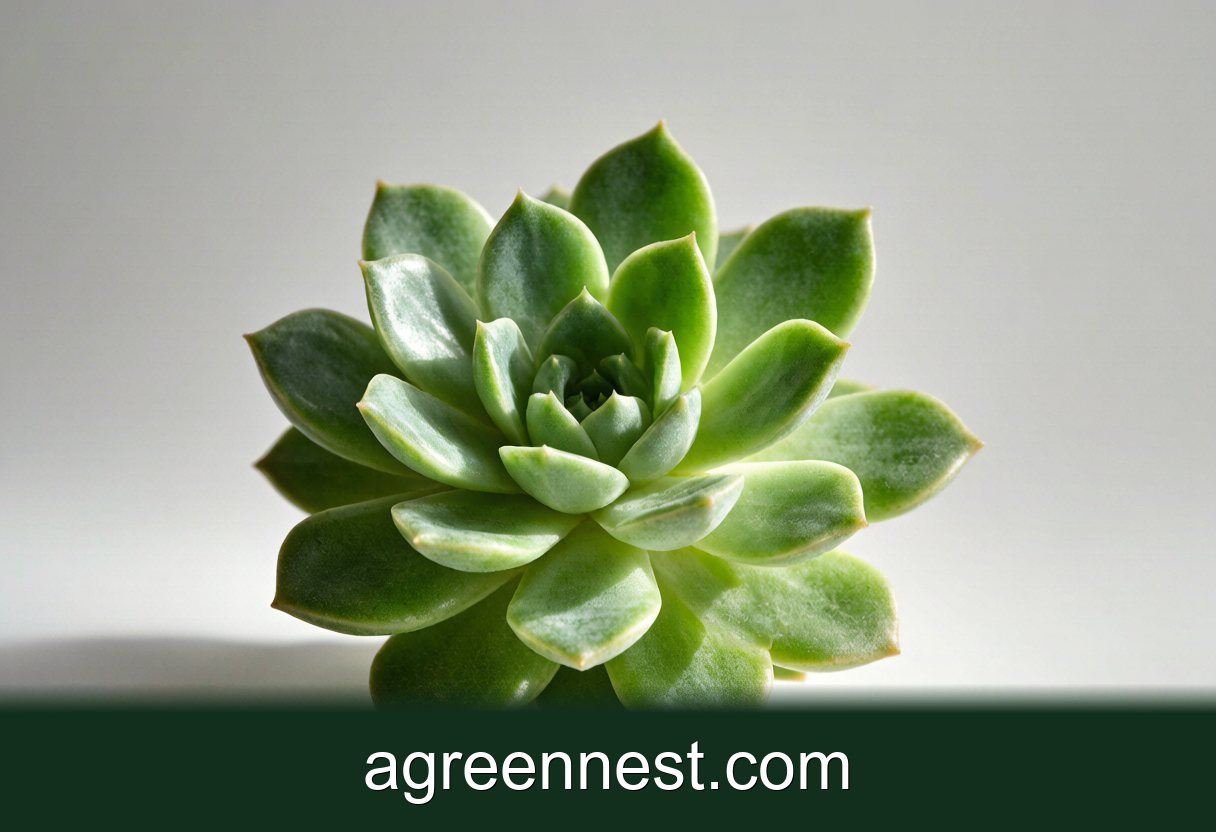
The secret to a happy Painted Echeveria Care Guide (Echeveria Pulidonis) is restraint. Place it in a few hours of direct sun, then wait until the soil is bone dry before watering (14 days between waterings). Use a lean, sandy soil and a porous pot so excess moisture escapes fast and rot never gets started.
Getting to Know Painted Echeveria
My painted echeveria started as a single rosette at a garden sale, priced so low I almost didn't trust it. Echeveria pulidonis has since become the centrepiece of my brightest shelf, and I understand the appeal completely. Its spoon shaped leaves carry a soft powder blue body with crisp red tips that appear only when the light is strong.
The plant belongs to a large group of Mexican and Central American succulents, and the painted form is one of the most forgiving. A close cousin, Echeveria elegans, shows the same waxy rosette habit in a paler, pearl toned colour. Both share that satisfying symmetry which makes echeverias such a joy to photograph.
What I love most is how the red edging deepens through the cooler months. On a grey winter morning that little flush of colour on the windowsill feels like a small private sunset. Give this plant the basics and it will quietly thrive for years.
What Kind of Light Does Painted Echeveria Need?
This is a sun lover, plain and simple. In my flat it sits where it gets full, direct sun for most of the day, and the red tips are the proof that it is happy. Aim for at least 6 hours of bright light, with as much direct sun as you can manage without cooking the leaves.
If your only option is a bright but indirect window, the plant will live, yet the edges stay green and the rosette loosens. A grow light aimed from above for 12 to 14 hours a day fixes that fast. Rotate the pot a quarter turn each week so every side receives even exposure and the shape stays balanced.
How Often Should You Water Painted Echeveria?
Water deeply only when the soil has dried out completely. Through spring and summer I water roughly every 14 days, then I cut back to once every 4 to 5 weeks in winter when the plant rests. The calendar is a loose guide, not a rule, so I always check the soil first with a finger.
Pour slowly until liquid runs from the drainage hole, then discard the saucer water after a few minutes. The rosette should stay dry, because trapped moisture in the centre invites rot. On the rare hot day the lower leaves may feel soft, which is fine, but a mushy crown is a warning you waited too long or watered too often.
Painted echeveria tolerates a touch more moisture than some of its relatives, which is why beginners do well with it. Even so, underwatering is far kinder than overwatering, and the plant bounces back from a dry spell faster than from wet feet.
Soil, Pots, and Drainage
A dense, peat heavy mix will hold water and sour the roots. I use a blend of roughly 50% cactus soil and 50% pumice or coarse grit, which drains almost immediately after a soak. That open structure is the real secret behind healthy echeverias.
Shallow clay pots suit these shallow rooted plants better than deep containers. A genuine drainage hole is essential, and I avoid decorative pots without one by nesting a plain nursery pot inside. Repot in early spring every two to three years, moving up just one size so the roots are not lost in cold, wet soil.
Keeping the Temperature Right
Painted echeveria is content in a band from 50 to 80°F (10 to 27°C). It shrugs off a cool night better than a stuffy heated room. I keep mine off the radiator and away from the icy draft of an open window, because sharp changes make the leaves drop.
Normal household humidity, around 30% to 50%, is ideal. Skip the mister. Dry air and steady movement keep the powdery farina intact and the foliage firm. A small fan on low nearby during humid summer weeks helps prevent the still, damp conditions that fungi enjoy.
How Do You Propagate Painted Echeveria?
The easiest route is a single leaf. Twist it from the stem cleanly, let the wound dry for a day or two, then rest it on dry soil. Within two to three weeks a tiny rosette forms at the base, and you can begin light misting.
Offsets, the small pups at the foot of the mother plant, root even faster. I ease them free with a clean knife, dry the cut, and set them in their own gritty pot. Three to four weeks later they are established. Sharing these little starts has built a small circle of plant friends in my building.
Common Problems and Easy Fixes
- Leaning or stretched growth means the light is too weak. Move the pot to a sunnier spot or add a grow light from above.
- A mushy, yellow base points to overwatering. Let the soil dry out fully and inspect the roots for dark, rotten sections.
- Brown, crispy edges often come from salt build up or very dry air. Flush the soil with plain water and lift the humidity a little.
Frequently Asked Questions
Can painted echeveria live outdoors in summer?
Yes, it enjoys a sheltered, sunny patio once night temperatures stay above 50°F (10°C), but bring it back inside before the first cool night.
Is painted echeveria safe for pets?
No. The sap and leaves can irritate a cat or dog if chewed, so keep the pot on a high shelf or in a terrarium.
Why are the leaf tips turning red?
That flush is a healthy response to strong light. Tips fading to green simply mean the plant would like more sun.
Painted echeveria proves that a stunning succulent need not be difficult. Give it sun, a fast draining pot, and the discipline to water only when the soil is dry, and those red tipped rosettes will reward you for years. For a plan built around your home, try our free watering calculator and the light calculator to choose the brightest corner.
Sources & further reading
GreenNest authors research and write every guide independently. The external links below are reputable references we recommend for deeper reading — they are not the sources we copied from.
- Royal Horticultural Society — Houseplant care — RHS
- Missouri Botanical Garden — Missouri Botanical Garden
- Royal Botanic Gardens, Kew — Kew Gardens
Recommended Tools for Succulent Care
Free, no-signup helpers matched to this guide.
Free Ebooks to Explore
Downloadable handbooks — no email required.
Free Ebook
The AGreenNest Succulent Care Handbook
The complete, beginner-to-confident guide to growing fat, happy succulents — 10 chapters and a 20-plant directory.
Free Ebook
Haworthia & Haworthiopsis Care Handbook
A focused guide to the striped, forgiving Haworthia clan.
Share Your Plant Story
Grown something tricky, or found a trick that finally worked? Tell us in the comments, or see what other readers are sharing on our Community page. The best reader tips get folded back into our guides.
Join the Conversation
Have a tip or a question about Painted Echeveria Care Guide (Echeveria pulidonis)? Share it below — comments are saved on our server.