 AGreenNest
Hydroponic Growing
Clay Pebbles (Hydroponics)
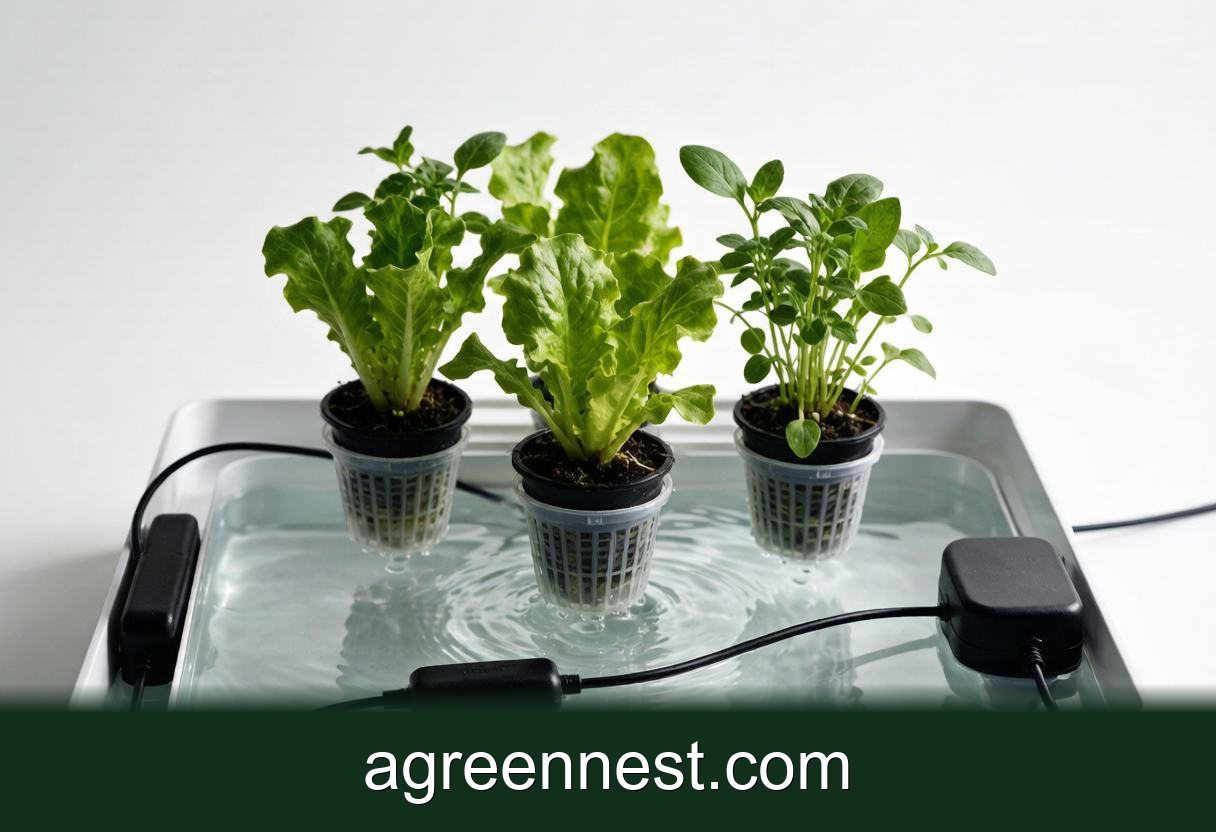
Run Clay Pebbles (Hydroponics) at steady strength: 1.5-2.0 EC, pH 5.8-6.2, reservoir 18-22 C. Provide 13-16 hours of grow-light or bright supplemental light for 14-16 hours a day. The only common failure is stale solution, so top up daily and swap the reservoir every 7-14 days so roots stay white and active.
What Are Clay Pebbles?
Expanded clay pebbles are fired balls of clay, roughly 8 to 16 mm across, with a porous skin and a hollow core. Manufacturers heat raw clay to about 1200 °C so it puffs and hardens, much like popcorn. The result weighs little, drains fast, and holds a thin film of moisture against the root zone.
Growers call them LECA, Hydroton, or simply clay balls. They are inert, which means they add no nutrients of their own. That is the whole point. They only give roots something to grip and a steady supply of oxygen at the surface.
These pebbles suit flood and drain systems, deep water culture, and the passive Kratky method. They do not break down, so a single batch lasts for years if you rinse and reuse it. The upfront cost pays back through repeated cycles.
Why Use Clay Pebbles In Hydroponics?
Three reasons stand out for new growers. First, oxygen reaches the roots because the medium stays loose and airy between floods. Second, the balls wick a thin layer of nutrient solution upward, so roots never sit fully submerged in still water. Third, they are clean and reusable, which cuts waste and cost over time.
Soil mixes hold disease and compact after a single season. Clay pebbles do neither. Roots also stay white and healthy because the system stays cool and well aired. For beginners, the simple physics make success more likely than with finicky media that need constant tuning.
The trade off is weight when wet and the need to rinse dust before use. Both are minor. A single 10 litre bag supports several small pots, and the same pebbles return for the next crop without replacement.
Beginners often ask whether pebbles cost more than soil. They do at first, yet one bag serves many crops. Over a year the reuse easily beats buying bags of potting mix that clump and spoil. The cleaner result also means fewer pests on the windowsill.
EC, pH, and Reservoir Numbers
Run the reservoir at 1.5 to 2.0 EC for leafy crops and most houseplants. Keep pH at 5.8 to 6.2 so nutrients stay available to the root across the full range. Hold the solution temperature between 18 to 22 °C (64 to 72 °F). Warm solution above 24 °C (75 °F) loses oxygen fast and invites root rot within days.
Light drives growth. Give plants 14 to 16 hours of bright light per day, from a grow lamp or strong supplemental source. A timer keeps the cycle steady without daily effort. Top up the reservoir every day with plain water to replace what the plant drinks, because evaporation concentrates salt and pushes EC upward.
Swap the full reservoir every 7 to 14 days so the mix stays fresh. Stale solution is the single most common failure, and it turns roots brown at the tips. Measure EC and pH every two days, and correct with small doses rather than large jumps.
Watch the leaves for cues. Tip burn on older leaves points to salt build up, so lower EC by 0.2 and flush the tank. Pale new leaves with green veins signal iron lockout, which pH below 5.8 causes. Raise pH toward 6.0 to free the nutrient.
How Do You Prepare and Run a System?
Rinse the pebbles in a bucket before use. Agitate them under running water until the rinse runs clear, which removes the fine clay dust that would otherwise clog pumps and cloud the tank. Fill the net pot one third with pebbles, set the seedling or rooted cutting in place, and pack gently around the stem.
Place the pot so the base touches the nutrient line. In flood and drain, the pump should wet the roots 4 to 6 times per day for 10 to 15 minutes each cycle. In Kratky, leave a 2 to 5 cm air gap below the root crown and let the level drop slowly as the plant drinks. Check EC and pH every two days with a meter, and correct with small doses of A and B nutrient mixed separately.
Start seedlings in a 1.0 to 1.2 EC solution, then raise strength to 1.5 to 2.0 EC as true leaves form. Sudden high feed shocks young roots, so ramp up over one week.
Which Crops Work Best?
Leafy greens lead the list. Lactuca sativa (lettuce) and Lepidium sativum (watercress) grow fast and forgive small errors in mixing. Mentha (mint) and sweet basil also thrive in pebbles with minimal care.
Fruiting plants such as Fragaria (strawberry) work but need stronger feed near 2.0 EC and more light at 16 hours. Ornamental types do well too. Epipremnum aureum (pothos) and lucky bamboo transition from soil to pebbles with ease once the soil is washed from the roots. Avoid large root crops and anything that needs a deep, dense medium, because the loose balls cannot anchor heavy tops in wind or draft.
Herbs from the supermarket work as a first project. Root a basil or mint stem in water, then move it into pebbles once white roots reach 3 to 5 cm. The transition is quick, and a single plant proves the method before you scale up.
Frequently Asked Questions
Q: Do I need pumps and timers?
A: Not always. Passive systems like Kratky need none, while active systems (DWC, NFT) do.
Q: Is hydroponic food the same as normal fertiliser?
A: No. Use a proper two-part A/B hydroponic nutrient. Ordinary soil fertiliser will clog lines and unbalance the solution.
Q: Why are my leaves pale?
A: Usually the pH is off, so roots cannot absorb the food. Test and correct to 5.8 to 6.2.
Q: Can I move a soil plant to water?
A: Soft-stemmed types like pothos and lucky bamboo transition easily; most soil root balls do not.
Clay pebbles are a reliable, low-mess way to grow without soil. Start small with our hydroponics guide and track every reservoir change in the care schedule tool. Steady numbers beat guesswork, so measure often and swap the tank on schedule.
Recommended Tools for Hydroponic Growing Care
Free, no-signup helpers matched to this guide.
Free Ebooks to Explore
Downloadable handbooks — no email required.
Free Ebook
The AGreenNest Succulent Care Handbook
The complete, beginner-to-confident guide to growing fat, happy succulents — 10 chapters and a 20-plant directory.
Free Ebook
Haworthia & Haworthiopsis Care Handbook
A focused guide to the striped, forgiving Haworthia clan.
Sources & further reading
GreenNest authors research and write every guide independently. The external links below are reputable references we recommend for deeper reading — they are not the sources we copied from.
- UA Controlled Environment Agriculture Center — U Arizona CEAC
- UF/IFAS Gardening Solutions — UF/IFAS
- Oregon State University Extension — Oregon State Extension
Share Your Plant Story
Grown something tricky, or found a trick that finally worked? Tell us in the comments, or see what other readers are sharing on our Community page. The best reader tips get folded back into our guides.
Join the Conversation
Have a tip or a question about Clay Pebbles (Hydroponics)? Share it below — comments are saved on our server.