 AGreenNest
Low-Light Indoor Plants
Scindapsus treubii Low-Light Care Guide
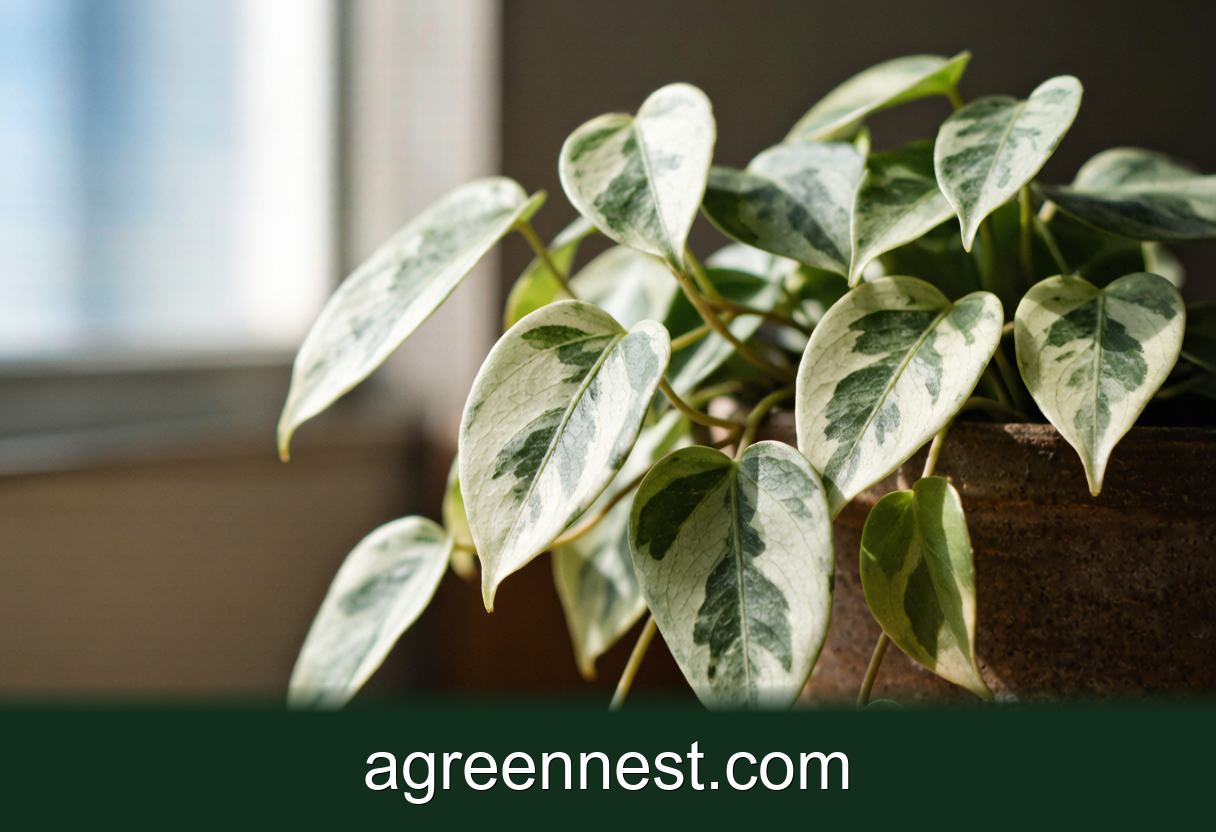
Do not overthink Scindapsus Treubii Low-Light. It thrives in bright, indirect light and asks for little: water when the top layer of soil dries (10 days between waterings), and keep it away from harsh midday sun. A slightly lean soil and a stable, warm spot are all it needs to look good through the year.
Scindapsus treubii is the plant I hand to friends who swear they kill everything. The dark form, with its near-black green leaves, sits calmly in corners where other vines give up, and it asks for almost nothing.
My mother, who once drowned a cactus, has kept hers alive for four straight years on a shadowy stair landing. That track record is why I call it the most beginner-proof trailing plant I have ever grown.
Getting to Know Scindapsus treubii
My own plant lives on a dim bookshelf, and after a year it has trailed a full 18 inches without a single complaint. Those leaves are thick and leathery, almost velvety, which is why they hold their glossy look even far from a window.
Unlike the flashy variegated types, Scindapsus treubii makes a quiet, confident statement. Its close cousin Scindapsus pictus carries silver splashes, but I love the dark form for the way it anchors a room.
I trained mine up a small moss pole, and within eight months the stems had wrapped the post with a dozen leaves. The new growth came in a touch lighter, which told me the corner was a hair too dim, and a simple shelf move deepened the color again.
Can Scindapsus treubii Really Grow in Low Light?
Yes, and this is the question I get most. It tolerates low light, though the leaves grow smaller and the pace slows. Bright indirect light gives the fullest foliage, and a north window is a safe middle ground I recommend often.
In a genuinely dark room, a grow light running 9 to 11 hours a day keeps growth steady. Mine runs on a timer, so the plant gets a consistent 10 hours without me thinking about it.
A reader once emailed to say hers thrived under a single north window with zero supplemental light for a whole winter. Growth nearly stopped, true, but the leaves stayed glossy, which is more than most pothos relatives can claim in that spot.
How Often Should I Water?
Water every 7 to 10 days, letting the top 1 to 2 inches of soil dry first. The thick leaves store water, so I consider underwatering the safer mistake by far.
A moisture meter saved my early attempts, and I aim for a dry 2 inch reading before I pour. In winter the plant slows, so I stretch to every 10 to 14 days and watch the leaves rather than the clock.
On vacation last spring I left for twelve days in cool weather, and the soil was still faintly damp at the 2 inch mark on return. That resilience is exactly what makes the plant so kind to busy or forgetful owners.
Temperature and a Warm Spot
Keep your plant in a warm 65°F (18°C) to 85°F (29°C) range for even growth. It handles normal household temperatures with ease but sulks if the thermometer dips below 60°F (16°C).
Cold drafts near windows and blasting AC vents are the enemies I watch for. Stable warmth matters more than high humidity, though average room humidity suits it fine.
I once placed a humidifier nearby for a month and noticed no real change, which confirmed that warmth beats moisture for this particular plant.
Thick Leaves That Hold Water
The standout trick of Scindapsus treubii is succulent-like foliage that stores moisture. That built-in reservoir is why it forgives a forgotten watering better than thin-leaved vines.
If the leaves look a little soft, it is usually thirst, not sickness. A good soak and a dry-out cycle restores the plump look within 3 to 4 days.
I learned this the hard way after a two week trip where I expected trouble and found none. The foliage had plumped up beforehand and coasted, showing me that the leaves really do act like a built in canteen.
Feeding and Repotting
I feed every 4 to 6 weeks through spring and summer with a half-strength liquid fertilizer. Its slow metabolism needs little, and winter feeding only wastes nutrients.
Repot only every 2 to 3 years, or when roots escape the bottom. This slow grower is content slightly pot-bound, and it dislikes excess soil that stays damp.
When I do move it up, I go just one pot size larger, from a 6 inch to an 8 inch container, so the mix dries at the same relaxed pace it prefers.
What Should I Do About Common Problems?
Small, widely spaced leaves signal too little light, so move the plant brighter or add a grow light. Mushy stems at the soil line mean overwatering, and I let the soil dry and improve drainage right away.
Pale, washed-out leaves come from too much direct sun, and a shift to filtered light fixes it. Most other slowness is simply the species being itself, which warmer temperatures and patience ease.
Frequently Asked Questions
Q: How often should I water Scindapsus treubii?
A: Water every 7 to 10 days, letting the top 1 to 2 inches dry, and slow to every 10 to 14 days in winter.
Q: Can Scindapsus treubii grow in low light?
A: Yes, it tolerates low light, though growth is slower and the leaves stay smaller than in bright indirect light.
Q: Is Scindapsus treubii safe around pets?
A: No, it contains calcium oxalates and is toxic to cats and dogs if chewed, so place it out of reach.
Scindapsus treubii is a tough, good-looking answer for anyone fighting dim corners at home. Pair it with other shade lovers from our low-light plant hub, and you will have a foolproof green corner that thrives on neglect.
Recommended Tools for Low-Light Indoor Plants Care
Free, no-signup helpers matched to this guide.
Free Ebooks to Explore
Downloadable handbooks — no email required.
Sources & further reading
GreenNest authors research and write every guide independently. The external links below are reputable references we recommend for deeper reading — they are not the sources we copied from.
- Royal Horticultural Society — Houseplant care — RHS
- NC State Extension — Plant Toolbox — NC State Extension
- Royal Botanic Gardens, Kew — Kew Gardens
Share Your Plant Story
Grown something tricky, or found a trick that finally worked? Tell us in the comments, or see what other readers are sharing on our Community page. The best reader tips get folded back into our guides.



Join the Conversation
Have a tip or a question about Scindapsus treubii Low-Light Care Guide? Share it below — comments are saved on our server.