 AGreenNest
Plant Styling & Display
One Big Plant vs Many Small: Which Wins?
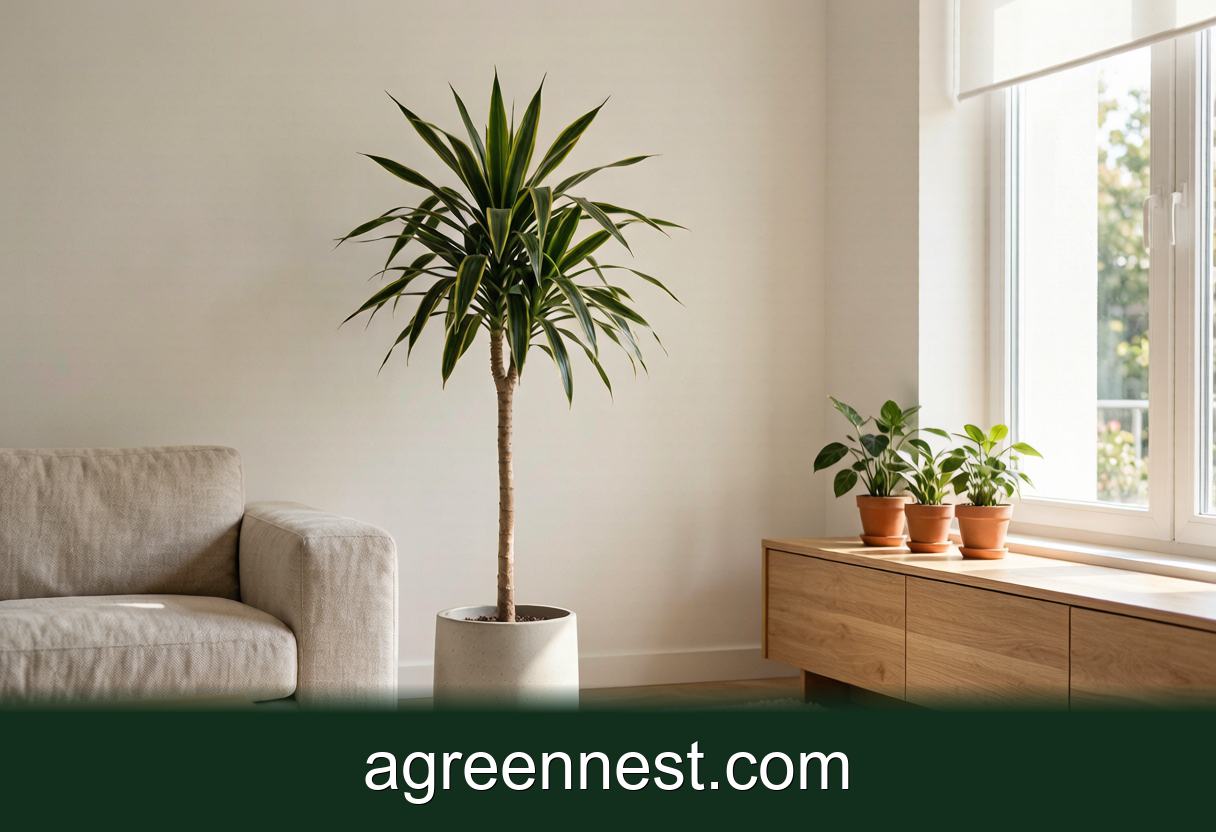
One large plant suits open floor space, high ceilings and low patience: a single 1.6 m specimen anchors a room and takes about 4 minutes of care a week. Five small plants cost less, fit windowsills where the light actually is, and need roughly ten minutes plus more decisions.
A client once asked me to fix a living room that felt empty despite holding fourteen plants. Every one of them was a 12 cm pot. Scattered across two shelves, a sideboard and a windowsill, they read as clutter rather than greenery, and the two metres of blank wall by the sofa still swallowed the room.
We moved eleven of those plants into a bedroom, bought one Dracaena fragrans at 1.7 m, and the space finally settled. Not because big is better. Because that particular room had a scale problem, and scale problems need scale answers.
Should You Buy One Big Plant or Five Small Ones?
Ask what the room is short of.
Short of presence, structure, or something to fill vertical space above 1 m? One large plant. Short of life on surfaces, colour at eye level, or a way to soften a hard shelf? Several small ones.
The budget lands in similar territory either way. A 1.5 to 1.8 m specimen in a 30 to 35 cm nursery pot usually runs 60 to 130 depending on species, and five 12 cm plants at 8 to 15 each land between 40 and 75. Where they differ sharply is everything after the purchase.
What a Single Large Plant Does to a Room
It gives the eye a stopping point. A room without one large vertical element makes people scan restlessly, which is the feeling my client described as empty.
Scale rule I use constantly: a floor plant should reach roughly two thirds of the ceiling height in the sightline where it sits. A standard 2.4 m ceiling wants a plant that finishes between 1.4 and 1.7 m, including the pot. Under 1.1 m, a floor plant looks like it is waiting for a table. The statement floor plant guide goes deeper on placement.
Big plants also carry a room with fewer objects, which matters in small flats. One Ficus lyrata by a window leaves the sideboard clear, and clear surfaces make a room feel larger. My own living room ran on exactly two plants for a year, and nobody ever described it as sparse.
The catch is light, and it is a serious catch. Floor plants stand where furniture allows, which is often 2 to 3 m from the glass. I have measured 200 to 400 lux in those spots at midday in a north-facing room, against 3,000 to 8,000 lux on the sill of the same room. A Ficus lyrata at 300 lux drops leaves within three months. Before you spend three figures, take a reading with the phone method in the lux test.
Where Does a Cluster of Small Plants Win?
Anywhere the light is good and the floor space is not.
Windowsills, shelves, a narrow kitchen rail: these are bright, and they are the wrong shape for anything with a 35 cm pot. A row of Peperomia obtusifolia, Pilea peperomioides and Haworthiopsis attenuata on a sunny sill will thrive where a floor specimen slowly declines two metres behind them.
Small plants also let you build a composition. Three pots at 15, 25 and 40 cm tall create a rhythm that one object cannot, and grouping raises the humidity in the pocket between them by a few percent. The layering and height rules and plant grouping rules both apply: odd numbers, varied heights, repeat one material to hold it together.
Then there is risk. Losing a 12 cm Calathea costs 10 and a shrug. Losing a 1.6 m Strelitzia nicolai costs 120 and a hole in the room you will notice every day for a year. Small plants are how you experiment with a species before you commit to a big one.
The failure mode is what my client had. Small plants spread thinly across every horizontal surface stop being a display and start being visual noise. Cluster them in two or three deliberate groups, and leave whole surfaces empty on purpose.
The Care Bill Nobody Compares
Rough figures from my own rounds, per week:
- One 1.6 m floor plant: about 4 minutes. Watering 2 to 3 litres every 10 to 14 days, a leaf wipe monthly, a quarter turn weekly. One decision to make.
- Five 12 cm plants: about 10 to 12 minutes. Each takes 150 to 300 ml, and they dry at different rates because pot size, mix and position all differ. Five decisions, and that is where beginners drown things.
Repotting flips the comparison. A small plant goes up a size in 5 minutes at the sink. Moving a 1.7 m Dracaena from a 30 cm to a 35 cm pot means 25 litres of mix, a second pair of hands, and a tarp. I do it every 3 to 4 years and dread it each time.
Also worth weighing: a big plant has to fit through doorways and into lifts, and it will not enjoy a 40 minute car journey lying sideways in July.
How to Choose in Your Actual Room
Four checks, in order:
- Measure the empty vertical space. More than 1.2 m of blank wall or corner above floor level is a case for one big plant.
- Measure the light where the plant would physically stand. Under 500 lux for most of the day rules out large tropicals and points you back to the windowsill.
- Count the free surfaces. Two or more clear ledges at different heights suit a cluster better than a floor specimen.
- Be honest about time. Under 10 minutes a week, buy one plant, not five.
In practice most rooms want both, in a ratio of about one large plant to every three or four small ones. My living room runs one 1.6 m Dracaena fragrans, a group of three on the coffee table and two on the sill. Nine would be too many for 18 m², a question covered in how many plants one room can hold.
Frequently Asked Questions
Q: I have a 2.6 m ceiling and a very small room. Does a tall plant make it feel cramped?
A: Usually the opposite, if the plant has a bare trunk or open structure. Height draws the eye upward and emphasises the ceiling. What shrinks a small room is a dense, wide plant at chest height blocking a sightline. Room-shrinking effects covers which shapes are safe.
Q: Can I grow one small plant into a big one instead of buying a big one?
A: Yes, and it costs a fraction. Set expectations: a 40 cm Ficus elastica takes 4 to 6 years to reach 1.5 m indoors, faster with a grow light and a spring feed. Fast growers like Dracaena fragrans and Monstera deliciosa get there sooner.
Q: Which large plants tolerate a dim corner best?
A: Zamioculcas zamiifolia, Dracaena trifasciata and Aspidistra elatior hold form at 300 to 600 lux, though growth nearly stops. Ficus lyrata, Strelitzia and most palms will not.
Q: How many small plants can I group before it looks messy?
A: Five to seven per grouping, in no more than two pot materials and three pot colours. Past that, split into a second group at a different height rather than extending the row.
Q: I rent and move every year. Which option is more practical?
A: Small plants, by a wide margin. They survive car journeys, fit boxes, and adapt to whatever light the next flat has. Rental-friendly styling is built around exactly that constraint.
Neither option is the better style choice on its own. One large plant solves scale and empty vertical space, a group of small ones solves surfaces, light access and the itch to collect. Measure the light in the exact spot first with our free light calculator, because the most beautiful plan for that corner is worthless if the corner is dark.
Sources & further reading
GreenNest authors research and write every guide independently. The external links below are reputable references we recommend for deeper reading — they are not the sources we copied from.
- Royal Horticultural Society — Houseplant care — RHS
- Missouri Botanical Garden — Missouri Botanical Garden
- NC State Extension Plant Toolbox — NC State Extension
Recommended Tools for Plant Styling & Display Care
Free, no-signup helpers matched to this guide.
Free Ebooks to Explore
Downloadable handbooks — no email required.
Free Ebook
The AGreenNest Succulent Care Handbook
The complete, beginner-to-confident guide to growing fat, happy succulents — 10 chapters and a 20-plant directory.
Free Ebook
Haworthia & Haworthiopsis Care Handbook
A focused guide to the striped, forgiving Haworthia clan.
Share Your Plant Story
Grown something tricky, or found a trick that finally worked? Tell us in the comments, or see what other readers are sharing on our Community page. The best reader tips get folded back into our guides.
Join the Conversation
Have a tip or a question about One Big Plant vs Many Small: Which Wins?? Share it below — comments are saved on our server.