 AGreenNest
Hydroponic Growing
I Grew Bok Choy 3 Ways in Hydroponics: The Results
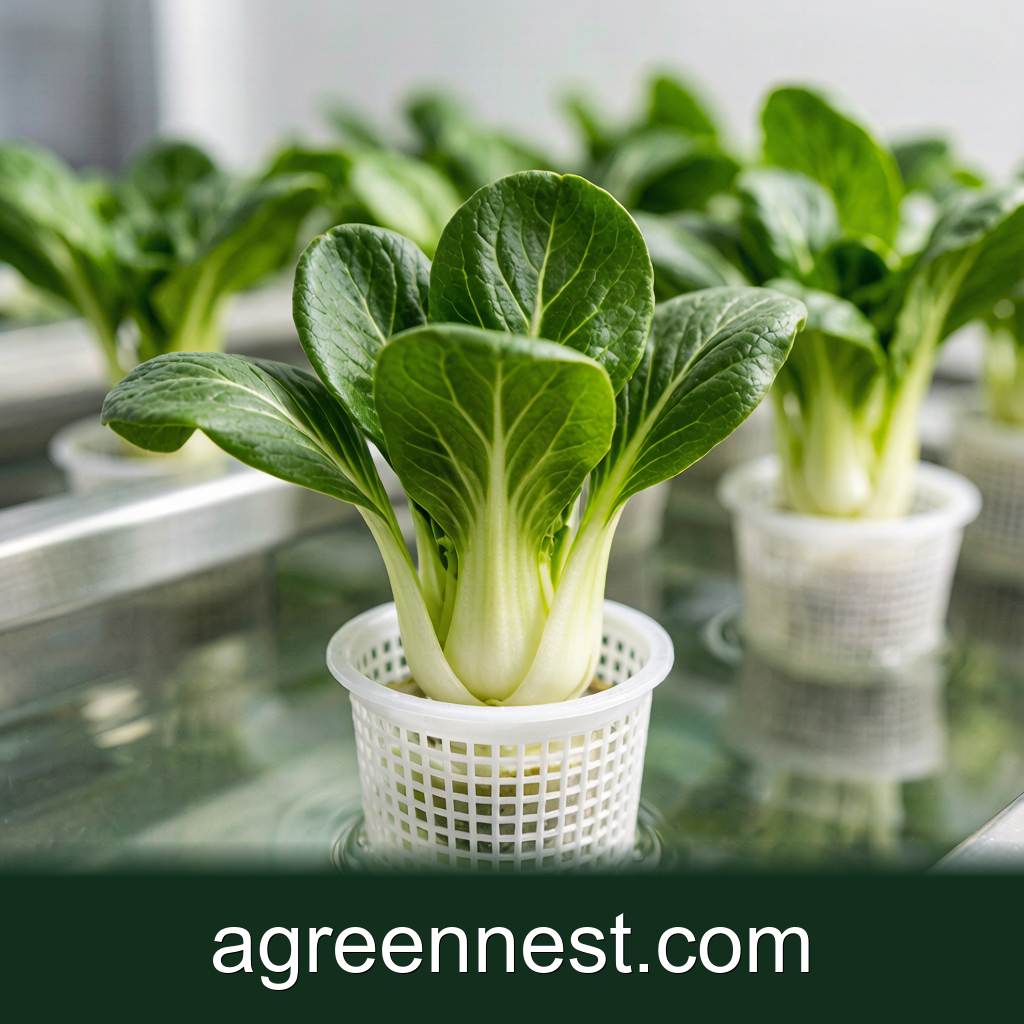
I Grew Bok Choy 3 Ways in Hydroponics grows fastest with 51 days between waterings at 18-22 C. Aim for 1.5-2.0 EC and pH 5.8-6.2, and give 13-16 hours of grow-light or bright supplemental light (14-16 hours daily). Keep roots dark and aerated, and change the reservoir every 1-2 weeks to avoid salt buildup.
I planted 12 bok choy seedlings on the same morning and split them across three hydroponic systems. Fifty-one days later every head went on the scale. That spread between best and worst ran bigger than I expected, and it changed which system I will run next time.
A note before the numbers: this was one run in one spare room, not a lab study. Your temperatures and light will shift the results. But the gaps were wide enough that the pattern is worth sharing.
The setup: same seed, same room, three systems
All 12 plants were Brassica rapa subsp. chinensis (the white-stem bok choy, not the soup spoon type), started from the same seed packet and moved to the systems at the same two-leaf stage. My spare room sat at 19 to 23°C (66 to 73°F). A single T5 LED bar ran over each, about 14 hours a day, since the room has no window worth mentioning.
Three systems shared the room: - Kratky: my three plants went in a 10-litre black tub, net pots, no pump, water topped up by hand. - Deep water culture (DWC): three plants shared a 12-litre reservoir with an air stone running 24 hours a day. - Nutrient film technique (NFT): six plants rode a 1.5-metre channel with a small recirculating pump.
All used the same base nutrient at 1.5–1.6 EC and pH held between 5.8–6.2. See the hydroponic nutrients guide for how I mix and check that.
What Did I Measure, and How?
At day 51 I cut each head at the base, shook off water, and weighed it on a kitchen scale. My log also tracked the day each plant reached a usable baby bok size, about 12cm tall, and how much time went to maintenance.
Kratky: the lazy winner
Kratky needed almost nothing from me after the first fill. By day 30 the three plants were a solid 12 to 14cm and crisp. Final weights averaged 180g per head. Kratky leaves looked a touch lighter green than the DWC plants, which tells me nutrient strength could have gone up a notch, but nothing looked deficient.
Beginners get this system from me first. No pump to fail, no electricity bill, and the Kratky method guide gets you started in an afternoon.
Deep water culture: biggest but neediest
DWC produced the heaviest heads by a clear margin, averaging 240g, with the widest stems. Attention was the catch. An air stone ran constantly, the reservoir warmed near the heater one week and I swapped in a frozen bottle to keep it under 24°C (75°F), and the water level needed checking every few days.
Max yield with a daily glance goes to DWC. The deep water culture walkthrough covers the air-stone detail that keeps roots from drowning.
NFT: fastest start, then it stalled
That system sprinted out of the gate. Those six plants hit baby size by day 24, a week ahead of the others, because the roots met nutrient immediately. Then it flattened. By day 51 the average weight was 165g, the lowest of the three, and two channel plants bolted when the pump hiccuped for a day during a power blip.
This method suits leafy greens you harvest young and often. On a one-and-done bok choy crop it was more fuss than the result deserved. Compare it with NFT explained before you commit.
Which System Came Out Ahead?
DWC heads ran about 33 percent heavier than Kratky and 45 percent heavier than NFT. Kratky cost me the least time by a wide margin, roughly 5 minutes total against 15 minutes a week for DWC. It landed in the middle on effort but last on yield, which surprised me given its fast start.
First timers should still pick Kratky. Kratky stays my first pick for a beginner because the pump free design removes the main point of failure, and 180g of clean bok choy from one tub is a fair return. DWC wins only if you already check plants daily and want the biggest harvest.
What Would I Do Differently?
Next run I raise the Kratky nutrient to 1.8. Moving the DWC reservoir off the warm floor keeps the water cool, so that is where it goes. Save NFT for cut-and-come-again lettuce, Lactuca sativa, not full bok choy heads, which is what indoor hydroponic lettuce is built for anyway.
A complete hydroponic kit in one box gets the plumbing out of the way so you can focus on the growing.
Frequently Asked Questions
What pH and EC did you actually hold for bok choy?
pH between 5.8–6.2, EC 1.5–1.6 for most of the run, nudged to 1.8 on the Kratky replan. Bok choy is not fussy but it sulks if pH drifts above 6.5.
Why did the NFT plants weigh the least?
They bolted after a one-day pump stop, which redirected energy from leaf growth into flowering. NFT has no buffer, so a short outage hurts it more than Kratky or DWC.
Can I grow bok choy in plain water without nutrients?
No. It will look okay for two weeks on water alone, then the leaves yellow from nutrient starvation. You need a proper mix, as covered in the nutrients guide.
How long from seed to harvest did it take?
About 51 days to full heads across all three systems, with baby-size picks possible from day 24 (NFT) to day 30 (Kratky). Warm rooms shave a week off; cold ones add one.
Is bok choy a good first hydroponic crop?
Yes, if you pick Kratky. It is fast, tolerates small mistakes, and you eat the result. Start there before building a pumped system.
That data surprised me because I expected the pumped systems to win outright, and instead the no-pump Kratky tub gave me 75 percent of the DWC yield for a fifth of the effort. When you choose where to start, open the Kratky method guide first, then graduate to DWC once you trust your nutrient mixing.
Recommended Tools for Hydroponic Growing Care
Free, no-signup helpers matched to this guide.
Free Ebooks to Explore
Downloadable handbooks — no email required.
Free Ebook
The AGreenNest Succulent Care Handbook
The complete, beginner-to-confident guide to growing fat, happy succulents — 10 chapters and a 20-plant directory.
Free Ebook
Haworthia & Haworthiopsis Care Handbook
A focused guide to the striped, forgiving Haworthia clan.
Sources & further reading
GreenNest authors research and write every guide independently. The external links below are reputable references we recommend for deeper reading — they are not the sources we copied from.
- University of Minnesota Extension — U Minnesota Extension
- UA Controlled Environment Agriculture Center — U Arizona CEAC
- NC State Extension — Plant Toolbox — NC State Extension
Share Your Plant Story
Grown something tricky, or found a trick that finally worked? Tell us in the comments, or see what other readers are sharing on our Community page. The best reader tips get folded back into our guides.
Join the Conversation
Have a tip or a question about I Grew Bok Choy 3 Ways in Hydroponics: The Results? Share it below — comments are saved on our server.