 AGreenNest
Low-Light Indoor Plants
Heartleaf Philodendron Care Guide (Philodendron hederaceum)
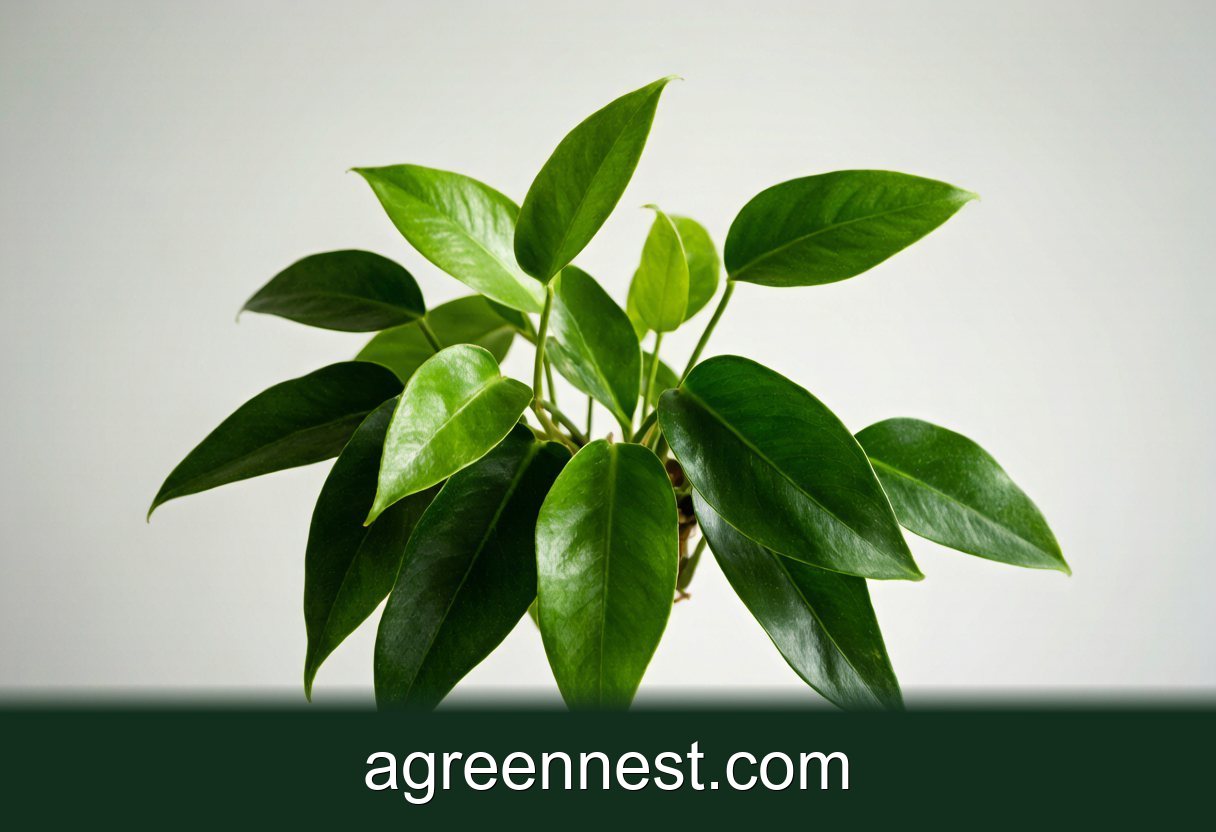
Do not overthink Heartleaf Philodendron Care Guide (Philodendron Hederaceum). It thrives in bright, indirect light and asks for little: water when the top layer of soil dries (14 days between waterings), and keep it away from harsh midday sun. A slightly lean soil and a stable, warm spot are all it needs to look good through the year.
Heartleaf Philodendron at a Glance
| Care factor | What Heartleaf Philodendron wants |
|---|---|
| Light | low to bright indirect light, keep it out of hot, direct sun |
| Water | water deeply only when the soil has dried out completely, roughly every 14 days in the growing season, far less in winter |
| Temperature | comfortable between 60 and 85°F (16 and 29°C) |
| Humidity | average home humidity is fine |
| Soil | a standard peat-free houseplant mix |
| Difficulty | very easy, great for beginners |
| Pet safe | no, keep it away from cats and dogs |
My Philodendron hederaceum trails from a shelf above the bath, and it is the plant I recommend to every nervous first time grower. Heartleaf Philodendron is one of the most widely grown houseplants in the world, and for good reason. It forgives missed waterings, tolerates a dim corner, and keeps putting out heart shaped leaves month after month. The specimen in my flat has dropped vines more than 120 cm long, and it still asks for almost nothing.
Why Is Philodendron hederaceum So Forgiving?
This species evolved as a climber in Central and South American forests, scrambling up trunks toward dappled light. That background is why it copes so well indoors, where conditions are rarely perfect. The thick stems store a little moisture, and the waxy leaves lose water slowly, so a missed watering is rarely fatal. I once left mine untended for three weeks during a trip, came home to slightly limp foliage, and watched it bounce back within two days of a normal drink. Few plants shrug off neglect that gracefully.
Light Needs
Heartleaf Philodendron wants low to bright indirect light, and it must stay out of hot, direct sun. A few feet back from an east or west window is ideal in my home, where it gets soft morning or late afternoon rays without the harsh midday beam. In a north facing room it grows slower but stays perfectly healthy, which makes it a rare plant that genuinely suits a darker flat. Yellow leaves with scorched patches signal too much sun, while tiny, widely spaced leaves mean the spot is too dim. Slide the pot toward the window by 30 to 50 cm and new growth usually fills in within a month.
What Watering Schedule Actually Works?
Water deeply only when the soil has dried out completely. In the growing season, that means roughly every 14 days in my home, though a small pot in a warm room may need a drink closer to every 10 days. Winter is a quieter time. From December through February I cut back to about once every 3 to 4 weeks, because cooler air slows growth and the mix stays wet far longer. The sap can irritate pets if chewed, so I site mine well out of reach of the dog. I check with a finger pushed to the second knuckle, and only water when that depth feels dry. A pot that drains in under a minute keeps the roots sweet.
Soil and Pot
Use a standard peat-free houseplant mix with a handful of perlite added for airflow. I blend three parts peat-free compost, one part perlite, and one part orchid bark for a medium that holds a little moisture yet never turns to mud. A pot with a real drainage hole is non negotiable, because sitting in water is the fastest way to lose a Heartleaf Philodendron. I refresh the top 3 cm of mix each spring rather than repotting fully, which keeps the plant settled and reduces shock. When I do repot, I size up by only 2 to 3 cm in diameter.
Temperature and Humidity
It is happiest between 60 and 85°F (16 and 29°C). Average home humidity around 40 to 50 percent is fine, though the leaves look their glossiest nearer 60 percent. I run a small humidifier in the same room during the driest weeks of January, but the plant copes without it. Keep it away from cold draughts where temperatures can dip to 50°F (10°C), since chill is what brown the leaf edges fastest. Above 90°F (32°C) growth slows, yet the vine keeps its colour better than many tropicals.
How Do You Propagate Heartleaf Philodendron?
The easiest method is a stem cutting. Take a 10 to 15 cm section that includes at least one node, the little bump where a leaf meets the stem, because roots form there and nowhere else. Let the cut end sit for an hour, then pop it into a glass of water or press it into moist mix. Roots usually appear within two to three weeks if the spot stays above 68°F (20°C). I move water cuttings to soil once the roots reach 3 to 5 cm, and I keep the first week slightly more humid with a clear bag tent. A single node can become a whole new trailing plant within a season.
Common Problems and Fixes
- Leaning or stretched growth means it wants more light. Move it brighter or add a grow light.
- Mushy, yellow base points to overwatering. Let it dry out and check the roots for black, soft spots.
- Brown, crispy edges usually come from dry air or salt build up. Flush the soil and raise humidity a little.
Frequently Asked Questions
Q: How often should I water Heartleaf Philodendron?
A: Water deeply only when the soil has dried out completely, roughly every 14 days in the growing season, and far less in winter.
Q: Is Heartleaf Philodendron safe for pets?
A: No, the foliage is toxic, so keep it away from cats and dogs.
Q: Why are the leaves changing colour?
A: A little colour shift with the seasons is normal. Dramatic scorch means too much direct sun, while fading to plain green means it wants more light.
Heartleaf Philodendron rewards a little restraint with years of easy beauty. For a personalised schedule, try our free watering calculator and pair it with the light calculator to pick the perfect spot. Give it soft light and a regular sip, and it will quietly trail across your shelf for years.
Sources & further reading
GreenNest authors research and write every guide independently. The external links below are reputable references we recommend for deeper reading — they are not the sources we copied from.
- Missouri Botanical Garden — Missouri Botanical Garden
- Cornell Garden-Based Learning — Cornell University
- NC State Extension — Plant Toolbox — NC State Extension
Recommended Tools for Low-Light Indoor Plants Care
Free, no-signup helpers matched to this guide.
Free Ebooks to Explore
Downloadable handbooks — no email required.
Share Your Plant Story
Grown something tricky, or found a trick that finally worked? Tell us in the comments, or see what other readers are sharing on our Community page. The best reader tips get folded back into our guides.
Join the Conversation
Have a tip or a question about Heartleaf Philodendron Care Guide (Philodendron hederaceum)? Share it below — comments are saved on our server.