 AGreenNest
Plant Pests & Diseases
How to Deal With Thrips
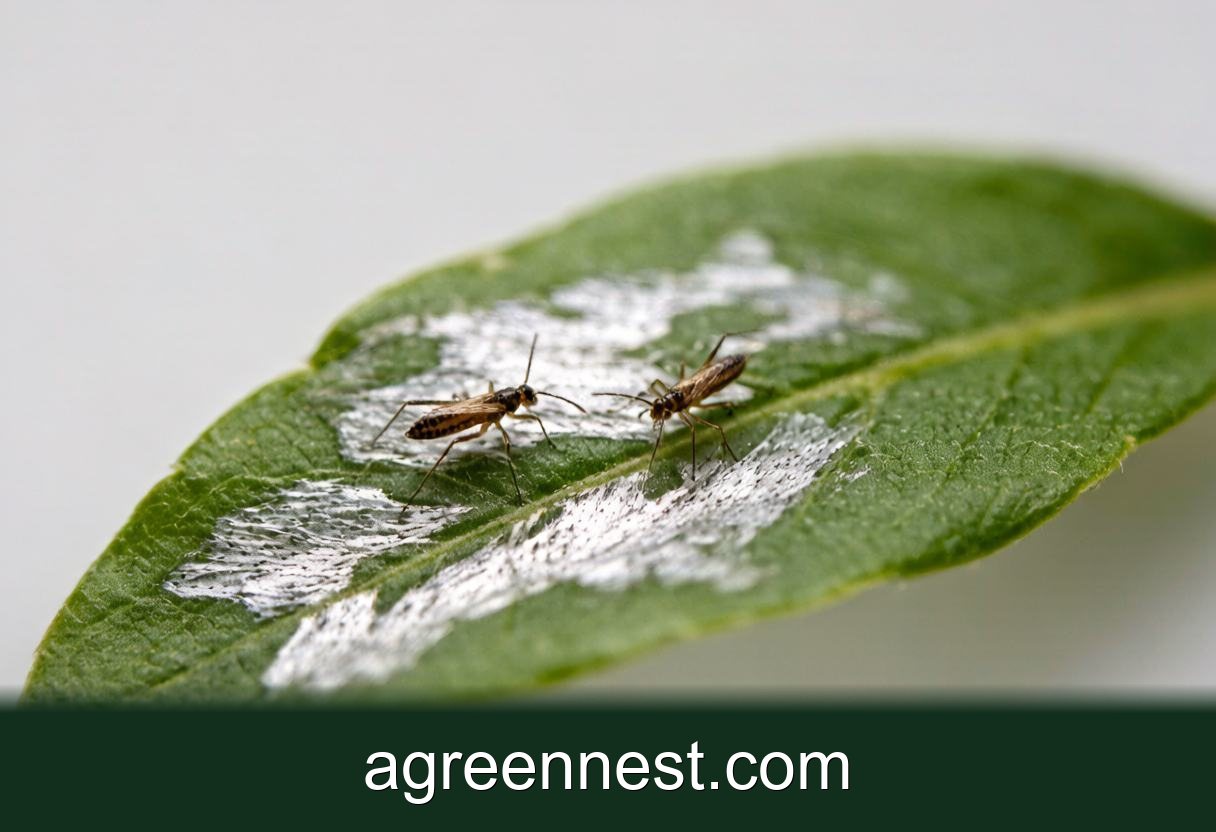
I checked what actually harms How to Deal with Thrips, and it is almost always the common indoor pests. Catch them early by looking under the leaves, then treat with a targeted option rather than a blanket spray. Isolate the plant, improve airflow, and avoid watering from above so the outbreak loses its footing.
What does a thrips infestation actually look like?
The first sign most growers miss is a faint silver sheen across the upper leaf surface. Thrips rasp the epidermis with their mouthparts and leave behind tiny black droppings that look like ground pepper scattered on the leaf. New growth twists, scars, and stops elongating. I have pulled dozens of houseplants apart for this column, and the pattern is remarkably consistent across species.
Frankliniella occidentalis, the western flower thrips, is the usual culprit on indoor ornamentals according to extension entomologists at Oregon State University. It favors tender new leaves and flower buds, which is why infestations often appear on blooming plants first. Catching it means flipping leaves and using a hand lens, not waiting for the plant to collapse. A single silver streak is worth a closer look, because by the time damage is obvious the population has usually been breeding for two weeks. Check the undersides of leaves near the stem, since that is where adults hide during the day.
Why do thrips spread so fast indoors?
The answer lies in the life cycle. A female lays 20 to 40 eggs inside leaf tissue, and those hatch into larvae within 3 to 5 days at normal room temperature. The pest reaches adulthood in about 2 weeks when the air sits near 75°F (24°C). Warm, still, crowded conditions let populations double every 10 to 14 days, which is why a small problem becomes a room wide one quickly.
Research summarized by the American Phytopathological Society notes that low airflow is the single biggest amplifier of thrips outbreaks. A fan on low and 6 inches of space between pots removes most of their reproductive advantage. The pests are weak fliers, so moving air disrupts mating and egg laying far more than most people expect. Outdoor thrips also ride in on bouquets and nursery plants, so the indoor problem frequently starts at the garden center rather than in your home. Because generations overlap, treating once never clears every stage at once.
How do you confirm the diagnosis?
Do not trust a single symptom, because silver scarring can also come from mites and hard water spray. Tap a suspect leaf over white paper and watch for moving specks smaller than a pinhead. Blue sticky traps catch the adults and prove an active flight, which is the most reliable field test available to a home grower.
The Texas A&M Aggie Horticulture program recommends a 10x lens for spotting larvae lined up along the veins. I keep a trap in every propagation tray now, because seedlings are the most common first casualty. Thrips tabaci, the onion thrips, shows the same silver scarring on alliums and can be confused with mite damage, so a close look under magnification matters more than guesswork. Confirm before you spray, because the wrong treatment wastes the narrow window you have and can chase off the predators you want.
Which treatment works without nuking the plant?
Skip the blanket pesticide, which kills the predators you want and selects for resistance. Spinosad applied every 4 to 5 days for three cycles knocks down most outbreaks, and neem oil targets the adults between sprays. Insecticidal soap handles the soft bodied stages on contact and is safe on most foliage.
The key is repetition, because no home product kills the eggs, only the mobile stages. Keep the plant isolated for at least 21 days after the last sighting, since a single missed larva restarts the colony. For heavy infestations on Capsicum annuum and other tender hosts, combine sticky traps with a soil drench to catch pupae that drop to the media to transform. Persistence for a month beats a single heavy dose every time. Where local rules allow, predatory mites offer a chemical free backup once the adult count drops.
Can you stop thrips from coming back?
Prevention beats cure in every case I have documented. Quarantine new plants for 14 days and inspect under the leaves twice a week before they join the collection. Raise humidity slightly and run a small circulator so the foliage moves, because still air is an open invitation.
Avoid watering from above, since wet foliage shelters the pests and washes your treatments off before they act. The Oregon State guidance is blunt on this point and matches what I see in reader photos. A consistent 70 to 85°F (21 and 29°C) range with good air flow keeps numbers too low to matter, and regular trapping turns a silent invasion into an early warning you can actually use. A simple Sunday scouting habit, five minutes per shelf, has saved more reader collections than any spray I could name.
Frequently Asked Questions
Q: Will thrips spread to my other plants?
A: Yes. Most thrips species move readily between nearby hosts, so isolate the affected plant the moment you spot silver streaks.
Q: How long until the outbreak is gone?
A: Expect three to four weekly treatment cycles before signs stop, then keep watching for 21 more days to be safe.
Q: Should I throw the plant away?
A: Rarely. Outbreaks are reversible if you act early, isolate the plant, and stay consistent with the sprays.
Catching thrips early is half the battle, and the other half is airflow plus patience with the schedule. Keep our pest identifier tool bookmarked and check new growth every time you water. A calm, repeated routine beats panic spraying every single time.
Recommended Tools for Plant Pests & Diseases Care
Free, no-signup helpers matched to this guide.
🔍 Free Tool
Pest & Problem Identifier
Pick the symptoms you see and get the likely culprit plus a fix.
Free Ebooks to Explore
Downloadable handbooks — no email required.
Free Ebook
The AGreenNest Succulent Care Handbook
The complete, beginner-to-confident guide to growing fat, happy succulents — 10 chapters and a 20-plant directory.
Free Ebook
Haworthia & Haworthiopsis Care Handbook
A focused guide to the striped, forgiving Haworthia clan.
Sources & further reading
GreenNest authors research and write every guide independently. The external links below are reputable references we recommend for deeper reading — they are not the sources we copied from.
- Oregon State University Extension — Oregon State Extension
- American Phytopathological Society — APS
- Aggie Horticulture (Texas A&M) — Texas A&M AgriLife
Share Your Plant Story
Grown something tricky, or found a trick that finally worked? Tell us in the comments, or see what other readers are sharing on our Community page. The best reader tips get folded back into our guides.
Join the Conversation
Have a tip or a question about How to Deal With Thrips? Share it below — comments are saved on our server.