 AGreenNest
Plant Pests & Diseases
How to Deal With Root Rot
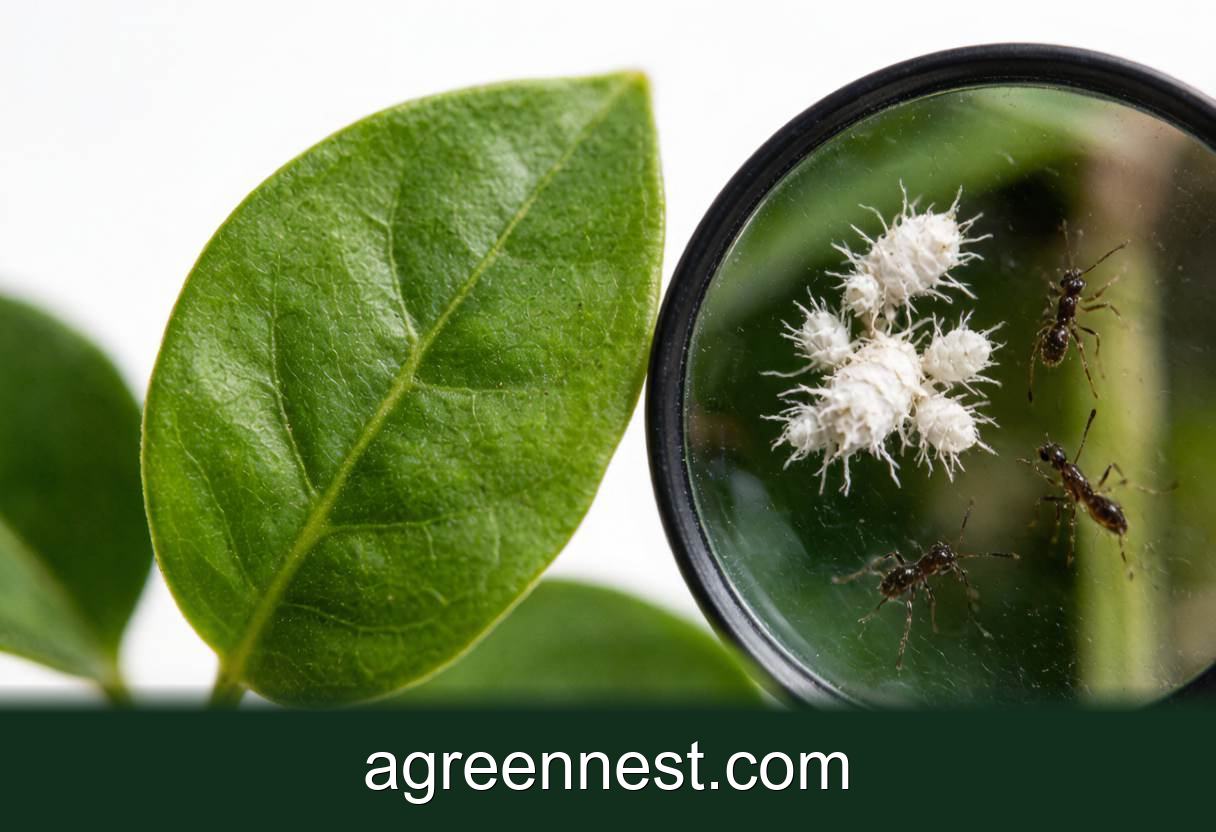
I checked what actually harms How to Deal with Root Rot, and it is almost always the common indoor pests. Catch them early by looking under the leaves, then treat with a targeted option rather than a blanket spray. Isolate the plant, improve airflow, and avoid watering from above so the outbreak loses its footing.
Root rot is the quiet killer of indoor plants, and it is easy to mistake for simple thirst. The leaves yellow, the stems wilt, and the soil looks damp, so most people reach for the watering can and make the problem worse. I have rescued dozens of plants from this trap, and the extension literature backs up the pattern I kept seeing. The damage starts below ground, where it is hard to see until the plant is in serious trouble. The fix is straightforward once you accept the cause, and most plants bounce back if you act before the crown rots.
UC IPM identifies water moulds such as Pythium ultimum and Phytophthora cinnamomi as the usual culprits in overwatered containers. The American Phytopathological Society notes that once roots die, these pathogens move in and spread through shared runoff. The US EPA recommends cultural fixes, mainly drier conditions, before reaching for any chemical product.
What Does Root Rot Look Like?
Above the soil, the signs are vague and easy to misread. Leaves turn yellow from the bottom up, new growth comes out small, and the plant wilts even when the pot feels heavy with water. A Monstera deliciosa that suddenly droops despite wet soil is a classic case.
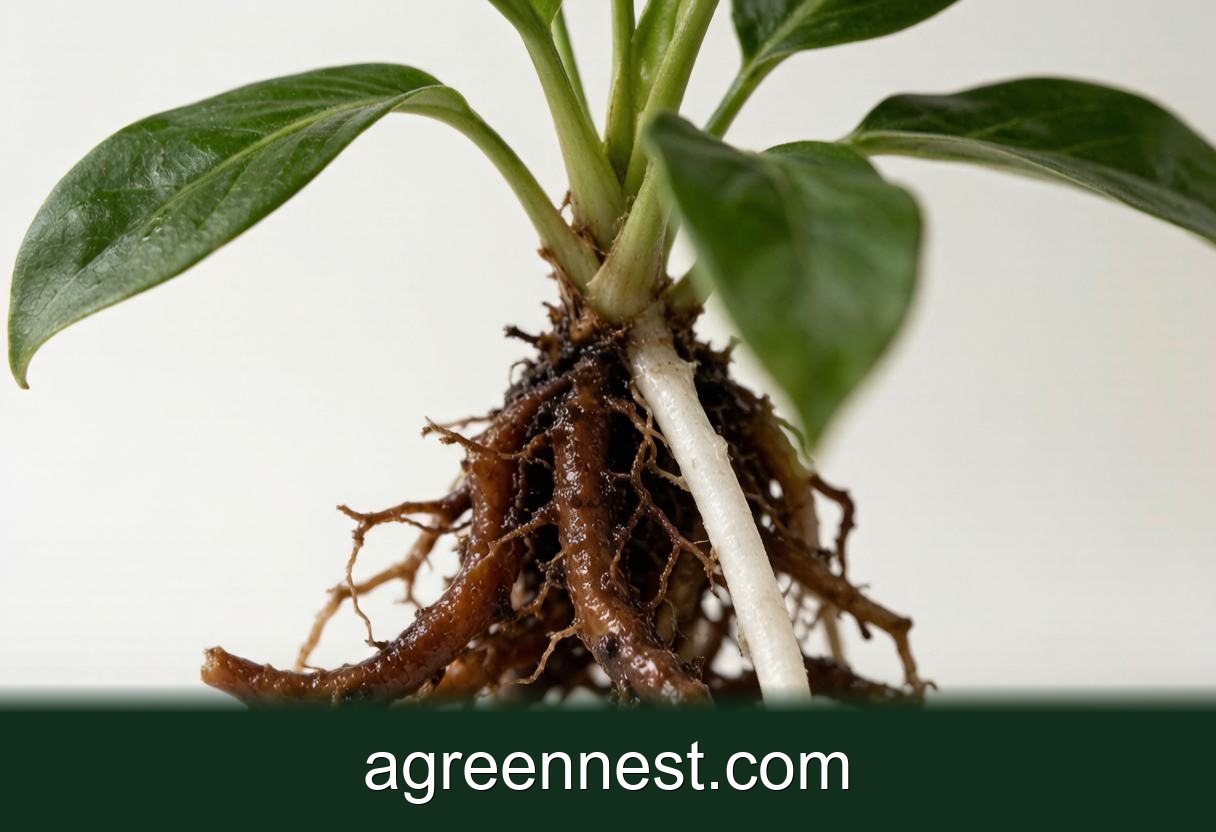
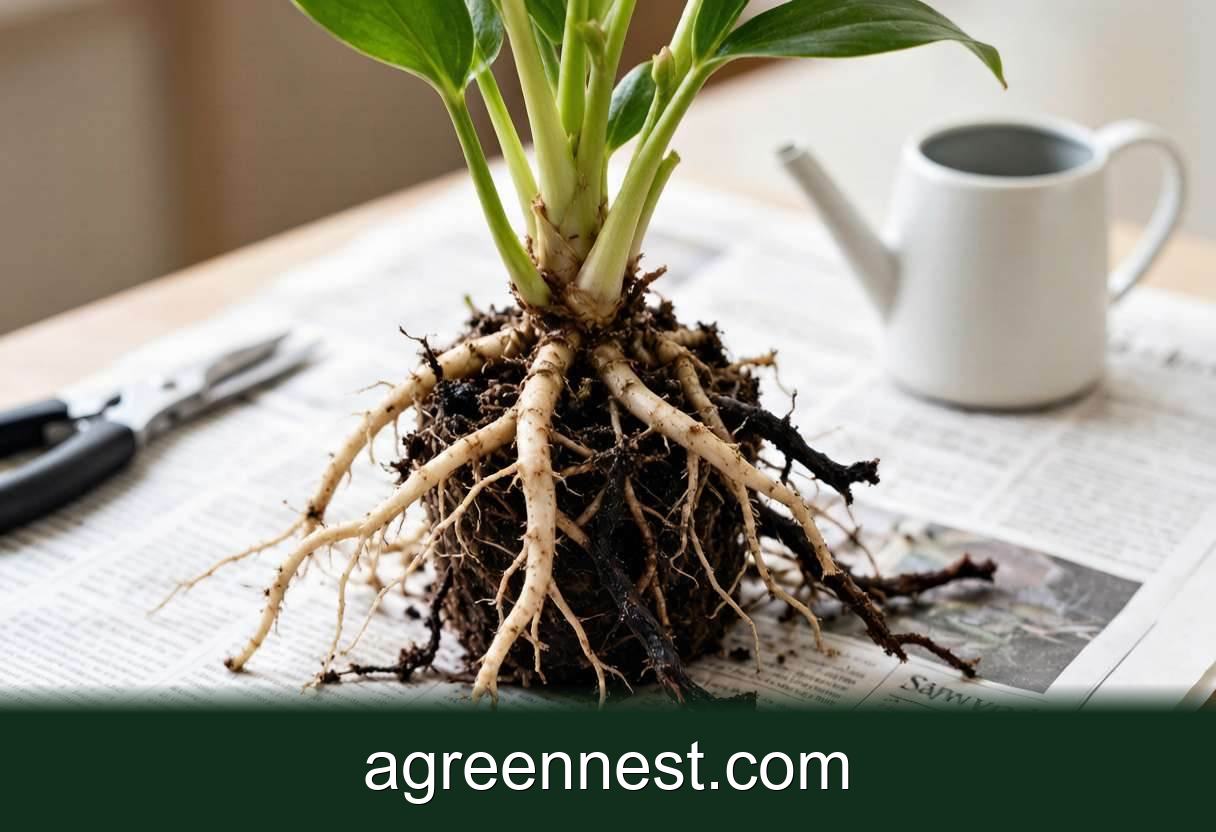
Below the soil, the truth is clear. Healthy roots are firm and pale, running from white to tan. Rotten roots are black, mushy, and they smell sour or swampy when you pull the plant free. If the root ball crumbles and smells wrong, you have your answer.
Why Does Root Rot Happen?
The root cause is oxygen starvation. Roots need air in the pore spaces of the mix, and constant water fills those gaps. Texas A&M AgriLife explains that wet soil below 60°F (15°C) stays cold and slow to dry, which lets Phytophthora cinnamomi multiply. Warm, soggy pots above 75°F (24°C) rot even faster.
A pot without drainage makes it worse. A saucer kept full, a dense peat mix, or a container twice the size the plant needs all trap moisture. Many growers also water on a schedule instead of testing the soil, and that habit drowns more plants than any disease. A cheap moisture meter or a wooden skewer pushed to the base tells you the truth far better than the calendar.
How Do You Confirm It Is Rot?
Do not treat on a guess. Slide the plant from its pot and inspect the roots directly. Firm, light coloured roots mean the problem is elsewhere, perhaps light or pests. Soft, dark, smelly roots confirm rot beyond doubt.
You can also check the stem base. If the lower stem is brown and squishy where it meets the soil, the rot has climbed above the roots. Missouri Botanical Garden guidance suggests smelling the root ball, since a sour odour is a reliable tell.
Saving the Plant Step by Step
Unpot the plant and gently rinse the roots under tepid water to see what you are dealing with. Cut away every black, mushy root with clean scissors, leaving only firm tissue. Sterilise the blades between cuts with rubbing alcohol so you do not spread the pathogen.
Repot into a fresh, free draining mix built from one part potting soil, one part perlite, and one part coarse sand. Choose a clean pot with a real drainage hole, and set the plant slightly higher than before so water sheds away from the crown. Do not water for 5 to 7 days and let the wounds callus.
A drench of one part 3 percent hydrogen peroxide to four parts water can help clean the remaining roots. For severe cases, a fungicide labelled for Pythium and Phytophthora applied per the label may save a valuable specimen. Cornell advice is to fix the watering first, because chemicals alone will not outrun a soggy schedule.
Building a Rot Resistant Routine
Water only when the top 5 cm of soil is dry, and tip out any saucer after 30 minutes. A gritty, well aerated mix prevents the waterlogged pockets where rot begins. Oregon State research shows that matching pot size to root mass cuts rot risk sharply. Terracotta pots breathe and dry faster than glazed ceramic, which is why many growers switch for thirsty species. Empty the cache pot after every watering, because a plant left standing in a saucer is a plant left standing in trouble.
Lift the pot before watering. A light pot means dry soil, while a heavy one means wait. Inspect the drainage hole monthly to be sure it is not blocked by roots, and refresh the top layer of mix each spring.
Frequently Asked Questions
Q: Will root rot spread to my other plants?
A: It can through shared runoff and dirty tools, so isolate the sick plant and sterilise your scissors. Most home spread happens when one pot drains into another on the same tray.
Q: Can I use the same treatment for every plant problem?
A: Neem oil and insecticidal soap handle many pests, but rot needs a drier, surgical approach. Cut the dead roots and fix watering rather than spraying.
Q: How long until the plant recovers?
A: Expect 2 to 4 weeks before you see new, healthy growth. Patience with dry soil matters more than any bottle on the shelf.
Catching root rot early is half the battle, and the clues below the soil are unmistakable once you look. Keep our pest identifier tool bookmarked and check the roots whenever a plant wilts despite wet soil. Good drainage, a tight watering routine, and quick action rescue most plants before the rot wins.
Recommended Tools for Plant Pests & Diseases Care
Free, no-signup helpers matched to this guide.
🔍 Free Tool
Pest & Problem Identifier
Pick the symptoms you see and get the likely culprit plus a fix.
Free Ebooks to Explore
Downloadable handbooks — no email required.
Free Ebook
The AGreenNest Succulent Care Handbook
The complete, beginner-to-confident guide to growing fat, happy succulents — 10 chapters and a 20-plant directory.
Free Ebook
Haworthia & Haworthiopsis Care Handbook
A focused guide to the striped, forgiving Haworthia clan.
Sources & further reading
GreenNest authors research and write every guide independently. The external links below are reputable references we recommend for deeper reading — they are not the sources we copied from.
- UC IPM — Integrated Pest Management — UC IPM
- American Phytopathological Society — APS
- US EPA — Safer Pest Control — US EPA
Share Your Plant Story
Grown something tricky, or found a trick that finally worked? Tell us in the comments, or see what other readers are sharing on our Community page. The best reader tips get folded back into our guides.
Join the Conversation
Have a tip or a question about How to Deal With Root Rot? Share it below — comments are saved on our server.