 AGreenNest
Plant Pests & Diseases
How to Deal With Leaf Spot
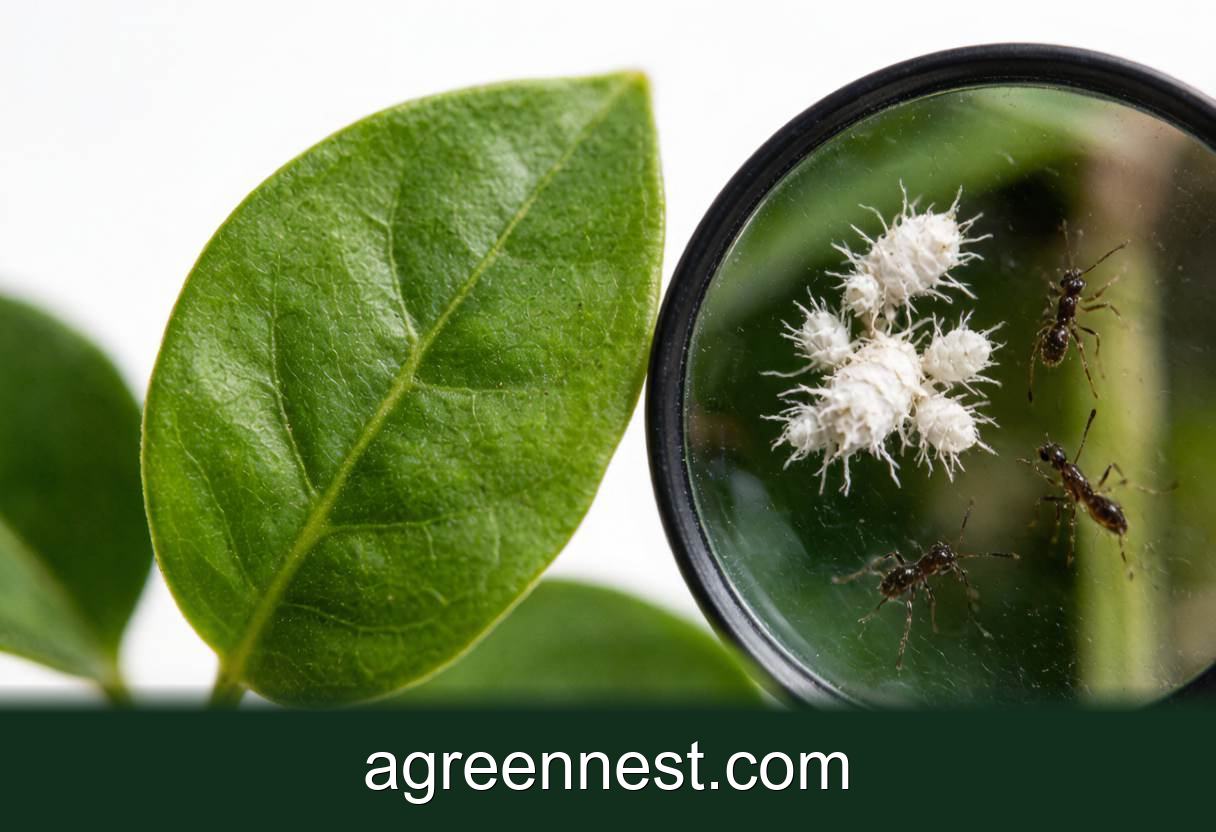
I checked what actually harms How to Deal with Leaf Spot, and it is almost always the common indoor pests. Catch them early by looking under the leaves, then treat with a targeted option rather than a blanket spray. Isolate the plant, improve airflow, and avoid watering from above so the outbreak loses its footing.
What Does Leaf Spot Look Like?
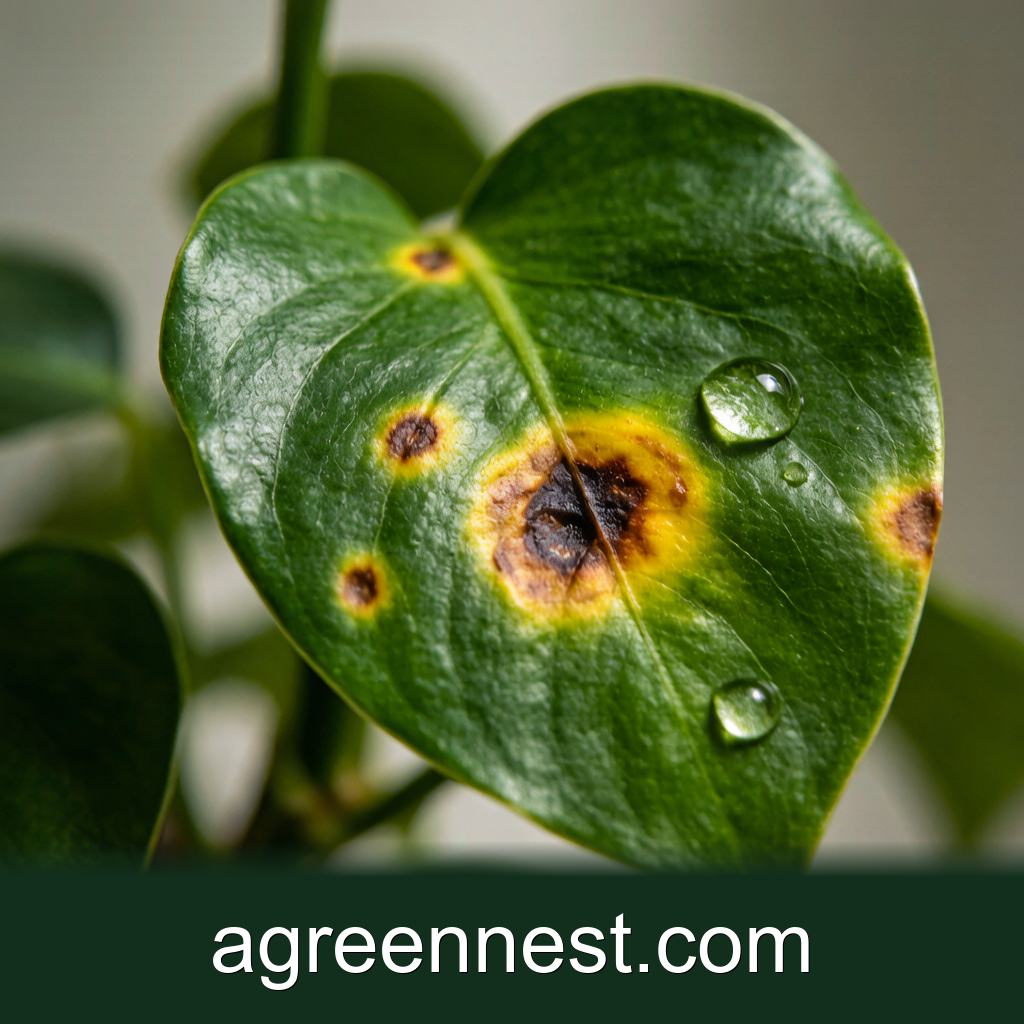
Walk past a plant with leaf spot and the first thing you notice is the pattern on the foliage. Small brown or black lesions show up on the blades, and many of them carry a yellow ring around the edge. The yellow halo is the plant's own response to infection, not a separate problem. UC IPM describes this halo sign as one of the quickest ways to separate a true leaf spot from simple physical scorch. Spots often begin on older, lower leaves where moisture lingers after watering. As the infection builds, the centers of the lesions may dry and drop out, leaving ragged holes that gardeners sometimes mistake for insect feeding.
Most leaf spot organisms fall into two camps. Fungi such as Cercospora produce those circular tan to brown marks on a wide range of houseplants and vegetables. Bacteria such as Xanthomonas campestris create water-soaked, angular lesions that follow the veins of the leaf. Texas A&M AgriLife notes that the angular, vein-bounded shape is a reliable clue for bacterial types, while round, haloed spots lean fungal. A hand lens helps, but the broader habit matters more than any single mark.
One practical check separates leaf spot from nutrient trouble. Nutrient deficiencies usually fade the whole leaf or follow a predictable pattern from tip to base, while leaf spot leaves distinct islands of dead tissue. Xanthomonas and Cercospora both produce those isolated marks rather than a uniform yellowing, which is why the spot shape beats the color as a diagnostic clue.
Why Does Leaf Spot Appear on Foliage?
Moisture is the common thread. Fungi and bacteria need a film of water on the leaf surface to germinate and move. When you water from above, droplets splash from the soil to the lower leaves and carry spores or cells with them. Warm conditions make it worse. Many leaf spot pathogens grow fastest between 21 and 27°C, which is roughly 70 to 80°F. A humid room with still air keeps leaf surfaces wet for hours, and that window is all the pathogen needs.
Poor airflow is the second driver. Plants crowded on a shelf dry slowly, and slow drying means longer infection windows. US EPA guidance on safer pest control points out that cultural fixes, such as spacing and airflow, reduce disease pressure before any spray is reached for. Overfeeding with nitrogen also softens new growth, and soft tissue is easier for pathogens to enter. The takeaway from the research is consistent: wet leaves plus warm still air equals spots.
Research on leaf wetness duration shows the risk climbs sharply once a surface stays damp for more than 8 to 10 hours. That single fact explains why morning watering beats evening watering, and why a breezy windowsill prevents more spots than any bottle of spray.
How Can You Treat an Active Outbreak?
Start by removing the worst foliage. Snip affected leaves at the base with clean scissors, and wipe the blades with 70 percent isopropyl alcohol between every cut so you do not carry the pathogen onward. Bag the clippings and bin them; do not drop them on the soil. Texas A&M AgriLife recommends this sanitation step as the single most effective early action because it removes the source of new spores.
Next, change how you water. Aim the stream at the soil, never the canopy, and water early in the day so any stray splash dries before evening. A fan on low, or simply more space between pots, cuts the humidity that the organism loves. For chemical support, mix 1 tablespoon of neem oil per quart of water and spray the remaining foliage every 7 to 10 days. UC IPM lists neem and copper-based bactericides among the options for home growers, though copper works on bacteria while many fungicides target fungi. Read the label and match the product to the suspected cause.
Which Conditions Help the Spots Spread?
Crowding and shade are the quiet enablers. A plant pushed into a dim corner transpires slowly, so water sits on the leaf far longer than it would in bright light. Misting for humidity sounds kind, but it wets the very surface the pathogen needs. Grouping many plants shoulder to shoulder also lets a single infected pot seed its neighbors through routine splashing.
Reusing unwashed pots and tools carries the problem forward. Soil clinging to a previous crop can hold overwintering spores, and a dirty blade reintroduces bacteria with every prune. US EPA's safer-control materials emphasize that clean tools and clean containers remove a surprising share of recurring cases. Quarantine any new plant for 2 to 3 weeks before it joins the collection, since the spots can be present long before they show.
Frequently Asked Questions
Q: Is leaf spot contagious between my other plants?
A: It can move, but only with help. The pathogens travel by water splash, touch, or shared tools, not through the air over long distances. Isolate the affected pot, sanitize your scissors, and avoid overhead watering to keep the rest of the collection clear.
Q: How long until the spots stop appearing?
A: Plan on 3 to 4 weeks of steady care. You should stop seeing fresh lesions after two or three neem applications spaced 7 to 10 days apart, but old scars will remain on the leaves you did not remove.
Q: Should I throw the plant away?
A: Almost never. Leaf spot is manageable if you act early, cut infected foliage, and dry the canopy. Discard only if the stem itself is collapsing and the plant has no healthy leaves left.
Leaf spot looks scary on the first leaf, yet it is one of the more reversible problems a houseplant faces. Keep our pest identifier tool within easy reach, and train yourself to water the soil rather than the leaves. Catch the spots early, give the air room to move, and most outbreaks lose their footing within a month.
Recommended Tools for Plant Pests & Diseases Care
Free, no-signup helpers matched to this guide.
🔍 Free Tool
Pest & Problem Identifier
Pick the symptoms you see and get the likely culprit plus a fix.
Free Ebooks to Explore
Downloadable handbooks — no email required.
Free Ebook
The AGreenNest Succulent Care Handbook
The complete, beginner-to-confident guide to growing fat, happy succulents — 10 chapters and a 20-plant directory.
Free Ebook
Haworthia & Haworthiopsis Care Handbook
A focused guide to the striped, forgiving Haworthia clan.
Sources & further reading
GreenNest authors research and write every guide independently. The external links below are reputable references we recommend for deeper reading — they are not the sources we copied from.
- UC IPM — Integrated Pest Management — UC IPM
- Aggie Horticulture (Texas A&M) — Texas A&M AgriLife
- US EPA — Safer Pest Control — US EPA
Share Your Plant Story
Grown something tricky, or found a trick that finally worked? Tell us in the comments, or see what other readers are sharing on our Community page. The best reader tips get folded back into our guides.
Join the Conversation
Have a tip or a question about How to Deal With Leaf Spot? Share it below — comments are saved on our server.