 AGreenNest
Plant Pests & Diseases
How to Deal With Over-fertilisation
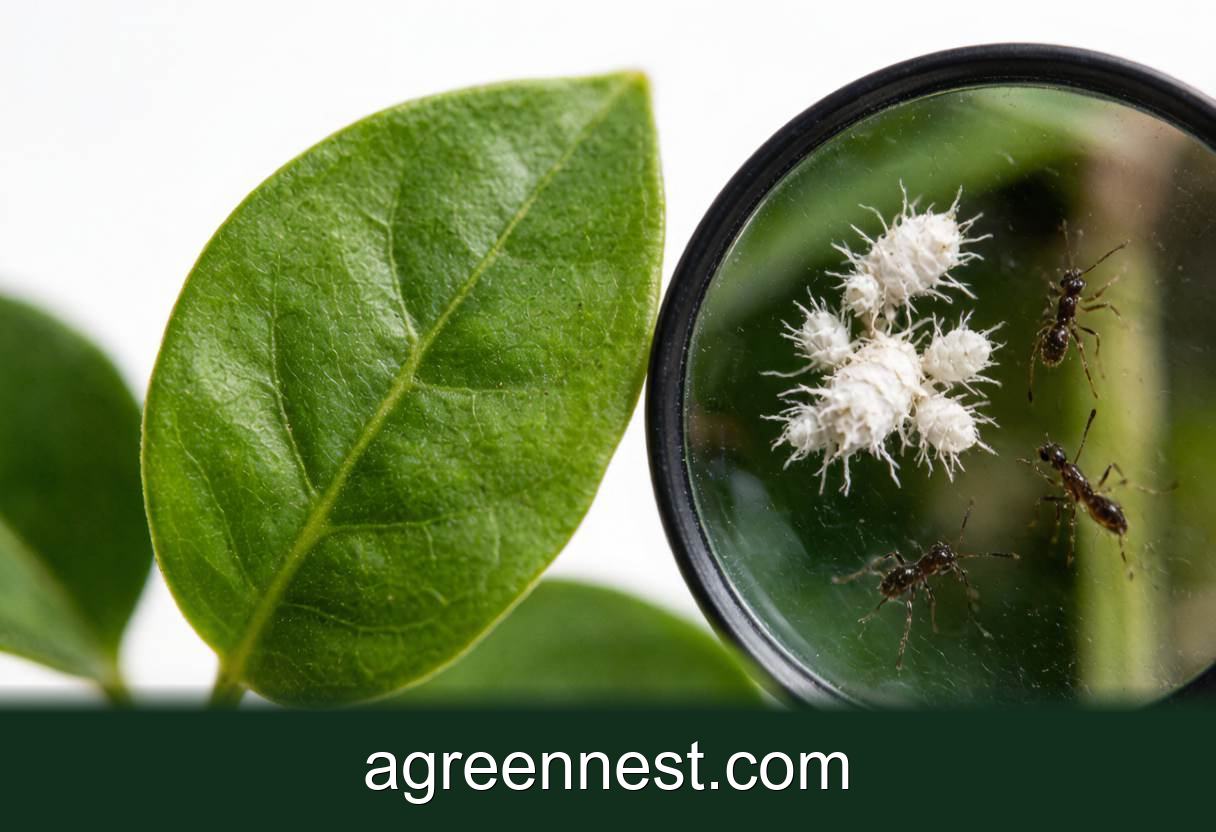
Most How to Deal with Over-fertilisation problems trace back to the usual indoor pests, not bad luck. Inspect weekly (leaf undersides, stem joints), quarantine new plants, and treat early with a targeted spray. Good airflow and dry foliage do more than any bottle, since prevention beats the cure every time.
What Does Over-fertilisation Look Like?
The first signs usually appear at the leaf margins. Crispy brown leaf edges, often starting on the oldest foliage and creeping outward, signal that something is burning the plant from the root line up. A second, more telling clue sits on the soil surface itself: a white or pale crust forms as water evaporates and leaves behind mineral residue. Houseplant keepers frequently describe this crust as looking like a dusting of salt or powdered sugar across the top of the potting mix.
Researchers at the University of Minnesota Extension note that this crust is not decorative. It is a visible accumulation of soluble salts, the dissolved mineral residues from fertilisers, softened water, and even tap water that carries its own mineral load. When you lift the pot, you may also see a white ring deposited on the outside of terracotta or on the drainage saucer. That ring tells the same story from a different angle.
Why Does It Happen?
Fertilisers work by adding dissolved nutrients to the soil solution. Problems start when the rate of addition outpaces the rate at which plants take those nutrients up or water carries them away. Each time you feed, you add salts. Each time you water lightly, you move a fraction of those salts upward toward the surface where they concentrate. Over weeks, the total salt concentration in the root zone climbs.
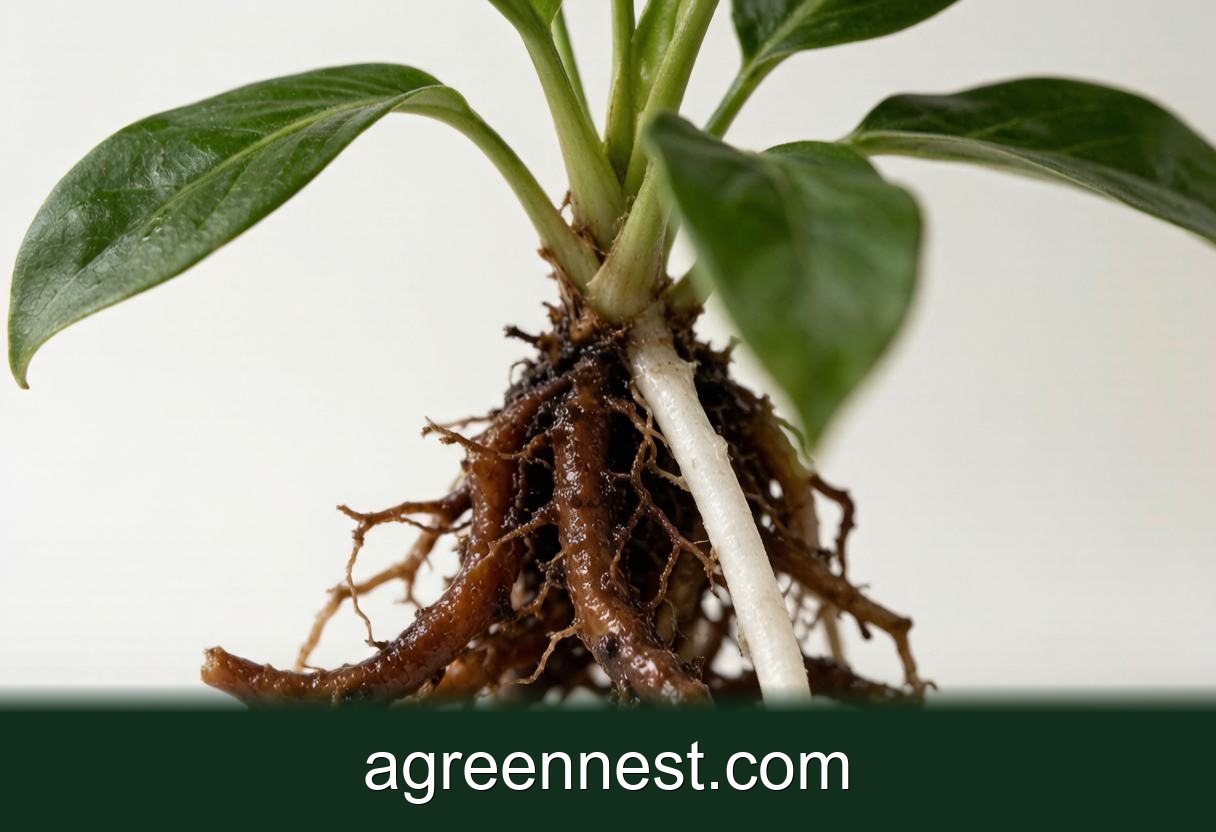
Osmosis drives the mechanism. Root cells rely on a controlled gradient to pull water in. When the salt concentration outside the root exceeds the concentration inside, water moves the wrong way, out of the root and into the surrounding soil. Extension specialists describe this as physiological drought: the plant is surrounded by water it cannot drink. Young root tips do the bulk of uptake and burn first, because they are the most sensitive. From there the damage reads upward through the foliage.
A separate confusion matters for diagnosis. Over-fertilisation is frequently mistaken for underwatering because both produce wilting and crisp leaf edges. It is also blamed on pests when the real cause is abiotic. The American Phytopathological Society distinguishes true disease from environmental stress precisely because the treatment differs: more water will not fix salt burn, and a pesticide will not fix a chemistry problem.
How Do You Flush and Recover the Plant?
Begin by removing the visible crust from the soil surface with a spoon, taking care not to gouge the roots. A thorough leaching flush forms the core remedy. Run two to three times the pot volume of plain water, ideally at room temperature between 65 and 75°F (18 and 24°C), through the container, letting it drain completely each time. For a one litre pot, that means two to three litres of water passed slowly so it actually reaches the root ball rather than channelling down the sides. Flushing the pot washes excess salts out through the drainage holes.
After the flush, withhold all fertiliser for three to four weeks. This resting window lets damaged roots regrow without fresh osmotic shock. When you resume feeding, cut the dose hard: a balanced 10-10-10 fertiliser applied at one quarter of the label strength is enough for most indoor specimens through the active season. Many keepers find that less is genuinely more.
For plants that repeatedly show symptoms, an EC or TDS reader removes the guesswork. These handheld meters measure the dissolved solids in your runoff water and give a number instead of a hunch. Pair that with a moisture meter so you water by need rather than by calendar. Measuring soil moisture before each watering is exactly what the University of Minnesota Extension recommends.
A practical case is the fiddle leaf fig, Ficus lyrata. This species reacts badly to accumulated feed and shows burnt margins quickly. Owners who switch to a quarter-strength regimen and flush monthly report far fewer crispy edges than those following full-strength labels.
Which Plants Are Most at Risk?
Sensitive species include many aroids and figs that evolved under canopy light with lean soils. Slow growers in small pots accumulate salts faster because the volume of mix is limited. Succulents and cacti are doubly at risk because their low water demand means salts sit longer between flushes. Cacti should be fed sparingly, perhaps once in spring and once in midsummer, never on a weekly schedule.
Container size also changes the math. A plant in a ten centimetre pot holds a fraction of the mix of one in a twenty five centimetre pot, so the same dose lands at a higher concentration. Always scale the amount to the volume of soil, not to the size of the plant above it.
Frequently Asked Questions
Q: Will over-fertilisation spread to my other plants?
A: No. This is an abiotic, chemistry problem tied to that specific pot, not a contagious pest or pathogen. Your other plants are safe unless you use the same salty mix or saucer water on them.
Q: Can a plant recover once the leaf edges turn brown?
A: The burnt tissue will not green up again, because the damage is dead cells. Recovery shows up as clean new growth once you flush the salts and pause feeding. Trim the worst leaves only for appearance.
Q: Should I repot into fresh soil instead of flushing?
A: Repotting helps when the crust is thick and the mix is old, but a proper flush often solves it without disturbing the roots. Choose repotting when the soil is also compacted or you suspect it has gone sour.
Over-fertilisation is one of the most misread problems in indoor plant care, and the fix is almost embarrassingly simple once you see the crust and connect it to the salt math. Flush two to three pot volumes of water, pause feed for three to four weeks, and resume at a quarter of label strength while you watch new growth. Keep a moisture meter and, ideally, an EC reader on hand so the next diagnosis rests on numbers instead of folklore.
Recommended Tools for Plant Pests & Diseases Care
Free, no-signup helpers matched to this guide.
🔍 Free Tool
Pest & Problem Identifier
Pick the symptoms you see and get the likely culprit plus a fix.
Free Ebooks to Explore
Downloadable handbooks — no email required.
Free Ebook
The AGreenNest Succulent Care Handbook
The complete, beginner-to-confident guide to growing fat, happy succulents — 10 chapters and a 20-plant directory.
Free Ebook
Haworthia & Haworthiopsis Care Handbook
A focused guide to the striped, forgiving Haworthia clan.
Sources & further reading
GreenNest authors research and write every guide independently. The external links below are reputable references we recommend for deeper reading — they are not the sources we copied from.
- UC IPM — Integrated Pest Management — UC IPM
- American Phytopathological Society — APS
- University of Minnesota Extension — U Minnesota Extension
Share Your Plant Story
Grown something tricky, or found a trick that finally worked? Tell us in the comments, or see what other readers are sharing on our Community page. The best reader tips get folded back into our guides.
Join the Conversation
Have a tip or a question about How to Deal With Over-fertilisation? Share it below — comments are saved on our server.