 AGreenNest
Plant Pests & Diseases
How to Deal With Mealybugs
I checked what actually harms How to Deal with Mealybugs, and it is almost always the common indoor pests. Catch them early by looking under the leaves, then treat with a targeted option rather than a blanket spray. Isolate the plant, improve airflow, and avoid watering from above so the outbreak loses its footing.
What Do Mealybugs Actually Look Like?
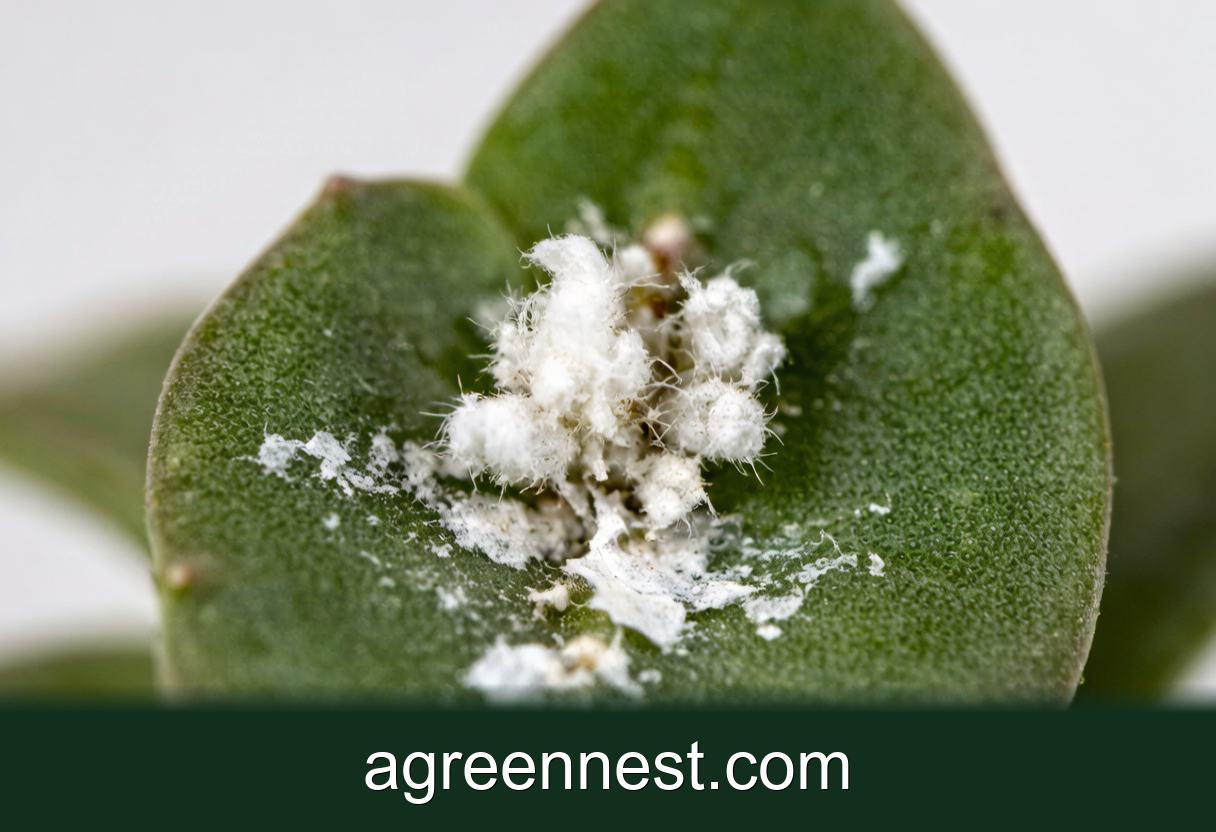
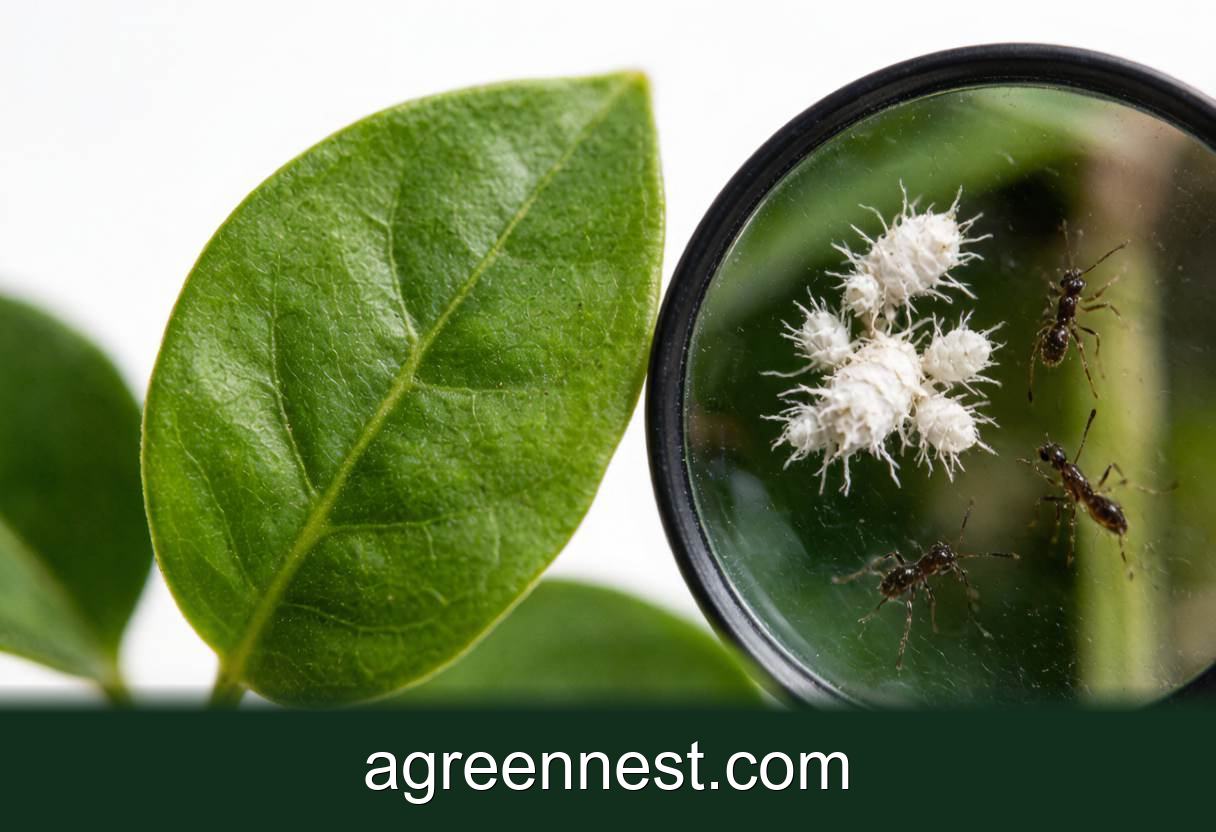
Mealybugs are small, soft bodied scale insects that hide in the tight, sheltered parts of a plant. The adults cover themselves in a white, waxy, cottony secretion, so the first sign is usually a fuzzy white clump tucked into a leaf joint, the crook where a leaf meets the stem, or the base of a young leaf. UC IPM describes the typical greenhouse pest, Pseudococcus viburni, as a slow moving insect about three millimetres long that clusters where it is hard to spot.
Two secondary clues confirm the diagnosis. The insects feed by piercing tissue and sucking sap, then excrete a clear, sticky waste called honeydew. That honeydew coats nearby leaves and becomes the growing medium for a black sooty mould, which you can wipe away but which returns until the insects are gone. Sticky foliage and a faint musty smell are practical field marks.
Why Do They Thrive Indoors?
Mealybugs are opportunists that exploit weak conditions more than they conquer strong ones. High humidity and still air let populations build without disturbance, and overcrowded shelves mean one infested plant shares air and touch points with a dozen neighbours. Missouri Botanical Garden notes that mealybugs move readily between plants that are spaced too close, which is why a single unnoticed specimen can seed an apartment wide outbreak. Quarantine is the cheapest control available. NC State Extension recommends holding every new plant apart from the collection for two to three weeks and checking it twice before it earns a place on the shelf.
The life cycle works in their favour. Females lay clumps of one hundred to two hundred eggs in a protective wax mass, and the young crawlers that hatch disperse to new feeding sites within a week. Warm homes between 70 and 80°F (21 and 27°C) let several generations overlap through the year, so a small find in January can be a large one by March if ignored.
How Do You Treat an Outbreak Step by Step?
Start by isolating the affected plant away from everything else. Physical removal does most of the work: dab each visible insect with a cotton swab dipped in 70% isopropyl alcohol, which dissolves the waxy coating and kills on contact. Follow with a spray of insecticidal soap, or a home mix of one to two millilitres of neem oil per litre of water plus a few drops of dish soap to help it spread.
Persistence matters more than the product. Repeat the spray every five to seven days for three full weeks, because eggs and hidden crawlers survive the first pass and you must catch each new wave as it emerges. A moisture free leaf surface helps, so avoid watering from above during treatment. For severe, entrenched cases where the plant is covered and recovering species are valuable, a systemic product containing imidacloprid taken up through the roots can clear what contact sprays cannot, but use it only as a last step and never on plants you will eat.
Natural enemies offer a longer term option. The ladybird Cryptolaemus montrouzieri, nicknamed the mealybug destroyer, feeds on mealybug eggs and larvae and is sold by some suppliers for greenhouse use. It is a specialist, so it works best in a contained space rather than a drafty living room.
Which Plants Are Most Vulnerable?
Succulents and rosette forming species trap moisture and insects in their tight centres. A favourite host is the Mexican snowball, Echeveria elegans, whose packed leaves give mealybugs shelter that is hard to inspect. Other prone groups include hoyas, orchids, and citrus grown indoors. Crowded collections of Sansevieria trifasciata also suffer because the upright leaves create humid microchannels at their base. Spacing is prevention. Leave a hand width between pots so air moves through the canopy, and prune dense growth that traps humidity at the centre. Missouri Botanical Garden ranks good airflow alongside isolation as the two controls that stop a second wave before it starts.
How Do You Confirm the Pest Is Gone?
Ending treatment too early is the most common reason outbreaks return. After the three week spray clock, keep the plant in isolation for two more weeks and inspect it under bright light every few days. Look specifically at the leaf joints and the underside of new growth, because survivors hide in the youngest folds. UC IPM advises that a single missed crawler can restart a colony, so the final all clear should come from two consecutive clean checks, not from the absence of visible cottony clumps on one afternoon.
Sticky traps near the pot catch wandering crawlers and give an early warning if something reappears. Once the plant passes two checks, return it to the main collection only after a final wipe down of the pot rim and saucer, where eggs sometimes cling unseen.
Frequently Asked Questions
Q: Will mealybugs spread to my other plants?
A: Yes, and faster than many owners expect. They crawl and are carried on hands, tools, and drifting air, so isolation the day you spot them is the single most effective move.
Q: Can I use the same treatment for everything?
A: Neem and insecticidal soap handle most soft bodied pests, but fungal and rot problems need a drier approach. Match the method to the organism rather than spraying blindly.
Q: How long until the plant is clean?
A: Expect three weeks of repeated sprays, since you are breaking a life cycle rather than killing one stage. Stop only after two consecutive checks find nothing.
Mealybugs reward patience and punish panic buying. Identify the cottony clumps and honeydew early, isolate without delay, and work the alcohol swab plus neem ladder on a strict five to seven day clock for three weeks. Bring in Cryptolaemus montrouzieri where the space allows, and above all keep plants spaced and aired so the next colony never gets its footing. Our pest identifier tool stays useful for the first uncertain glance.
Recommended Tools for Plant Pests & Diseases Care
Free, no-signup helpers matched to this guide.
🔍 Free Tool
Pest & Problem Identifier
Pick the symptoms you see and get the likely culprit plus a fix.
Free Ebooks to Explore
Downloadable handbooks — no email required.
Free Ebook
The AGreenNest Succulent Care Handbook
The complete, beginner-to-confident guide to growing fat, happy succulents — 10 chapters and a 20-plant directory.
Free Ebook
Haworthia & Haworthiopsis Care Handbook
A focused guide to the striped, forgiving Haworthia clan.
Sources & further reading
GreenNest authors research and write every guide independently. The external links below are reputable references we recommend for deeper reading — they are not the sources we copied from.
- NC State Extension — Plant Toolbox — NC State Extension
- UC IPM — Integrated Pest Management — UC IPM
- Missouri Botanical Garden — Missouri Botanical Garden
Share Your Plant Story
Grown something tricky, or found a trick that finally worked? Tell us in the comments, or see what other readers are sharing on our Community page. The best reader tips get folded back into our guides.

Join the Conversation
Have a tip or a question about How to Deal With Mealybugs? Share it below — comments are saved on our server.