 AGreenNest
Plant Styling & Display
Pet-Friendly Plant Room Styling That Works
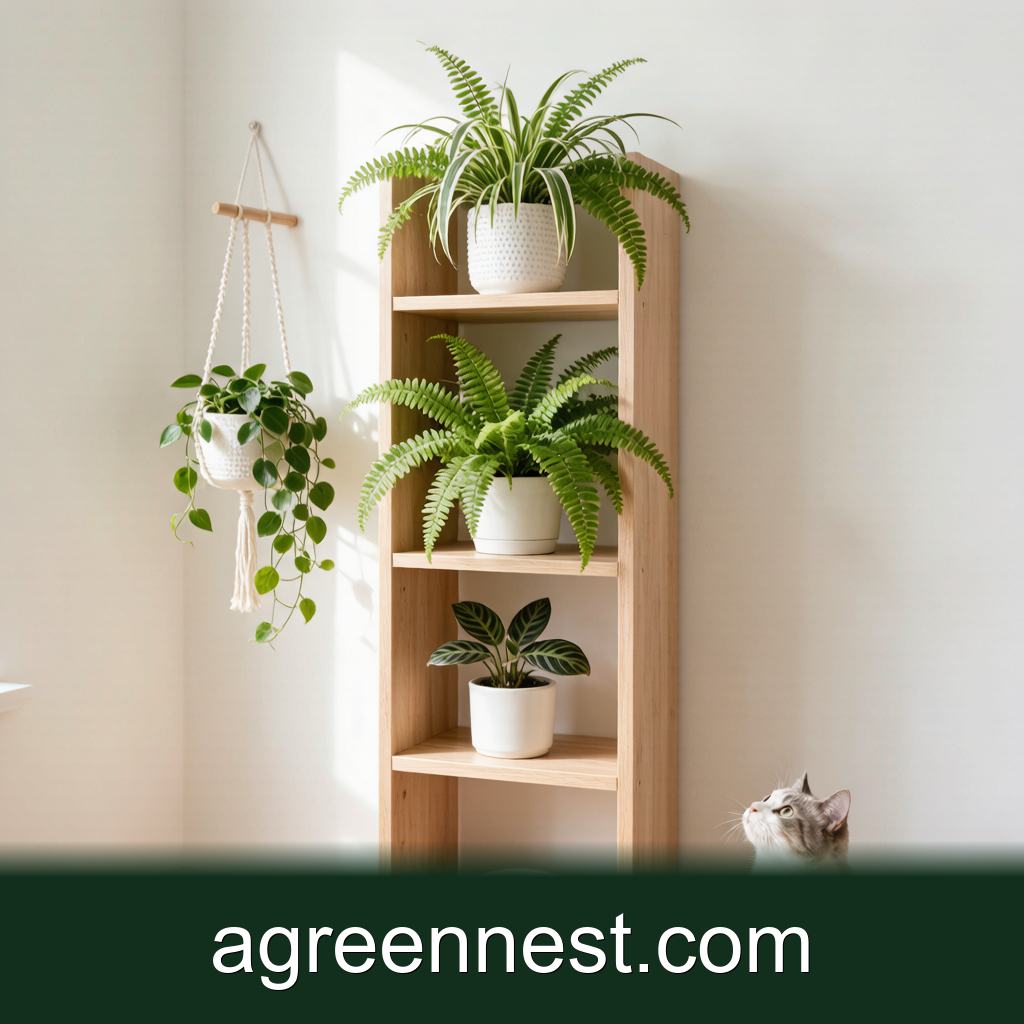
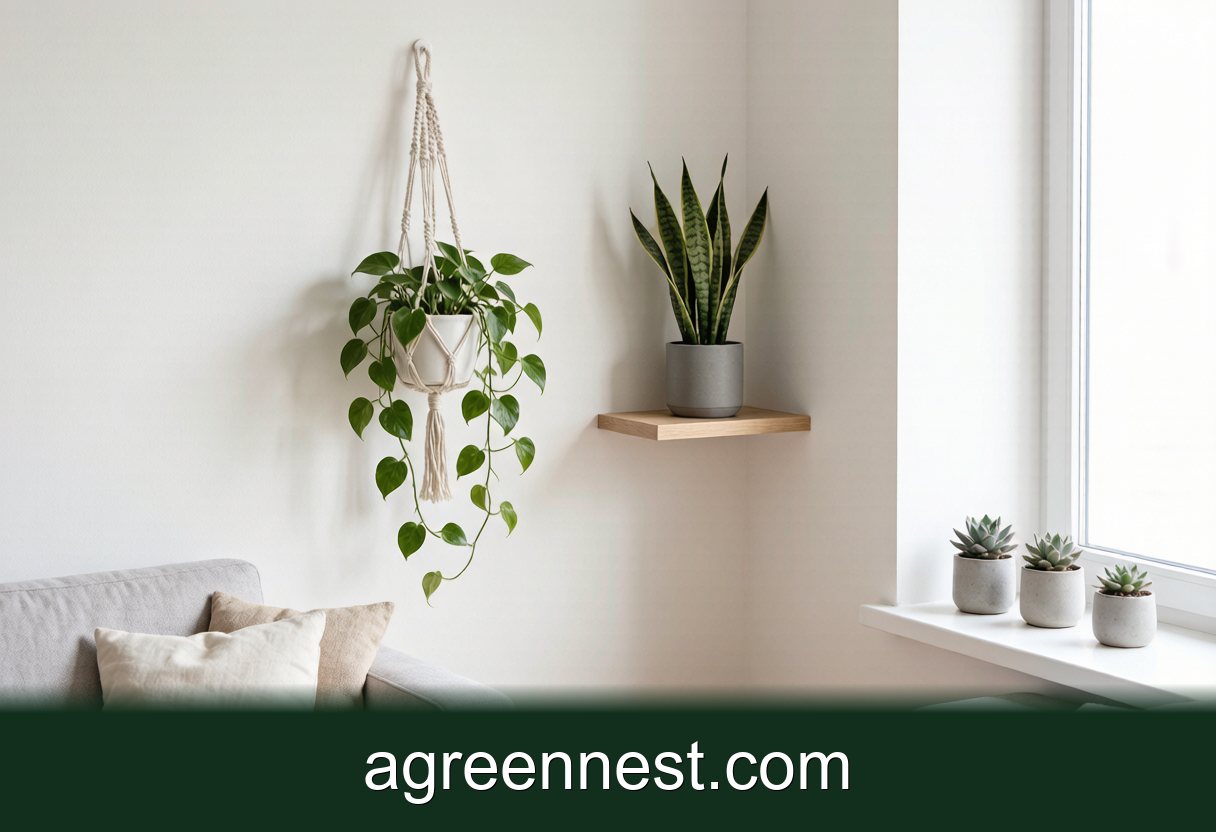
For a calm shelf with Pet-Friendly Plant Room Styling That Works, pair it with one taller focal plant and a small trailing piece. Keep care easy: bright, indirect light, water when the topsoil is dry (when the topsoil has dried). Rotate the pot weekly and wipe the leaves so the arrangement stays crisp and photogenic.
My cat and my calathea reached a truce the week I moved the calathea to a shelf he cannot reach. For two months he had been chewing the lower leaves and I had been scolding him, and neither of us was winning. We both settled once the plant went up and a safe one came down to his level. Pet-friendly rooms are not about removing the plants you love. Good styling places each specimen where your animal and the leaf can coexist.
Put the toxic plants up high or behind glass
Start with honesty about what you own. Many common houseplants are mild to moderate toxins for cats and dogs: pothos, peace lily, snake plant, and most philodendrons. None of these need to leave your home if you are willing to lift them. I keep a tall ficus on a 180cm (about 71 inch) bookshelf that my cat has never jumped to, because the seat below it gives him a better vantage.
For plants you love but cannot lift high enough, a glass cabinet or a closed terrarium does the work. One 40cm by 30cm glass case on a sideboard holds a small fern and keeps paws out entirely. That glass also raises humidity, which the fern likes. If the plant is tall and you rent, a tension-rod shelf keeps it above head height without drilling.
Separation works best by height or by barrier, not by constant supervision. You cannot watch the room all day, so build the distance in from the start.
How do you arrange safe trailing plants?
Once the risky plants are up, fill your mid and low spaces with species that will not hurt a chewer. Trailing plants make a room feel lush, and they belong on high shelves where their vines hang free.
I run a 14cm pot of Maranta leuconeura (prayer plant) on a 165cm shelf near an east window, set back 40cm from the glass so the morning light is bright but not baking. Its vines stay short and the leaves fold at night, which my dog ignores completely. Beside it, a Nephrolepis exaltata (Boston fern) sits in a 20cm pot and the fronds spill down like a green curtain.
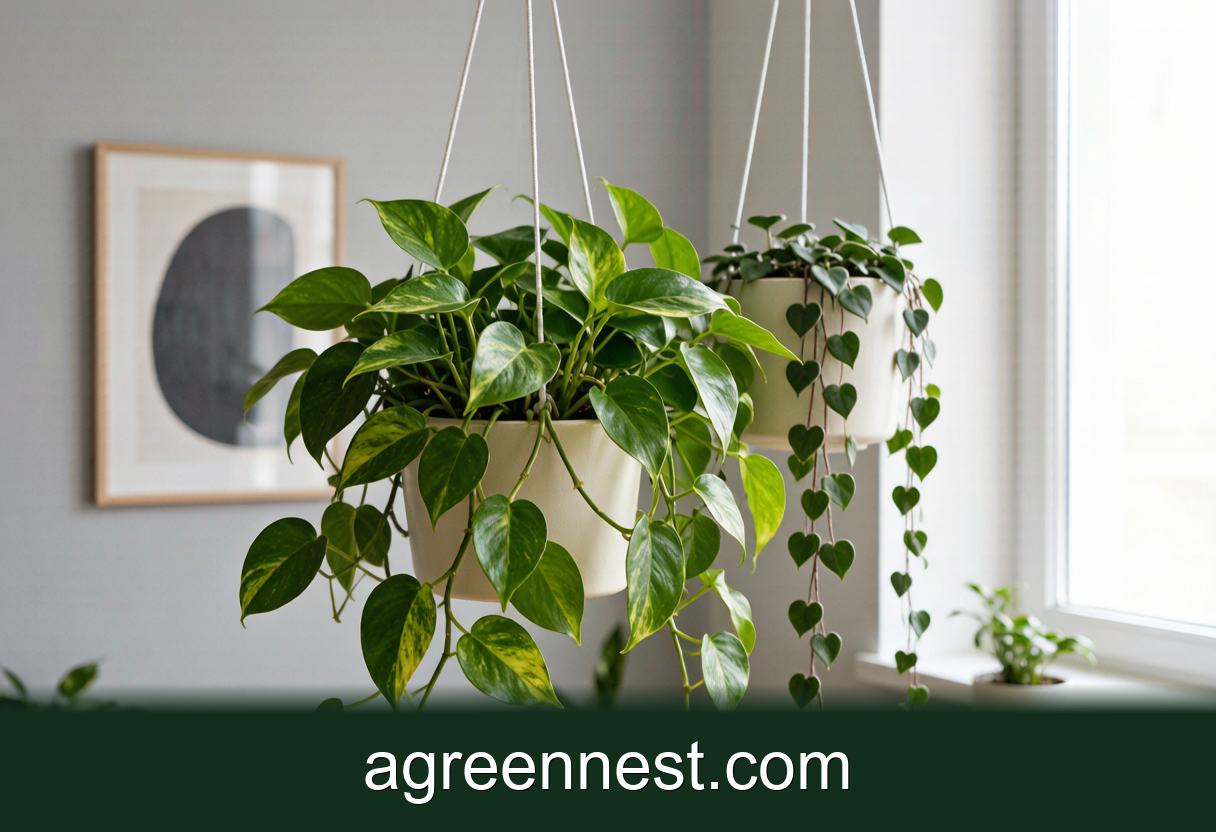
Hanging planters pull the eye upward and away from the floor, which is exactly where most pets roam. Try a Chlorophytum comosum (spider plant) in a 15cm hanging pot, hung at 200cm (about 79 inches) from the floor, so the plantlets dangle well above a jumping cat.
Group pet-safe species for a calm, green look
Scattered single plants read as clutter. Grouped plants read as designed. In the calmest rooms I have styled, every pet-safe specimen sits in one loose cluster while the toxic ones stand apart on their high shelves.
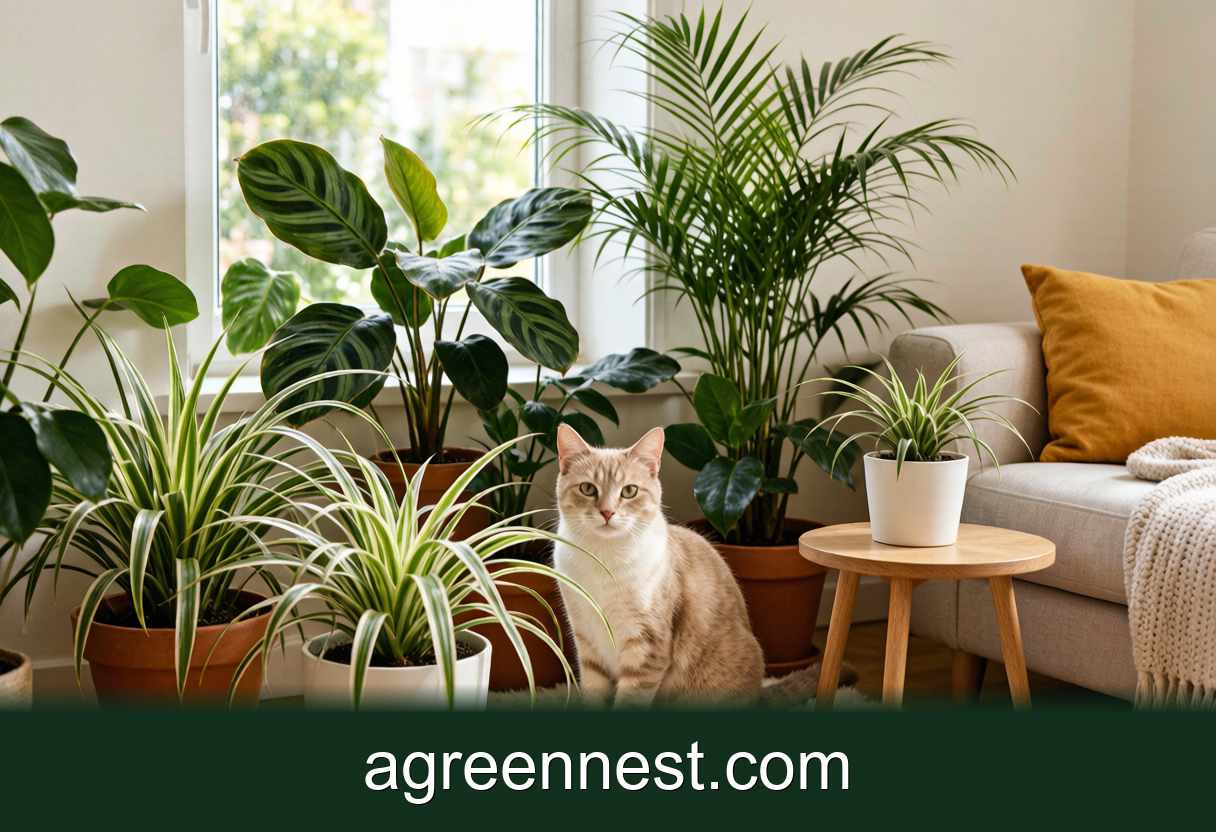
Build a trio on one surface: a Calathea orbifolia in an 18cm pot at the back, a Peperomia obtusifolia in a 12cm pot in front, and a small Maranta leuconeura in a 10cm pot to the side. All three are safe if nibbled, so place them low where a dog can sniff them without trouble. Calathea's broad stripes contrast nicely against the peperomia's round glossy leaves, giving the cluster shape without a risky plant in the mix.
I water this cluster from a small can and check the soil at 3cm before each pour, because grouped pots dry at different rates. Blend one part perlite to two parts potting soil and the roots stay healthy in a 20cm terracotta pot that sheds extra moisture.
The honest caveat: pet-safe is not pet-food
Here is the part most posts skip. "Pet-safe" on a plant label means it will not poison your cat or dog in a normal amount. It does not mean the plant is food, and it does not mean daily grazing is fine. Any dog that eats a whole Chlorophytum comosum leaf every morning may get a mild stomach upset from the fibre, not from a toxin. That label gives you room for the occasional chew, not a license for a salad.
In my experience the animals settle after the first week. Curiosity drops once the new leaf is no longer new. Keep a couple of safe plants within reach on purpose, like a Peperomia obtusifolia on a low table, so your pet has something to investigate and leaves the high, risky plants alone by habit.
If you use terracotta, note that unglazed clay dries faster than plastic, which suits the peperomias that hate wet feet. Most growers find a 12cm terracotta pot is the right first step for a small safe plant on a coffee table, and mixing 1 teaspoon per litre of balanced feed once a month is plenty through spring and summer.
Which plants are safest for a home with cats?
The safest choices are the ones that are non-toxic and also tough enough to survive a curious bite. Chlorophytum comosum and Peperomia obtusifolia top my list because both shrug off a tug and bounce back. Maranta leuconeura and Calathea orbifolia are also non-toxic, though their thinner leaves show the damage more clearly. Keep the true risks, like pothos and peace lily, at 165cm or higher and the safe ones low, and your room stays both green and calm.
Frequently Asked Questions
Q: How high should a shelf be to keep toxic plants away from a cat?
A: Aim for 165cm to 180cm (about 65 to 71 inches) if your cat jumps, and place the pot at the back of the shelf, not the front edge. Most domestic cats reach roughly 150cm from a standstill, so the extra height plus the setback matters more than the shelf alone.
Q: Are hanging planters safe if my dog can reach the chain?
A: Keep the pot above 180cm (about 71 inches) from the floor and the plant is safe. The risk with a dog is the pot falling, not the leaves, so use a secure ceiling hook rated for the pot's full weight and keep the cord short.
Q: Which trailing plant is safest to hang low where a puppy can grab it?
A: Chlorophytum comosum (spider plant) is the usual pick. Hang it at 200cm if you can, but even at arm height it is non-toxic, so a puppy tug does not become a vet call. Swap it out only if your dog eats enough to cause a tummy ache.
Build a pet-friendly room on height, barrier, and a few safe species placed where the animal can satisfy its curiosity. Move the risky plants up or behind glass, trail the safe ones from high shelves, and group the non-toxic specimens for a calm look. For the spacing and height steps that hold the whole arrangement together, our plant grouping guide is the page to read next.
Recommended Tools for Plant Styling & Display Care
Free, no-signup helpers matched to this guide.
Free Ebooks to Explore
Downloadable handbooks — no email required.
Free Ebook
The AGreenNest Succulent Care Handbook
The complete, beginner-to-confident guide to growing fat, happy succulents — 10 chapters and a 20-plant directory.
Free Ebook
Haworthia & Haworthiopsis Care Handbook
A focused guide to the striped, forgiving Haworthia clan.
Sources & further reading
GreenNest authors research and write every guide independently. The external links below are reputable references we recommend for deeper reading — they are not the sources we copied from.
- Missouri Botanical Garden — Missouri Botanical Garden
- NC State Extension — Plant Toolbox — NC State Extension
- UF/IFAS Gardening Solutions — UF/IFAS
Share Your Plant Story
Grown something tricky, or found a trick that finally worked? Tell us in the comments, or see what other readers are sharing on our Community page. The best reader tips get folded back into our guides.
Join the Conversation
Have a tip or a question about Pet-Friendly Plant Room Styling That Works? Share it below — comments are saved on our server.