 AGreenNest
Hydroponic Growing
Spinach (Hydroponics)
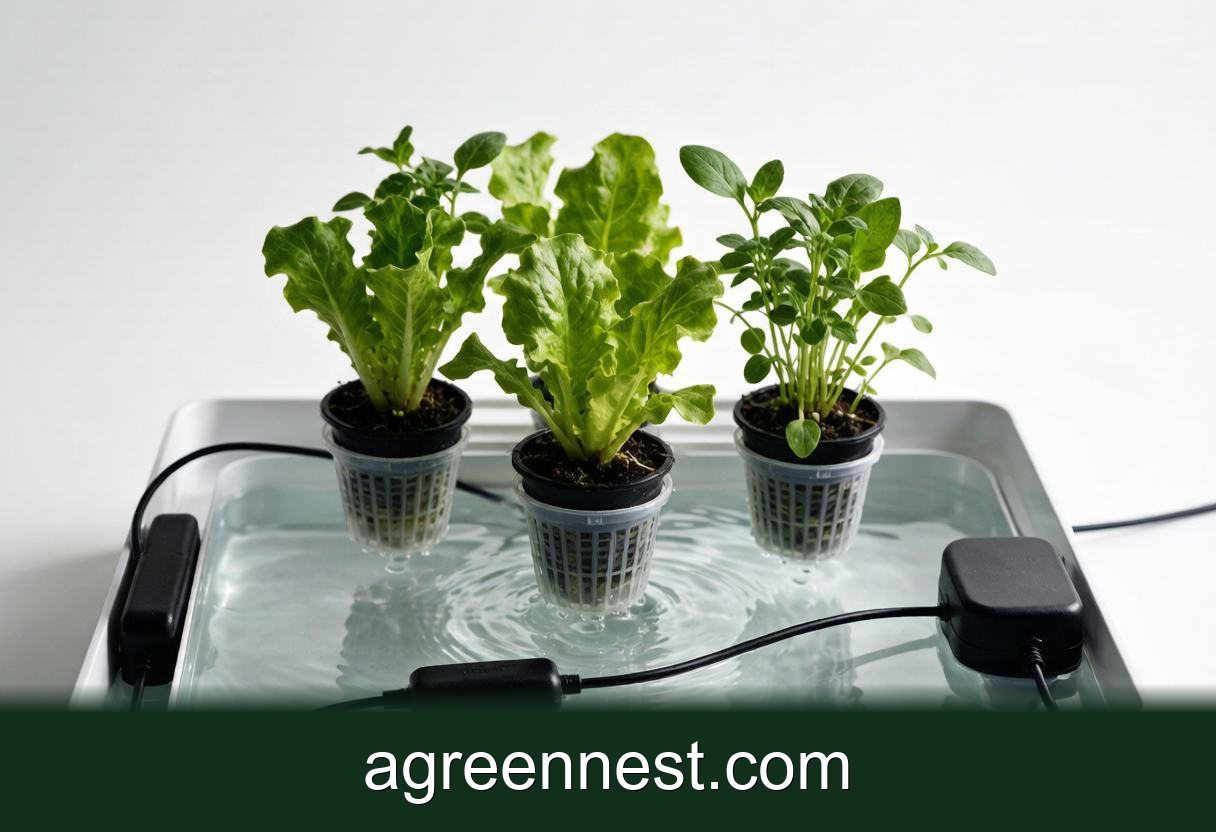
Run Spinach (Hydroponics) at steady strength: 1.5-2.0 EC, pH 5.8-6.2, reservoir 18-22 C. Provide a few hours of direct sun for 14-16 hours a day. The only common failure is stale solution, so top up daily and swap the reservoir every 7-14 days so roots stay white and active.
About Spinach
Spinacia oleracea is one of the easiest leafy greens to grow in water. The plant prefers cool roots and steady food. Growers rate it a difficulty of 2 out of 3 because the rules are simple, yet the margins matter. A small shift in temperature or solution age changes the taste from sweet to bitter within days.
The original wild form comes from central Asia, but modern cultivars are bred for short stems and tender leaves. In a hydroponic reservoir the roots stay clean and white when conditions are right. You will see growth in 10 to 14 days after seeding, with a full cut ready in about 35 to 45 days. Plan two sowings three weeks apart so you harvest without a gap.
Choose a smooth leaf variety such as Spinacia oleracea 'Bloomsdale' for fewer crevices where algae hide. Baby leaf mixes cut at 15 days taste mild, while full size at 40 days carries more iron. Expect roughly 4 to 6 ounces of leaf per plant across a season in a small home unit.
Why Does Spinach Bolt in Warm Water?
Bolting is the plant's rush to produce seed, and heat triggers it fast. When the nutrient solution climbs above 24 C (75 F), the leaves turn thin and the stem shoots up. The flavor turns sharply bitter. Keep the reservoir between 18 and 22 C (64 to 72 F) to hold the plant in its leafy stage.
Shade the tank during hot afternoons. A white bucket reflects light and stays several degrees cooler than a dark one. Many beginners lose a crop not to pests but to a warm, stale solution. Swap the reservoir every 7 to 14 days so the roots never sit in tired water.
Watch for a central stalk rising above the rosette. That is the first sign of bolting, and it appears about two days after a heat spike. Cut the whole plant the moment you see it, because the leaves decline within 48 hours. Cool the room to 16 C (61 F) at night and the risk drops sharply.
What Nutrient Strength Works Best?
Run the solution at 1.5 to 2.0 EC, which equals roughly 1050 to 1400 ppm on the 700 scale. Hold pH in the 5.8 to 6.2 band. Spinach absorbs iron and calcium best in that window, and those two drive leaf color.
Start seedlings on the weak end at 1.2 EC for the first week. Step up to 1.8 EC once true leaves appear. A two-part A/B nutrient is mandatory because a single bottle cannot keep the salts stable. Mix part A, add water, then part B, then adjust pH last.
Add a chelated iron supplement at 1 to 2 ppm if new growth stays pale yellow. Calcium at 150 to 200 ppm prevents tip burn on mature leaves. Test the solution every three days with a pen meter, since spinach pulls nutrients fast and the EC falls by 0.2 to 0.4 weekly.
How Do I Harvest Without Killing the Plant?
Cut outer leaves at 3 inches above the crown and leave the center to keep growing. A single plant gives three to four cuts across 30 days when you harvest this way. Use clean scissors so the stem does not tear.
The first cut comes at day 25 to 30 once the plant holds eight true leaves. Wait for morning, when turgor is high and the leaf snaps clean. After each cut, raise the nutrient by 0.1 EC because the smaller root mass needs denser food. Stop harvesting once the center bolts, then restart with fresh seed.
Light and Temperature Timing
Give the crop 14 to 16 hours of light each day. A few hours of that should be direct sun if you grow by a window. The rest can come from a basic LED panel drawing 20 to 30 watts per square foot. Lower light slows growth and stretches the stems.
Night temperatures should drop to 12 to 16 C (54 to 61 F). The swing between cool nights and mild days builds the crisp texture shoppers pay more for. Watch the reservoir level and top up daily, since spinach drinks steadily and a shallow tank spikes the EC overnight.
Position the lights 6 to 12 inches above the canopy and raise them weekly as the plant grows. Too close and the leaf edges scorch, too far and the stems lean. A simple timer set to 15 hours keeps the day length steady through winter when windows give only 9 hours.
What Water Should I Use?
Tap water works after you let chlorine evaporate for 24 hours, but test its baseline pH first since some city supplies read 7.8 to 8.2. Reverse osmosis water is cleaner and starts near 6.0, yet it lacks the calcium your spinach needs, so add a hardness buffer at 80 to 100 ppm.
Hard well water above 200 ppm of dissolved solids forces you to cut the nutrient strength by a third. Measure total dissolved solids with a meter before mixing. A neutral starting point saves you from chasing pH after every top up.
Common Problems and Quick Fixes
Powdery mildew shows as white dust on lower leaves when humidity stays above 70 percent for two days. Improve airflow with a small fan moving 40 cubic feet per minute. Trim affected leaves and the spread stops within a week.
Aphids cluster on new growth and double their number every four days. Spray the colony with plain water at 40 psi to knock them off, then rinse the roots. Root rot smells sour and turns tips brown, and it follows a reservoir above 24 C, so cool and replace the solution at once.
Frequently Asked Questions
Do I need pumps and timers?
Not always. Passive systems like Kratky need none. Active systems such as DWC and NFT need an air pump and a timer.
Why are my leaves pale?
Usually the pH has drifted, so roots cannot take up iron. Test and correct the solution to 5.8 to 6.2 before adding more food.
Can I move a soil plant to water?
Soft-stemmed types transition easily, but most spinach starts better from seed in net pots than from a transplanted soil root ball.
Spinach rewards a numbers-first approach more than any fancy gear. Keep the tank cool, the solution fresh, and the pH honest, and you will cut tender leaves in about six weeks. Start small, log your readings, and let the plant tell you when it is happy.
Recommended Tools for Hydroponic Growing Care
Free, no-signup helpers matched to this guide.
Free Ebooks to Explore
Downloadable handbooks — no email required.
Free Ebook
The AGreenNest Succulent Care Handbook
The complete, beginner-to-confident guide to growing fat, happy succulents — 10 chapters and a 20-plant directory.
Free Ebook
Haworthia & Haworthiopsis Care Handbook
A focused guide to the striped, forgiving Haworthia clan.
Sources & further reading
GreenNest authors research and write every guide independently. The external links below are reputable references we recommend for deeper reading — they are not the sources we copied from.
- Aggie Horticulture (Texas A&M) — Texas A&M AgriLife
- UA Controlled Environment Agriculture Center — U Arizona CEAC
- UF/IFAS Gardening Solutions — UF/IFAS
Share Your Plant Story
Grown something tricky, or found a trick that finally worked? Tell us in the comments, or see what other readers are sharing on our Community page. The best reader tips get folded back into our guides.
Join the Conversation
Have a tip or a question about Spinach (Hydroponics)? Share it below — comments are saved on our server.