 AGreenNest
Hydroponic Growing
Kale (Hydroponics)
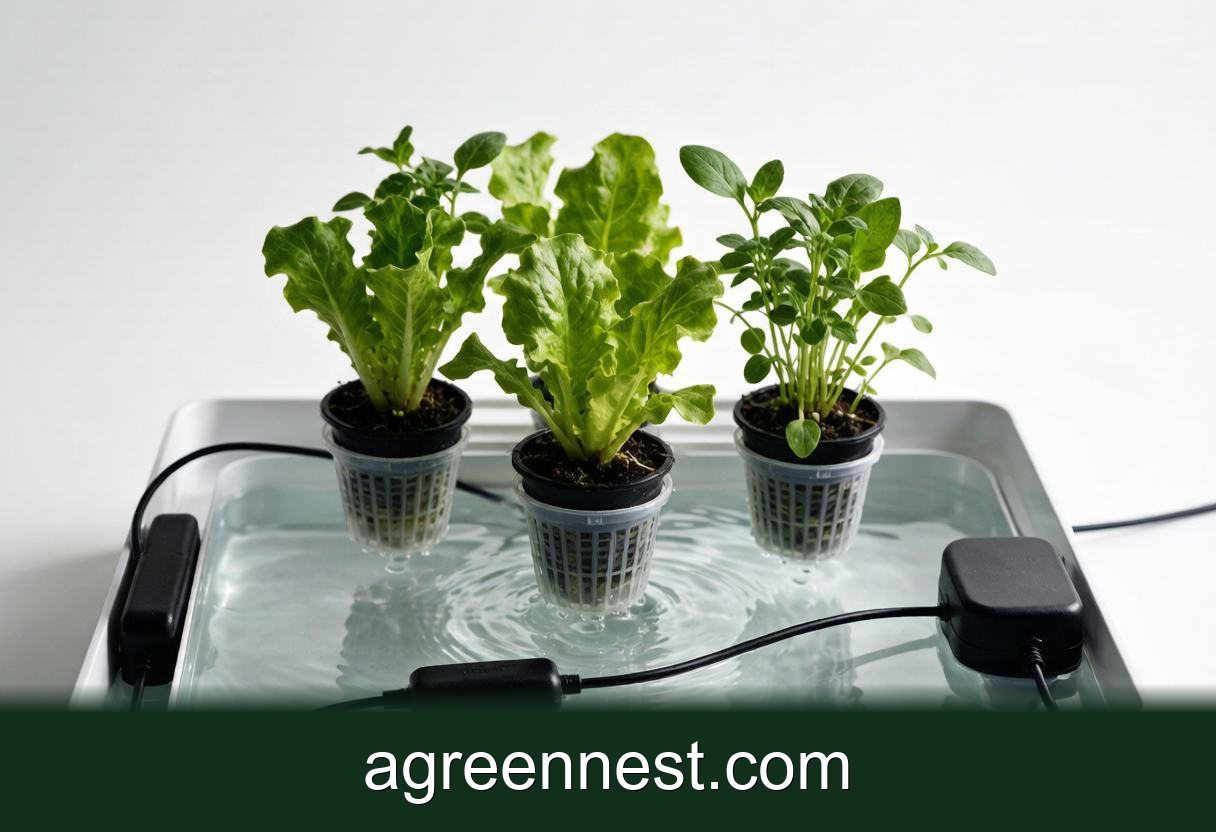
Run Kale (Hydroponics) at steady strength: 1.5-2.0 EC, pH 5.8-6.2, reservoir 18-22 C. Provide a few hours of direct sun for 14-16 hours a day. The only common failure is stale solution, so top up daily and swap the reservoir every 7-14 days so roots stay white and active.
About Kale
Kale, known botanically as Brassica oleracea var. acephala, is a cold tolerant leafy green that thrives in water. It prefers reservoir temperatures of 18 to 20 C (64 to 68 F) and a nutrient strength of 1.5 to 2.0 EC, equal to roughly 1050 to 1400 ppm. Give it 14 to 16 hours of light daily from a full spectrum LED at 150 to 250 µmol/m²/s. The flavour actually sweetens when air stays cool, between 15 and 21 C, because cold triggers sugar buildup in the leaves. Kale is a step up from lettuce but still forgiving for a confident beginner. Expect a first real harvest about 30 to 45 days after the seedling enters the reservoir, then cut leaves weekly through the season.
What Light Does Kale Need?
Kale wants bright, consistent light rather than a few weak hours. Run a 14 to 16 hour photoperiod with a LED that delivers 150 µmol/m²/s at canopy height. Below 100 µmol the stems stretch and leaves thin out. Above 300 µmol, unless vented, heat builds and edges scorch. Measure once with a phone par app or a quantum meter, then set the outlet timer and forget it. A simple timer costs little and removes the daily guesswork. Rotate the pot a quarter turn each week so all sides get even exposure.
Why Does the Reservoir Go Stale?
The most common kale failure is old solution, not bad light. Plants drink water faster than they take up salts, so EC climbs as the tank shrinks. Top up daily with plain water to hold volume and strength steady. Swap the full reservoir every 7 to 14 days, because roots shed organic matter that feeds biofilm. Keep the nutrient at pH 5.8 to 6.2 and the root zone at 18 to 22 C. A small aquarium air stone at 2 to 4 litres per minute keeps oxygen high and roots white.
How Do You Start Kale From Seed?
Sow 2 to 3 seeds per cube in rockwool or coco at 20 to 24 C. Germination takes 4 to 7 days under a humidity dome with light at 100 µmol. Once seedlings show true leaves, thin to one strong plant per site. Move them to the reservoir at half strength, about 0.8 EC, for the first week. Raise by 0.2 EC every few days until you reach the full 1.5 to 2.0 EC. Harden by exposing seedlings to moving air from a fan set on low for a few hours daily.
Which System Works Best?
Deep water culture and nutrient film technique both suit kale, though NFT fits larger sites better. A single plant in a 10 litre DWC bucket needs one net pot and a lid. Space plants 20 to 25 cm apart so leaves get airflow and light. Kratky, the passive no pump method, also works for a windowsill pot if you refill by hand. Active systems simply scale cleaner and faster for a family of four. Choose the system by space, not by fashion, and kale performs in either.
What Strength Should Seedlings Get?
New kale transplants burn easily at full feed, so start them at 0.8 to 1.0 EC for 7 to 10 days. This half strength dose lets fine roots adapt without osmotic shock. Increase by 0.2 EC every 3 to 4 days as the root ball fills the net pot. By day 14 most varieties handle the full 1.5 to 2.0 EC without stress. Watch the leaf margins, because brown crispy tips mean you moved up too fast. Ease back a step and the plant recovers within a week.
How Often Should You Harvest?
Kale rewards cut and come again harvesting rather than a single pull. Take the lower 2 to 3 leaves per plant every 4 to 5 days once it reaches 15 cm tall. Leave the growing tip so new leaves keep forming from the centre. A steady 7 to 14 day reservoir change keeps those harvested leaves tender and sweet. Over a season one DWC bucket can yield 30 to 50 g of fresh leaf per week. Harvest in the morning when turgor is highest for the best texture. Rinse cut leaves in cool water and dry them on a towel so they store for 4 to 5 days in the fridge without wilting.
Can Kale Handle Warm Rooms?
Warm air above 26 C makes kale bitter and leggy, though the roots tolerate 22 C. Keep the reservoir cool with a shade cloth or a frozen bottle swapped daily in summer. Target air of 15 to 21 C for the sweetest flavour, and raise light to 250 µmol to compensate for shorter cool season days. If leaves taste sharp, drop the room temperature before changing the feed. Cool roots and cool air together are the real secret to mild kale.
Frequently Asked Questions
Q: Do I need pumps and timers?
A: Not always. Passive Kratky needs none. Active DWC or NFT systems do need a pump and a timer.
Q: Is hydroponic food the same as normal fertiliser?
A: No. Use a proper two part A/B nutrient. Ordinary soil fertiliser clogs lines and unbalances the mix.
Q: Why are my leaves pale?
A: Usually the pH drifted, so roots cannot absorb iron. Test and correct to 5.8 to 6.2.
Kale rewards a steady hand more than a green thumb. Set the EC, hold the pH, and change the tank on schedule with the care schedule tool, and you will harvest for months.
Recommended Tools for Hydroponic Growing Care
Free, no-signup helpers matched to this guide.
Free Ebooks to Explore
Downloadable handbooks — no email required.
Free Ebook
The AGreenNest Succulent Care Handbook
The complete, beginner-to-confident guide to growing fat, happy succulents — 10 chapters and a 20-plant directory.
Free Ebook
Haworthia & Haworthiopsis Care Handbook
A focused guide to the striped, forgiving Haworthia clan.
Sources & further reading
GreenNest authors research and write every guide independently. The external links below are reputable references we recommend for deeper reading — they are not the sources we copied from.
- Michigan State University — Gardening — Michigan State University
- Aggie Horticulture (Texas A&M) — Texas A&M AgriLife
- NC State Extension — Plant Toolbox — NC State Extension
Share Your Plant Story
Grown something tricky, or found a trick that finally worked? Tell us in the comments, or see what other readers are sharing on our Community page. The best reader tips get folded back into our guides.
Join the Conversation
Have a tip or a question about Kale (Hydroponics)? Share it below — comments are saved on our server.