 AGreenNest
Hydroponic Growing
Kratky Method (Hydroponics)
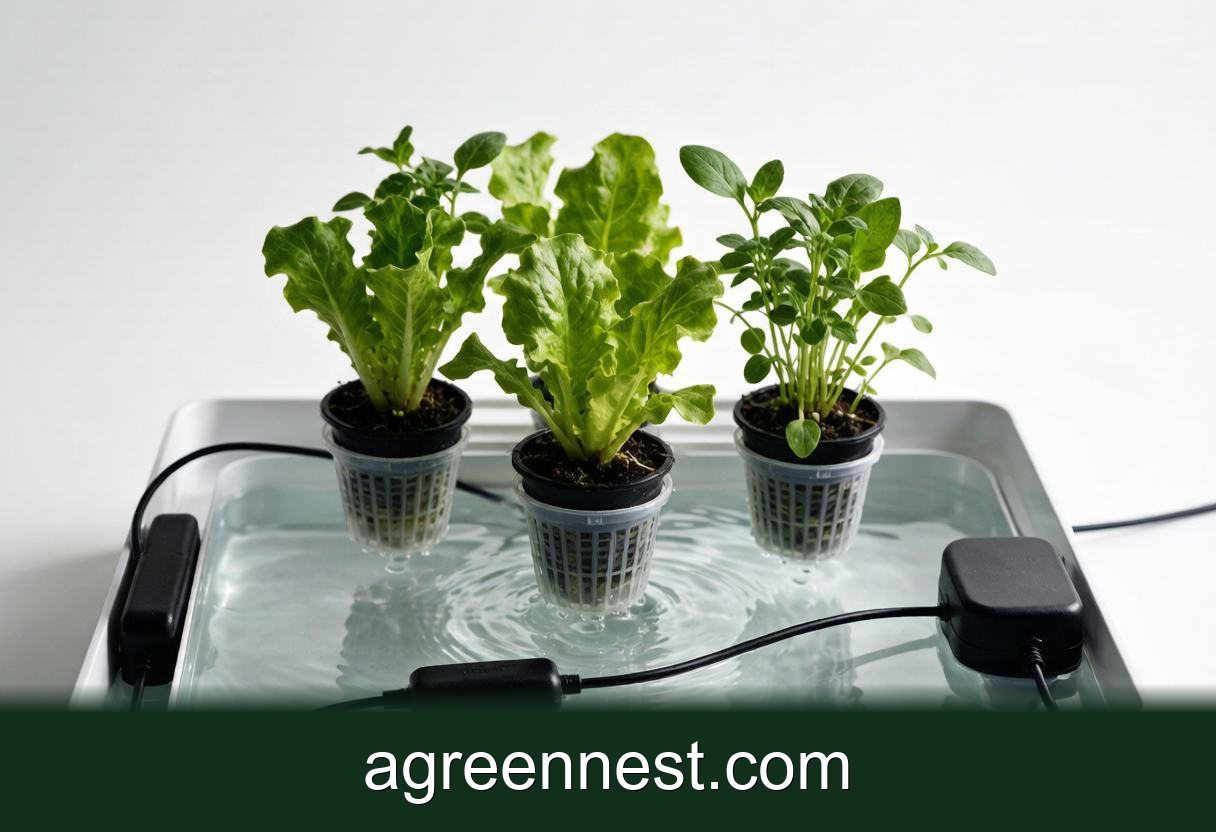
Run Kratky Method (Hydroponics) at steady strength: 1.5-2.0 EC, pH 5.8-6.2, reservoir 18-22 C. Provide a few hours of direct sun for 14-16 hours a day. The only common failure is stale solution, so top up daily and swap the reservoir every 7-14 days so roots stay white and active.
The Kratky method is the simplest form of hydroponics you can run at home. It uses a fixed reservoir of nutrient solution and leaves a gap of air above the liquid. Roots drink from the water below and breathe in the air above. There are no pumps, no timers, and no electricity bills to pay.
This approach suits beginners because the system corrects itself. As the plant drinks, the solution level drops and the air gap grows. New roots stay wet near the bottom and dry near the top. You only step in to top up the reservoir and swap the solution on a schedule. Most first timers grow a single lettuce or a pot of basil on a kitchen counter.
What You Need to Start
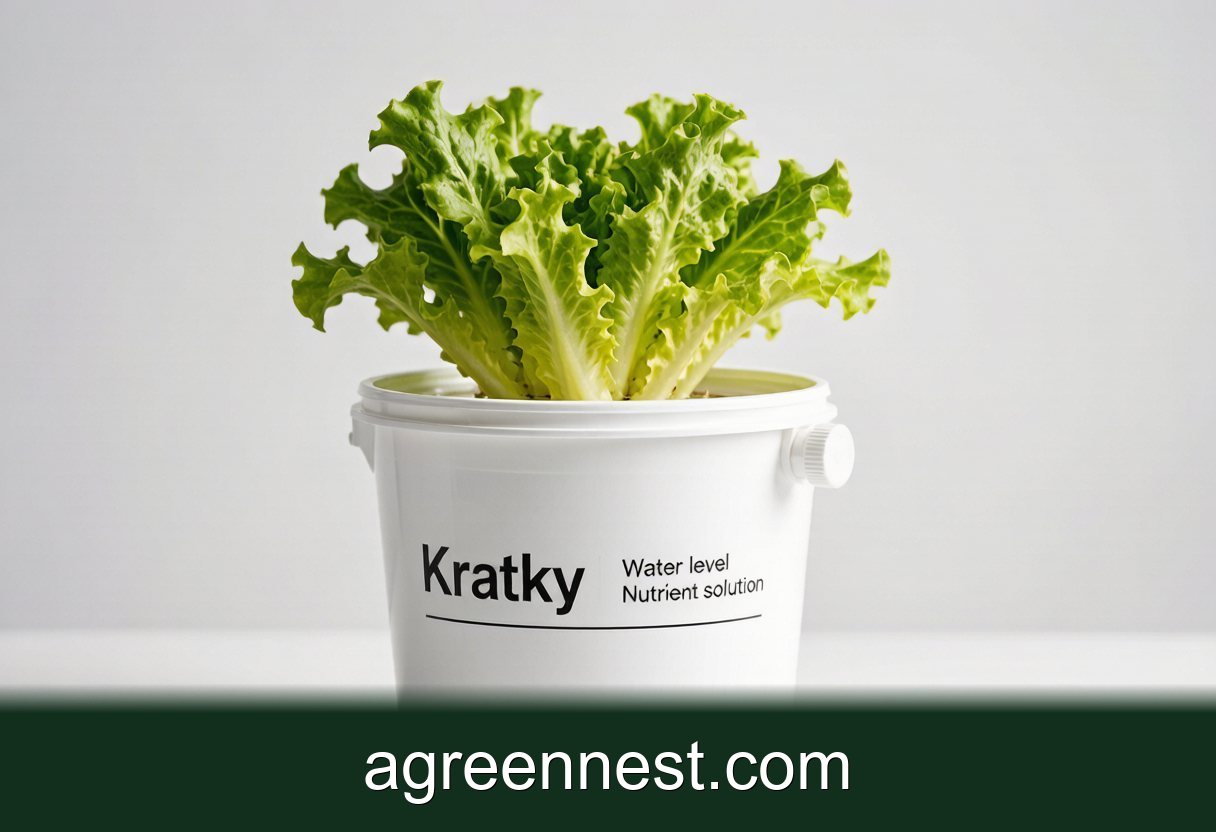
A single Kratky setup costs very little. You need an opaque container that holds between 1 and 2 liters of solution. Use a dark plastic bottle or a food safe bucket. Light must not reach the liquid because algae grows fast in clear water and steals oxygen from the roots.
You also need a lid or a raft to hold the plant in place. The seedling sits in a net pot filled with clay pebbles. Its roots hang down into the solution below. The net pot keeps the stem dry and stops rot from setting in.
Pick a nutrient formula made for hydroponics. A two part A and B mix gives you control over strength. Soil fertilizer will not work here. It lacks the right balance and it can clog the works within days.
A small pH test kit is worth the money. You will use it every few days at first and once a week later. Note the reading in a notebook so you learn your system's habits and catch drift early.
How Does the Air Gap Work?
The air gap is the heart of the method. Fill the reservoir so the bottom roots sit in liquid and the upper roots sit in air. As the plant drinks, the level falls by roughly 1 to 2 centimeters per day in warm weather. The gap widens and the exposed roots learn to pull oxygen from the air.
This self regulation is why Kratky needs no pump. In active systems like deep water culture the grower must bubble air through the water. Here the plant makes its own gradient. The catch is that the gap must not grow too large. If the liquid drops below the lowest roots, the plant dries out and wilts.
Keep the container opaque at all times. A dark interior keeps roots white and healthy. Brown or slimy roots signal trouble and usually mean light or stale water has reached them.
Nutrient and Temperature Numbers
Target a strength of 1.5 to 2.0 EC for leafy crops. EC stands for electrical conductivity and it tells you how much food is in the water. Start new seedlings at the low end near 1.0 EC and raise the strength as leaves mature.
Hold the pH between 5.8 and 6.2. Most nutrients lock out above 6.5 and below 5.5. Test with drops or a meter and correct with pH up or pH down solution. A shift of 0.1 in a day is normal. A shift of 0.5 means the solution is aging and should be changed.
Keep the reservoir at 18 to 22 degrees Celsius, which is 64 to 72 degrees Fahrenheit. Warmer water holds less oxygen and feeds bacteria. Cooler water slows growth but stays clean longer, which suits a lazy gardener.
Give the plant between 14 and 16 hours of light each day. A few hours of direct sun work well, or use a grow light on a timer. Leafy greens want strong light. Herbs like basil tolerate a little less and still taste good.
Why Does the Reservoir Go Stale?
The most common failure is stale solution. The plant pulls nutrients unevenly as it grows. Calcium and potassium drop first, then nitrogen. The leftover salts shift the pH and the roots lose their appetite. Leaves turn pale and growth stalls.
Top up the reservoir daily with plain water to replace what the plant drank. This keeps the strength steady between changes. Every 7 to 14 days, swap the whole solution for a fresh mix. Rinse the roots and the container before refilling to clear any film.
Watch the water line closely. When it sits more than 5 centimeters below the net pot, refill at once. Never let the lowest roots dry out, because recovery is slow and uneven.
Frequently Asked Questions
Q: Do I need pumps and timers?
A: No. Passive Kratky systems need neither. Active systems like deep water culture and nutrient film technique do require a pump.
Q: Is hydroponic food the same as normal fertilizer?
A: No. Use a proper two part A and B hydroponic nutrient. Ordinary soil fertilizer will clog and leave the mix unbalanced.
Q: Why are my leaves pale?
A: The pH is usually off, so roots cannot absorb the food. Test and correct the pH to between 5.5 and 6.5.
Q: Can I move a soil plant to water?
A: Soft stemmed types like pothos and lucky bamboo transition easily. Most soil root balls do not make the switch well.
Kratky is a rewarding way to grow without soil. Start small with one lettuce or herb on a countertop and learn the rhythm. Use our hydroponics guide and the care schedule tool to track your first run from seed to salad.
Recommended Tools for Hydroponic Growing Care
Free, no-signup helpers matched to this guide.
Free Ebooks to Explore
Downloadable handbooks — no email required.
Free Ebook
The AGreenNest Succulent Care Handbook
The complete, beginner-to-confident guide to growing fat, happy succulents — 10 chapters and a 20-plant directory.
Free Ebook
Haworthia & Haworthiopsis Care Handbook
A focused guide to the striped, forgiving Haworthia clan.
Sources & further reading
GreenNest authors research and write every guide independently. The external links below are reputable references we recommend for deeper reading — they are not the sources we copied from.
- UA Controlled Environment Agriculture Center — U Arizona CEAC
- NC State Extension — Plant Toolbox — NC State Extension
- Michigan State University — Gardening — Michigan State University
Share Your Plant Story
Grown something tricky, or found a trick that finally worked? Tell us in the comments, or see what other readers are sharing on our Community page. The best reader tips get folded back into our guides.
Join the Conversation
Have a tip or a question about Kratky Method (Hydroponics)? Share it below — comments are saved on our server.