 AGreenNest
Hydroponic Growing
Basil (Hydroponics)
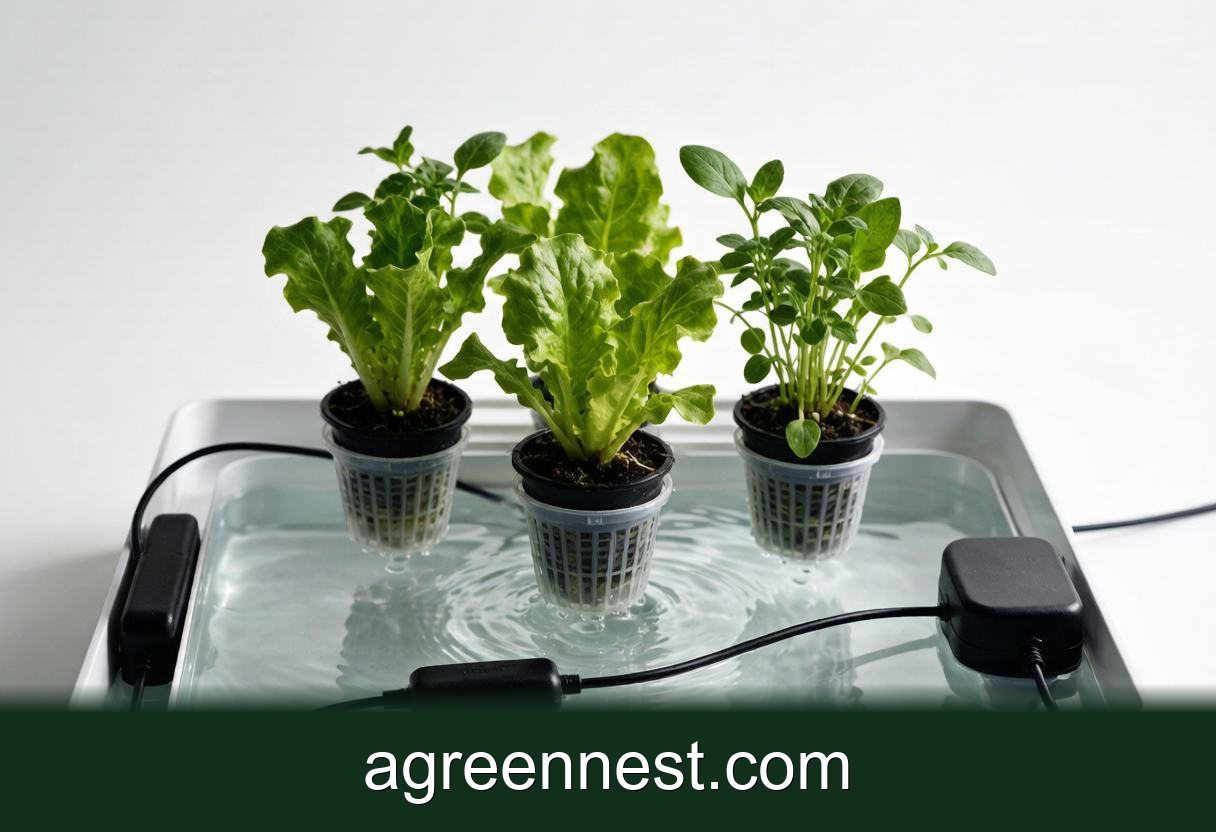
Basil (Hydroponics) grows fastest with a 1.5-2.0 EC nutrient solution at 18-22 C. Aim for 1.5-2.0 EC and pH 5.8-6.2, and give a few hours of direct sun (14-16 hours daily). Keep roots dark and aerated, and change the reservoir every 1-2 weeks to avoid salt buildup.
About Basil
Ocimum basilicum is one of the easiest herbs to grow without soil. The plant pushes out tender leaves fast when the root zone stays warm and the nutrient mix stays balanced. A single stem can give you a continuous harvest for eight to ten weeks before it turns woody. Most growers see the first usable sprigs at day 18 to 21 after a seedling goes into the reservoir.
Seeds sprout in four to six days at 21 to 24 degrees Celsius, which is 70 to 75 degrees Fahrenheit. Thin the seedlings to one per plug once the first true leaves appear, because two plants in one net pot fight for light and both stay small. A starter cube of rockwool holds moisture well for the first two weeks before you move it into the system.
Growers reach for basil because it forgives mistakes. A missed water change or a few cloudy days will slow it, but the plant rarely dies. That makes it a strong first choice if you want a quick win from a hydroponic setup.
What EC and pH Do Basil Plants Need?
Target a nutrient strength of 1.5 to 2.0 EC. Keep the pH between 5.8 and 6.2. Those two numbers decide whether the roots can pull in calcium, magnesium, and iron. Run the reservoir at 18 to 22 degrees Celsius, which is 64 to 72 degrees Fahrenheit. Roots above 24 degrees Celsius, or 75 degrees Fahrenheit, start to lose oxygen and the leaf tips brown.
Check the pH every three days with a calibrated pen. A reading that drifts to 6.5 blocks iron and the young leaves turn pale yellow. Correct it with a few drops of pH down and recheck after ten minutes. Stronger correction is rarely needed if you test on schedule.
Mix your two part A and B nutrient into water that is already at temperature, and never combine the concentrates directly. Add part A, stir for thirty seconds, then add part B. This order prevents a calcium lock that shows up as white specks on the leaves within a week.
How Much Light Does Basil Need?
Give basil 14 to 16 hours of light each day. Use a full spectrum LED that draws about 20 to 30 watts per square foot, or set the pot on a south facing window sill for direct sun. The plant needs at least six hours of that as direct light to keep stems short and leaves dense. Under weak light the stems stretch and the flavour thins.
Measure light with a simple lux app if you are unsure. You want 12,000 to 18,000 lux at the top of the canopy. Drop below 8,000 lux and the plant will lean toward the window and grow slow.
A red to blue ratio of about 5 to 1 helps the plant stay compact and green. Most grower LEDs land near this by default, but check the spec sheet before you buy. If your lamp runs blue heavy the leaves turn dark and small, while a red heavy lamp stretches the stems and weakens the taste.
When Should You Harvest Basil?
Begin cuts once the plant reaches 15 centimetres in height, usually at week four. Take the top set of leaves and the stem just above a node, which leaves two shoots to grow on. A plant cut this way yields roughly 4 to 6 grams of fresh leaf per week at peak. Stop heavy harvesting in the final two weeks before you replace the plant, so it stores energy and the last pick stays tender.
Time your cuts for the morning after the lights come on. The essential oils sit highest then, so the flavour is strong and the leaves crisp. Rinse them in cool water at 10 to 15 degrees Celsius and dry on a towel. Stored in a paper bag in the fridge at 4 degrees Celsius, or 39 degrees Fahrenheit, they keep for six to eight days.
Practical Tips
Pinch the top pair of leaves once the stem has four sets of true leaves. This forces two side shoots and roughly doubles your yield per plant. Remove any flower bud the moment you see it, because flowering stops leaf growth and turns the taste bitter.
Change the reservoir every seven to fourteen days. Old solution builds up salts that burn fine roots. Top up with plain water between changes so the EC does not climb past 2.2. Keep the reservoir dark with a liner or cardboard collar so algae does not compete for nutrients.
Add an air stone on a small pump if you run a DWC bucket. Roots need 5 to 6 parts per million of dissolved oxygen to stay white, and a stone sized for a 10 litre tank covers a three plant setup. Without it the lower roots brown and the whole plant stalls even at a perfect 1.5 EC.
Start with two plants per three litre bucket if you use a Kratky jar, or space seedlings 15 centimetres apart in a NFT channel. Crowding cuts airflow and invites fungus gnats. A small USB fan on low for two hours a day keeps the leaf surface dry and the stems sturdy.
Frequently Asked Questions
Q: Do I need pumps and timers?
A: Not always. Passive systems like Kratky need none. Active systems, such as DWC and NFT, do need a pump.
Q: Why are my basil leaves pale?
A: The pH is usually off, so roots cannot absorb the food. Test and correct to 5.8 to 6.2. Pale new growth also points to low iron, which fixes fast once the pH is right.
Q: Can I move a soil basil plant to water?
A: You can, but wash every bit of soil from the roots first. Soft stemmed herbs transition better than woody ones, and a clean rinse prevents rot in the reservoir.
Basil rewards a careful grower with months of fresh leaves from a small setup. Start small with our hydroponics guide and the care schedule tool, then scale up once you see steady growth at 1.5 to 2.0 EC and pH 5.8 to 6.2.
Recommended Tools for Hydroponic Growing Care
Free, no-signup helpers matched to this guide.
Free Ebooks to Explore
Downloadable handbooks — no email required.
Free Ebook
The AGreenNest Succulent Care Handbook
The complete, beginner-to-confident guide to growing fat, happy succulents — 10 chapters and a 20-plant directory.
Free Ebook
Haworthia & Haworthiopsis Care Handbook
A focused guide to the striped, forgiving Haworthia clan.
Sources & further reading
GreenNest authors research and write every guide independently. The external links below are reputable references we recommend for deeper reading — they are not the sources we copied from.
- Aggie Horticulture (Texas A&M) — Texas A&M AgriLife
- Oregon State University Extension — Oregon State Extension
- UA Controlled Environment Agriculture Center — U Arizona CEAC
Share Your Plant Story
Grown something tricky, or found a trick that finally worked? Tell us in the comments, or see what other readers are sharing on our Community page. The best reader tips get folded back into our guides.
Join the Conversation
Have a tip or a question about Basil (Hydroponics)? Share it below — comments are saved on our server.