 AGreenNest
Hydroponic Growing
Watercress (Hydroponics)
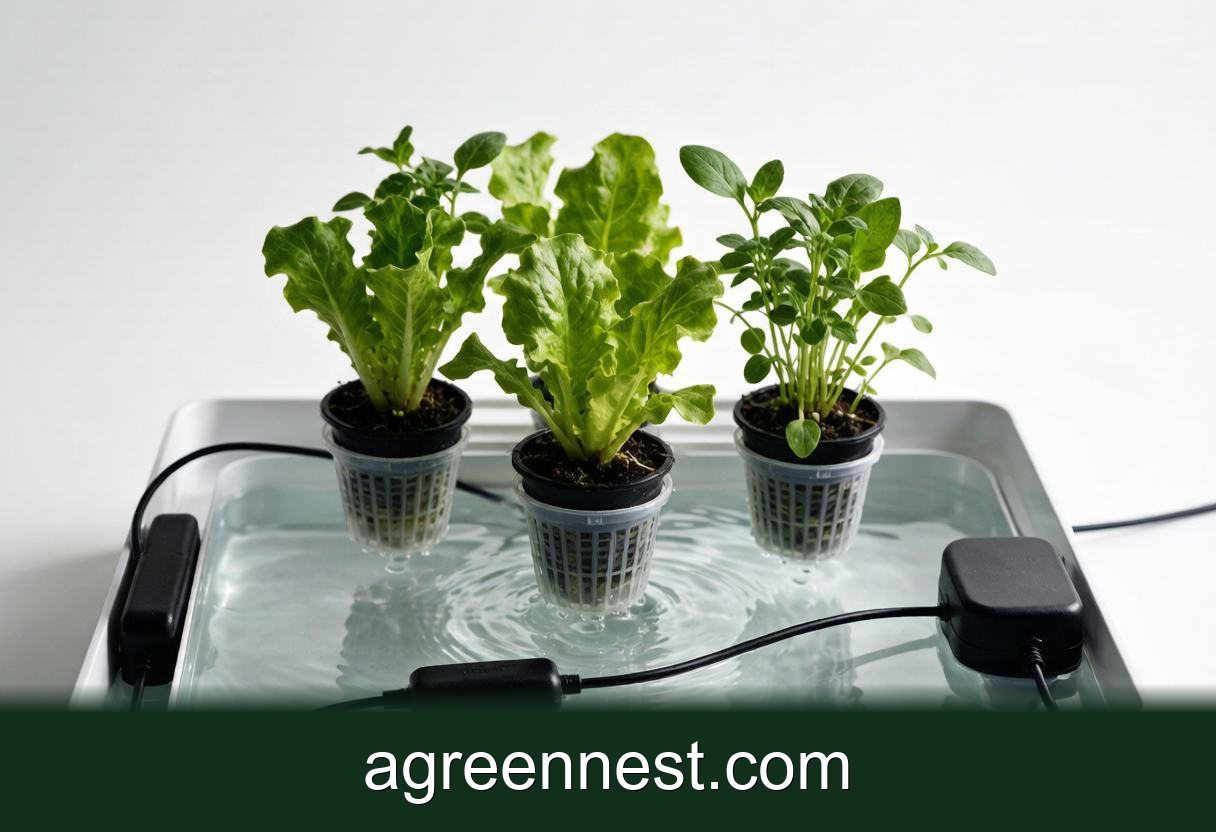
Run Watercress (Hydroponics) at steady strength: 1.5-2.0 EC, pH 5.8-6.2, reservoir 18-22 C. Provide a few hours of direct sun for 14-16 hours a day. The only common failure is stale solution, so top up daily and swap the reservoir every 7-14 days so roots stay white and active.
About Watercress
Nasturtium officinale grows fast in constantly moving water. The peppery stems double in length every seven to ten days when the flow stays steady and the solution stays fresh. A cutting placed in a channel gives you harvestable tips at day 14 to 18. The plant rarely pauses, which is why it suits a beginner who wants quick, visible results.
A single tray 30 centimetres by 40 centimetres yields about 80 to 120 grams of tips per week at full speed. Start three trays on a staggered two week cycle and you get a steady handful at every meal. The plant also cleans the water as it grows, pulling nitrate down by an estimated 30 to 50 parts per million in a busy channel.
Pick watercress over other greens when you want a cut and come again crop. Snip the top third and the lower nodes push four new shoots within a week. That cycle repeats for eight to twelve weeks before the stems get tough.
What Flow Rate Does Watercress Need?
Keep water moving at a gentle, constant pace. A NFT channel with a 200 to 400 litre per hour pump gives the roots a thin film without flooding the stems. Stagnant water is the main killer, because the plant needs oxygen at the root and hates heat. Hold the reservoir at 15 to 20 degrees Celsius, or 59 to 68 degrees Fahrenheit. Above 24 degrees Celsius, or 75 degrees Fahrenheit, the leaves wilt and the flavour turns bitter.
Run the pump twenty four hours a day. Unlike lettuce, watercress will not tolerate a nightly shutoff. If your power drops, the roots sour within four to six hours. A battery backup pump is worth it for any setup past a single jar.
Size the pump to the channel length, not the plant count. A 1 metre tray needs at least 300 litres per hour to keep the film moving at the far end, while a 30 centimetre jar does fine on a 80 litre per hour micro pump. Too little flow and the lower roots dry out between passes.
How Often Should You Change the Solution?
Swap the reservoir every seven to fourteen days. The only common failure in watercress is stale solution, so top up daily and do a full change on schedule. Old mix loses oxygen and the roots grey out. Keep EC at 1.0 to 1.6 and pH between 5.8 and 6.2.
Test pH every two to three days. A drift to 6.5 blocks iron and the young leaves pale. Correct with pH down and recheck. Because the plant drinks fast, top up with plain water so the EC does not climb above 1.8 between changes.
When Is Watercress Ready to Eat?
Cut once stems reach 10 to 12 centimetres, which happens at day 14 to 18 from a cutting. Take the top third and leave the lower nodes, then wait five to seven days for the next round. The peppery bite is strongest in cool rooms near 16 degrees Celsius, or 61 degrees Fahrenheit, and fades in warm rooms above 22 degrees Celsius. Taste a tip each morning, because flavour shifts with the water temperature more than with anything else.
Rinse cut tips in cold water at 4 degrees Celsius, or 39 degrees Fahrenheit, right after cutting to stop the wilt. Dry them on a towel and store in a closed container in the fridge for five to seven days. The crunch holds best if you keep the container at a steady cold, not swinging with the door left open.
Practical Tips
Use a flood and drain tray or a NFT channel rather than a deep tank. Watercress wants its crown dry and its roots wet, so keep the stems above the waterline. Net pots with a coarse media like leca let air reach the base and stop rot.
Plant cuttings 10 centimetres apart so the canopy stays open. Crowding holds humidity and brings snails and aphids to the lower leaves. A small fan for two hours a day keeps the surface dry and the stems firm.
Seed the channel with tip cuttings rather than seeds for speed, since seeds need light to sprout and take 10 to 14 days versus one week for a cutting. Dip the cut end in the flowing water for a minute to seal it, then tuck it into the leca. Roots show white nubs at day three and the plant stands firm by day seven.
Harvest with clean scissors and take no more than the top third each time. Rinse the cut tips in cold water and store them at 4 degrees Celsius, or 39 degrees Fahrenheit, to hold the crunch for five to seven days.
Frequently Asked Questions
Q: Do I need pumps and timers?
A: For watercress, yes, a continuous pump. Passive systems like Kratky work for herbs but this plant needs moving water around the clock.
Q: Why are my watercress leaves pale?
A: Usually the pH is off, so roots cannot absorb the food. Test and correct to 5.8 to 6.2. Stale solution also greys the roots, so check your change schedule.
Q: Can I move a soil watercress plant to water?
A: You can, but rinse all soil from the roots first. Clean cuttings from a stream or shop transition best, and they root within a week in a flowing channel.
Watercress is a fast, peppery crop that rewards a steady hand with the pump and the pH pen. Start small with our hydroponics guide and the care schedule tool, and keep the reservoir near 15 to 20 degrees Celsius with a full change every seven to fourteen days.
Recommended Tools for Hydroponic Growing Care
Free, no-signup helpers matched to this guide.
Free Ebooks to Explore
Downloadable handbooks — no email required.
Free Ebook
The AGreenNest Succulent Care Handbook
The complete, beginner-to-confident guide to growing fat, happy succulents — 10 chapters and a 20-plant directory.
Free Ebook
Haworthia & Haworthiopsis Care Handbook
A focused guide to the striped, forgiving Haworthia clan.
Sources & further reading
GreenNest authors research and write every guide independently. The external links below are reputable references we recommend for deeper reading — they are not the sources we copied from.
- UF/IFAS Gardening Solutions — UF/IFAS
- Aggie Horticulture (Texas A&M) — Texas A&M AgriLife
- UA Controlled Environment Agriculture Center — U Arizona CEAC
Share Your Plant Story
Grown something tricky, or found a trick that finally worked? Tell us in the comments, or see what other readers are sharing on our Community page. The best reader tips get folded back into our guides.

Join the Conversation
Have a tip or a question about Watercress (Hydroponics)? Share it below — comments are saved on our server.