 AGreenNest
Hydroponic Growing
Lettuce (Hydroponics)
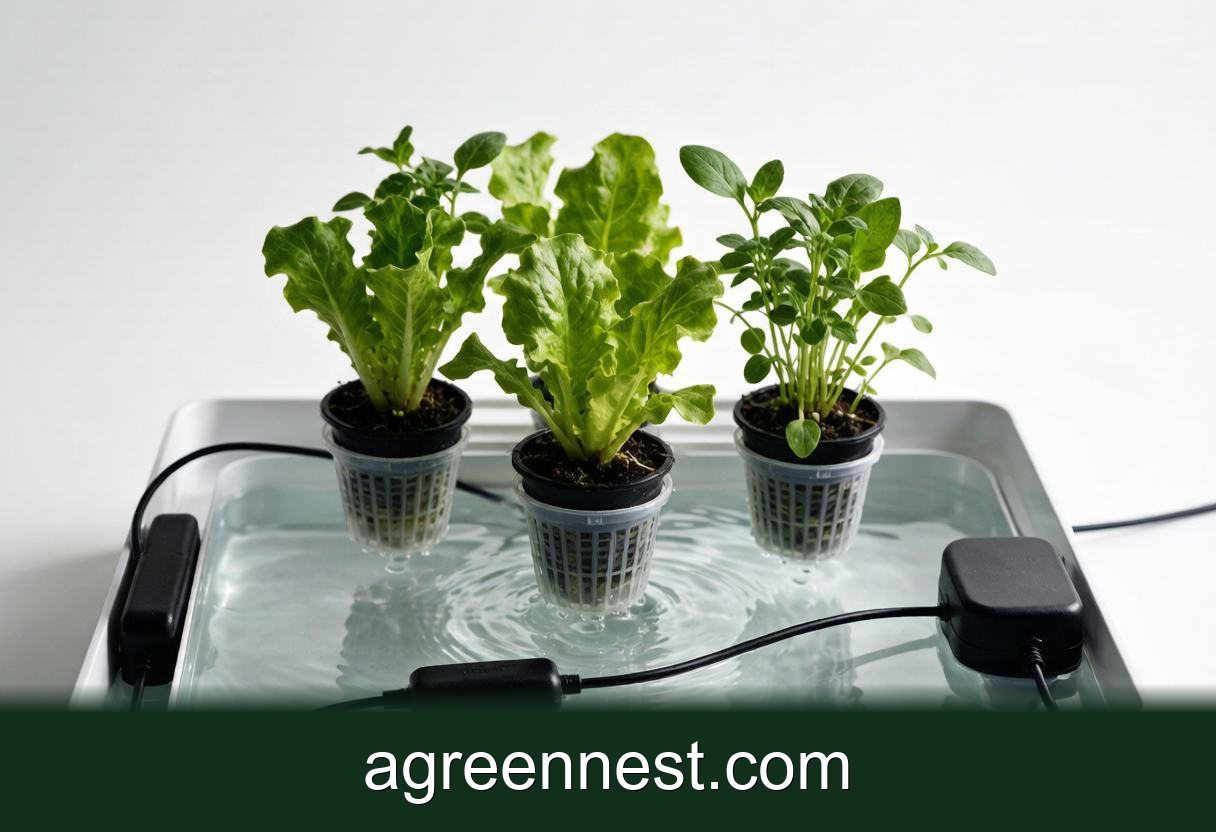
Run Lettuce (Hydroponics) at steady strength: 1.5-2.0 EC, pH 5.8-6.2, reservoir 18-22 C. Provide a few hours of direct sun for 14-16 hours a day. The only common failure is stale solution, so top up daily and swap the reservoir every 7-14 days so roots stay white and active.
About Lettuce
Lactuca sativa is the most forgiving crop you can run in water. Most growers pull the first cut in 3 to 5 weeks from a seedling, and a single plant keeps producing for another 4 to 6 weeks under cut and come again management. The root system stays small, so a 2 inch net pot handles a mature head without extra support. Seeds germinate in 2 to 4 days at 70 F (21 C) and reach transplant size in 10 to 14 days. Butterhead and loose leaf types outyield romaine in tight systems because they tolerate crowding. Start with 2 to 4 seeds per cell and thin to one strong seedling before moving that plant to the reservoir. Space sites 6 to 8 inches apart so leaves overlap slightly at maturity without blocking air. A 12 inch square raft feeds 4 heads, and that footprint yields 1 to 2 pounds of leaves per month once the cycle is steady.
What EC and pH Should You Run?
Target 1.5 to 2.0 EC for the whole growth cycle. Seedlings need the low end, around 1.2 EC, then step up to 1.8 EC once true leaves appear. Keep pH between 5.8 and 6.2, and check it every other day with a calibrated pen. A drift above 6.5 locks out iron, and the leaf tips turn pale yellow within a week. Mix the stock as 1 teaspoon of part A and 1 teaspoon of part B per gallon of water, never combined in concentrated form because they precipitate. Top the reservoir daily to replace what roots drink, because a falling level concentrates salts and burns fine roots. Swap the full reservoir every 7 to 14 days so the solution stays fresh and the roots stay white. Record the EC and pH readings in a notebook, since a steady log shows a problem three days before the leaves show it.
How Long Until Harvest?
Plan for 21 to 35 days from transplant to the first leaf cut. Baby greens are ready at 14 days if you only want 3 inch leaves. Mature butterhead heads need the full 5 weeks and weigh 5 to 8 ounces each. Under 14 to 16 hours of daily light the clock is steady, but short days stretch the schedule by a week. Cut outer leaves 1 inch above the crown and the center regrows for 2 to 3 more harvests. Track each tray on a simple sheet so you know which was planted on which date and when to expect the next cut. A single 12 inch raft produces 4 cuts across 8 weeks, then replant with fresh seedlings to keep the bench full. Yield per square foot runs 0.5 to 1.0 pound a month, which beats most soil beds on the same floor space.
Light and Temperature
Give lettuce 14 to 16 hours of light and at least 4 of those as direct sun if possible. A south window works in winter, while a 20 watt LED bar covers a 2 foot shelf year round. Keep the air at 60 to 70 F (15 to 21 C) and the reservoir at 65 F (18 C). Above 75 F (24 C) the plant shifts energy to flowering and the leaves go bitter. A small aquarium chiller or a shaded reservoir solves summer heat better than any additive you can buy. Run humidity near 50 to 60 percent, because dry air above 70 F scorches leaf edges even when the roots are cool. Set the LED 6 to 12 inches above the canopy and raise it weekly as the heads lift toward the light.
Why Does Lettuce Bolt in Heat?
Bolting is a survival response, not a disease. When day length exceeds 14 hours and the crown warms past 77 F (25 C), the plant sends up a flower stalk and the leaves toughen within days. Once it bolts the texture does not return, so prevention is the only real fix. Move the reservoir to a cooler room, drop the light to 14 hours, and harvest immediately if you see a central stalk. Choosing heat tolerant varieties like Summer Crisp cuts the risk by roughly half in warm homes. Note that cold shock below 40 F (4 C) also triggers bolting through a process called vernalization, so avoid moving trays between a cold garage and a warm room during the same week.
Which Varieties Should You Pick?
Pick by your heat and your space, not by looks. Butterhead types such as Lactuca sativa cultivars like Bibb hold 60 F (15 C) rooms and cut in 30 days. Loose leaf mixes give 3 to 4 harvests from one planting and forgive pH swings of 0.3. Romaine needs the longest run at 40 to 45 days and the tightest pH band, so save it for a stable setup. For a first bucket choose one butterhead and one loose leaf, then compare the cuts before you commit a full raft to either line. Red varieties need 1 hour more light daily to keep color, so plan the timer before you sow.
Frequently Asked Questions
Q: Do I need pumps and timers for lettuce?
A: Not always. A passive Kratky jar grows a full head with zero moving parts. Active systems such as DWC or NFT need an air pump or a circulating timer to keep roots fed.
Q: Why are my inner leaves pale?
A: The usual cause is a pH drift above 6.5 that blocks iron uptake. Test the reservoir, correct to 6.0, and the new growth greens up within a week.
Q: Can I grow lettuce next to tomatoes?
A: No. Tomatoes demand 2.5 to 3.5 EC and warmer water, so sharing one reservoir starves the lettuce. Run them on separate strength or the lettuce bolts.
Lettuce rewards precision more than effort. Hold EC near 1.8, pH near 6.0, and the reservoir under 70 F, and you will cut fresh leaves every week. Start with our hydroponics guide and the care schedule tool, then expand to two trays once the first harvest proves the numbers work for your space.
Recommended Tools for Hydroponic Growing Care
Free, no-signup helpers matched to this guide.
Free Ebooks to Explore
Downloadable handbooks — no email required.
Free Ebook
The AGreenNest Succulent Care Handbook
The complete, beginner-to-confident guide to growing fat, happy succulents — 10 chapters and a 20-plant directory.
Free Ebook
Haworthia & Haworthiopsis Care Handbook
A focused guide to the striped, forgiving Haworthia clan.
Sources & further reading
GreenNest authors research and write every guide independently. The external links below are reputable references we recommend for deeper reading — they are not the sources we copied from.
- NC State Extension — Plant Toolbox — NC State Extension
- Aggie Horticulture (Texas A&M) — Texas A&M AgriLife
- UA Controlled Environment Agriculture Center — U Arizona CEAC
Share Your Plant Story
Grown something tricky, or found a trick that finally worked? Tell us in the comments, or see what other readers are sharing on our Community page. The best reader tips get folded back into our guides.
Join the Conversation
Have a tip or a question about Lettuce (Hydroponics)? Share it below — comments are saved on our server.