 AGreenNest
Succulent Care
Crassula Care: 4 Species for Beginners
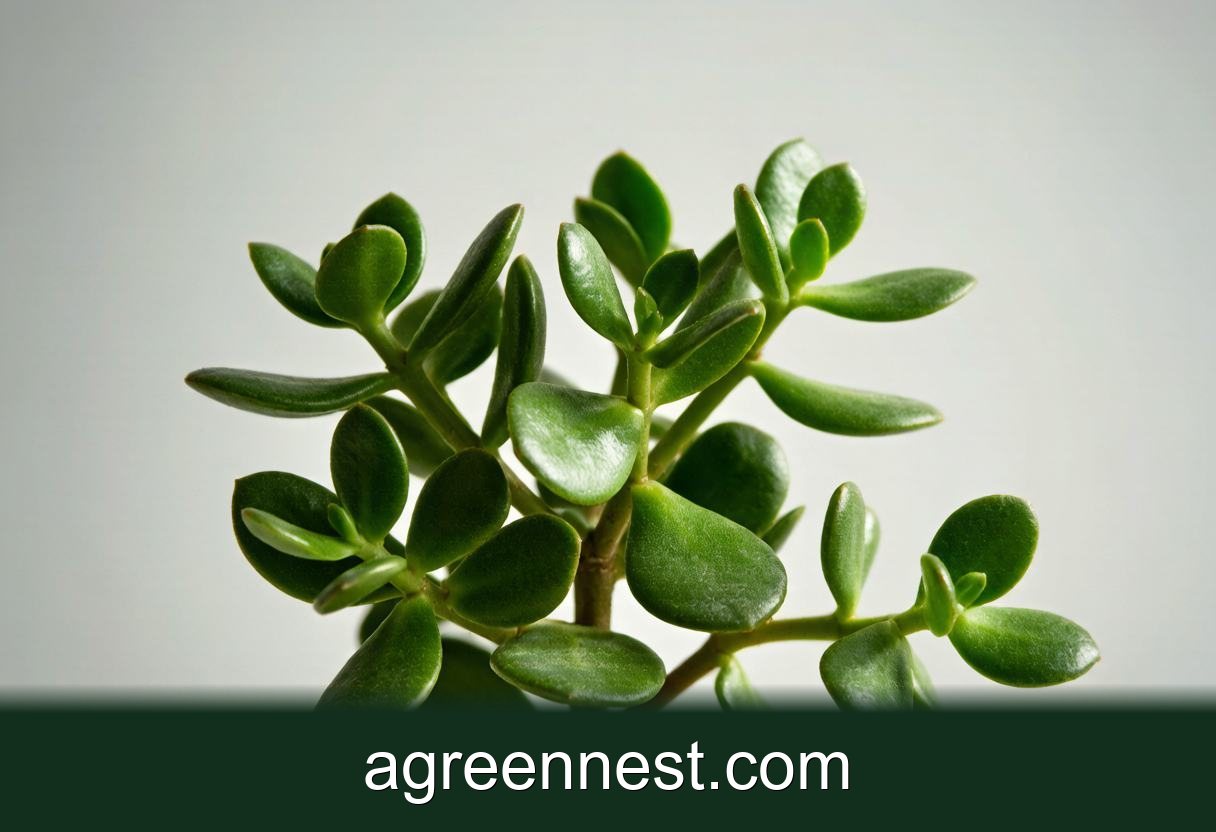
Crassula stores moisture in its leaves, so it tolerates some neglect. Give it bright, indirect light and water only when the potting mix has fully dried out (every 2-3 weeks in summer, less in winter). Plant it in a gritty, fast-draining mix and a terracotta pot to keep the roots healthy and rot-free.
Crassula has been my quiet companion through every gardening phase I have gone through. When I first moved into a small flat with a single sunny windowsill, one jade plant was all I could reliably keep alive. My first Crassula ovata taught me more about patience than any book ever did. These South African succulents are engineered to wait out long dry spells, and they reward a relaxed hand far more than a fussy one.
Over the past eight years I have grown roughly a dozen species from this genus. Four of them have stayed with me the whole time because they are tough, pretty, and forgiving of my busy weeks away from home. If you are new to succulents, this is the family I would hand you first, before anything spiky or rare.
Those pots sit two feet from a south facing window, behind a sheer curtain that softens the hottest part of the afternoon. This setup keeps the leaves happy without scorching them, and it is where I made most of the mistakes worth sharing below.
Why Are Crassulas So Forgiving?
Most houseplants panic when you forget them for a week. Crassula does the opposite. Its leaves are thick water tanks, holding moisture the way a camel stores fat for the desert. Mature specimens of Crassula ovata can coast for three full weeks in summer without a drink and closer to five weeks in the cool, dim months of winter. Copy the Cape Town climate it evolved in: warm days near 75°F (24°C), cooler nights around 55°F (13°C), and soil that dries out completely between soakings.
Beginners often worry they are underwatering. In my experience the bigger danger is the opposite one. Soft, yellow, translucent leaves almost always signal too much love, not too little attention. That lesson cost me a Watch Chain that rotted from the base after a rainy fortnight spent indoors near a leaking window.
Roots hate sitting wet. Every Crassula gets paired with a gritty mix that is at least 50 percent pumice or coarse sand by volume. This change cut my losses from rot by maybe 80 percent over two seasons.
Pests are rare but real. Mealybugs sometimes appear in the tight leaf joints during a warm spell, and I spot them as white fluffy dots. Dip a cotton swab in 70 percent isopropyl alcohol to remove them in minutes, then repeat the wipe every three days for two weeks to catch the hatchlings.
The Four Species I Keep Coming Back To
Four members of this genus earn a permanent place on my shelf. Each one brings a different texture and mood to the collection, which is why a single genus can still feel varied rather than repetitive.
Jade Plant, Crassula ovata, is the classic beginner choice. Woody trunks develop as the plant matures, and a five year old specimen can stand 18 inches tall in a 6 inch pot. Prune it in early spring to keep the canopy compact and to encourage that tree like look that collectors love.
Watch Chain, Crassula muscosa, is the oddball of the group. Its tiny interlocking leaves form a braided green rope that loves bright, breezy corners. Mine lives on a high shelf where the air moves and the light is strong but filtered through a curtain.
String of Buttons, Crassula perforata, stacks coin shaped leaves along a trailing stem. Bright indirect light keeps the stack tight instead of stretched toward the window. Left in low light, the gaps between leaves widen and the plant looks leggy within a month.
Spiderwort Jade, Crassula aragonensis, shows off boxy blue leaves that blush red when the light is strong. It is the drama queen of the four, and I adore the way it shifts colour from steel blue to wine red through the seasons.
How Often Should You Water a Crassula?
Every two to three weeks in summer is my personal rule of thumb. In winter I stretch that to once a month, and sometimes longer if the room stays cool. Trust the pot itself rather than the calendar on the wall.
Lift the container after a good watering and memorise how heavy it feels. Then wait until it feels light again before the next round. You can also use a moisture meter reading between 1 and 3 on the dry scale, though I prefer the lift test for its honesty and zero cost.
One mistake I made early on was watering on a fixed schedule. Plants do not read dates. They respond to light, temperature, and the air moving around them. When the days shorten in November, their thirst drops, and a fixed weekly routine simply drowns the roots. My winter watering drops roughly 40 percent compared with July.
If you travel, do not pre water out of guilt. Crassula shrugs off a two week gap with ease. The plants sat unwatered for eighteen days last spring, and I came home to firm, plump leaves with not a single casualty.
What Temperature Keeps Them Happy?
Daytime warmth of 70 to 78°F (21 to 26°C) suits these succulents best. They tolerate a nightly drop to 50°F (10°C), which actually deepens the red colour on Crassula aragonensis and tightens the rosettes. What they cannot take is a cold draft from an open window in January, so I move the whole shelf away from the glass when the heater cycles off at night.
Humidity is rarely a problem in my home. Average room air at 40 percent relative humidity is plenty for healthy growth. If your bathroom runs at 70 percent, keep the Crassula out of it, because damp still air invites fungal spots on the lower leaves within a week.
Feeding uses a balanced 10-10-10 liquid diluted to one quarter strength, about 1 teaspoon per gallon of water, once in April and once in July. More than that pushes soft growth that breaks easily and attracts the mealybugs I worked hard to avoid.
How Do You Propagate a Crassula?
Leaf propagation is the easiest entry point for a nervous beginner. Pull a healthy leaf from a Crassula ovata with a clean twist, let the wound dry for two days, then lay it on dry gritty mix. Tiny plantlets appear at the base in four to six weeks, and they reach a transplantable size by week ten.
Stem cuttings work for the trailing types. I cut a 3 inch tip from Crassula perforata, leave it on the counter for three days to callus, then stick it in dry soil. Mist lightly only after roots form, usually around day fourteen.
More than thirty propagated Crassula have left my shelf over the years, and each one carries a small story about the parent plant.
Frequently Asked Questions
Q: Which Crassula is easiest to start with?
A: The Jade Plant wins for most people. Crassula ovata roots from a single leaf laid on dry soil, so you can clone your first plant for free in about six weeks.
Q: Can these four share one pot?
A: Yes, if the container drains well and sits in bright indirect light. They share the same water needs, which keeps the routine simple and the roots safe.
Q: Why are my leaves losing their colour?
A: It is usually a light issue. Move the plant to a brighter spot for a few hours of gentle morning sun and the tint returns within two to three weeks.
Collecting one genus is a gentle way to learn a plant family without feeling overwhelmed. Start with a single Crassula ovata, add the others as your confidence grows, and let the light calculator guide where each one sits. Your shelf and your watering can will both thank you.
Sources & further reading
GreenNest authors research and write every guide independently. The external links below are reputable references we recommend for deeper reading — they are not the sources we copied from.
- Missouri Botanical Garden — Missouri Botanical Garden
- Royal Horticultural Society — Houseplant care — RHS
- Royal Botanic Gardens, Kew — Kew Gardens
Recommended Tools for Succulent Care
Free, no-signup helpers matched to this guide.
Free Ebooks to Explore
Downloadable handbooks — no email required.
Free Ebook
Crassula (Jade) Care Handbook
Everything you need to grow a Jade Plant that lives for decades.
Free Ebook
The AGreenNest Succulent Care Handbook
The complete, beginner-to-confident guide to growing fat, happy succulents — 10 chapters and a 20-plant directory.
Share Your Plant Story
Grown something tricky, or found a trick that finally worked? Tell us in the comments, or see what other readers are sharing on our Community page. The best reader tips get folded back into our guides.
Join the Conversation
Have a tip or a question about Crassula Care: 4 Species for Beginners? Share it below — comments are saved on our server.