 AGreenNest
Succulent Care
Spiderwort Jade Care Guide (Crassula aragonensis)
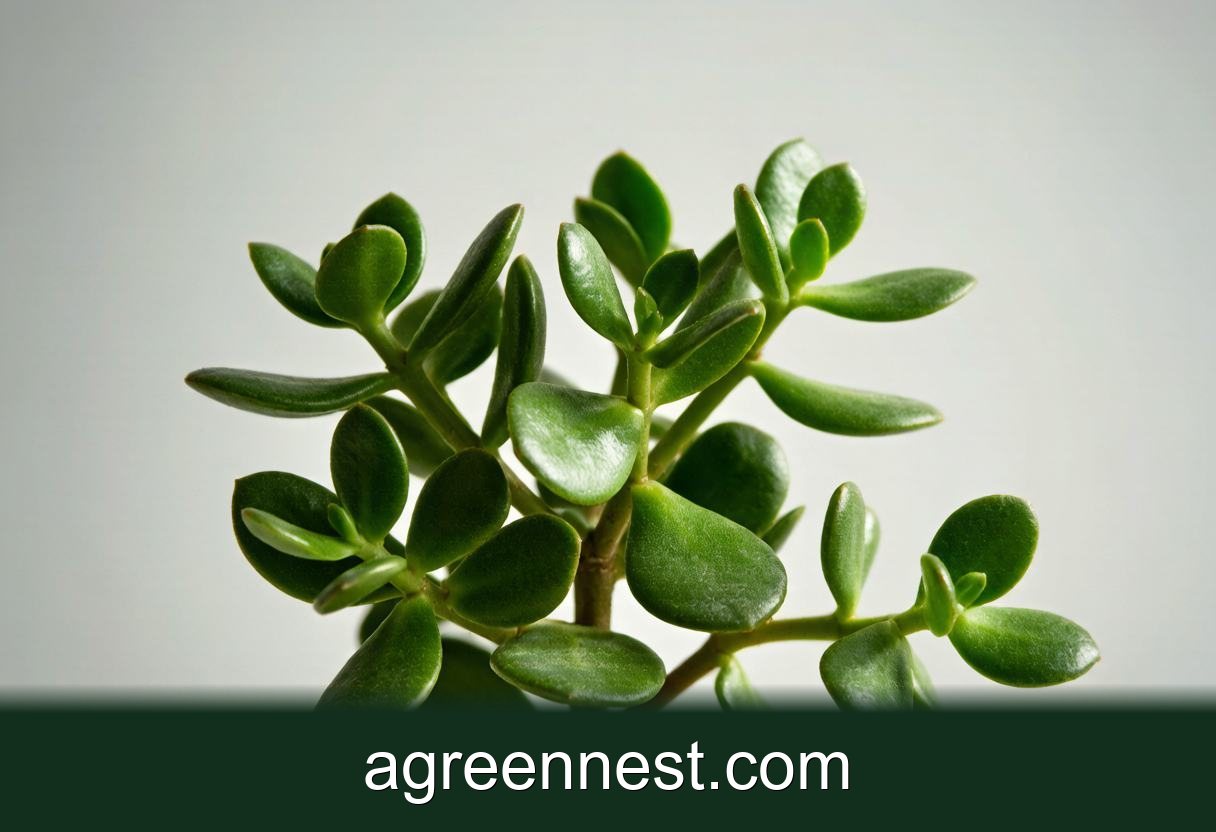
If you are new to Spiderwort Jade Care Guide (Crassula Aragonensis), keep it simple: a few hours of direct sun, and water sparsely. These plants hate wet feet, so always let the soil dry completely between drinks (16 days between waterings). A shallow terracotta pot with gritty soil is the safest setup, and a bright windowsill does the rest.
Spiderwort Jade at a Glance
| Care factor | What Spiderwort Jade wants |
|---|---|
| Light | lots of bright light and some direct sun for the best colour |
| Water | water deeply only when the soil has dried out completely, roughly every 16 days in the growing season, and far less in winter |
| Temperature | comfortable around 50 to 82°F (10 to 28°C) |
| Humidity | dry air is fine |
| Soil | a gritty, free-draining succulent mix |
| Difficulty | straightforward with the basics right |
| Pet safe | no, keep it away from cats and dogs |
Crassula aragonensis belongs to the same genus as the common jade plant, yet its boxy blue leaves set it apart. I placed my first one on a sunny kitchen sill and watched the foliage blush red within a month. That colour shift is part of its charm.
What Makes Spiderwort Jade Different From True Spiderwort?
Despite the name, this plant is not a spiderwort at all. True spiderworts belong to the Tradescantia genus, while our subject is a succulent in the Crassula family. Three features separate it: geometric leaves, a shrubby habit, and a thirst for sun. Geometric leaves stack in neat pairs along each stem. A shrubby habit means it forms a small mound without pruning. A thirst for sun explains the red tones that appear by a bright window.
Knowing the real identity prevents care mistakes. Many growers treat it like a trailing houseplant and overwater. Instead, it behaves like a desert cousin that stores moisture in its tissues. Under bright light the leaf edges turn pink, a sign of happiness rather than stress. Experienced collectors prize the blue grey tone that develops under strong sun.
Light Needs
Lots of bright light keeps the colour vivid. A south or west window gives the direct sun it craves for two to four hours daily. Without enough light the blue fades to plain green and stems stretch. Move it outdoors in summer once nighttime temperatures stay above 55°F (13°C).
Some shade at midday in hot climates prevents scorching. One grow light rated 20 watts, left on for 14 hours, substitutes for a sunny sill. Rotate the pot weekly so all sides colour evenly. Coastal gardeners can leave it in full sun for most of the day.
How Often Should You Water It?
Water every 16 days in the growing season is a sound baseline. Soak the soil until liquid exits the drainage hole, then wait for it to dry fully. Winter cuts the need to roughly every 30 to 40 days, since the plant rests in cool, dim months. Four clues confirm dryness: a pot that feels light, soil pulling from the rim, leaves that look slightly deflated, and no damp odour.
Overwatering is the main killer of this succulent. Sitting in damp soil for even five days can rot the base. Empty the saucer within an hour of watering. If rain is forecast, bring outdoor plants under cover.
Misting does more harm than good here. Gritty mixes that dry in two days protect the roots far better than any spray.
Soil and Pot
Use a gritty, free-draining succulent mix with coarse sand. Mix two parts base to one part pumice for moving water. Terracotta pots breathe and suit this species perfectly. Pick a shallow container, since the roots are minimal, and always insist on a drainage hole. Repot only every three to four years.
Fresh succulent soil feeds the plant for about six months. After that, feed with a 5-10-10 cactus fertilizer at 25 percent strength each month to support colour. Stop all feeding from December through February. Good drainage outweighs rich feeding for this species.
What Temperature Keeps It Happy?
Comfortable warmth of 50 to 82°F (10 to 28°C) spans most homes and gardens. Brief cold to 40°F (4°C) is survived, but frost damages the leaves permanently. Keep it off cold tile floors in winter and away from air conditioning vents blowing 60°F (16°C) air. Dry air near 30 to 40 percent humidity is ideal.
Bringing it indoors before the first frost preserves the season's colour. Bright garage windows work as a winter refuge. Sheltered courtyards often hold the right range even in changeable weather.
How to Propagate Spiderwort Jade
Leaf or stem cuttings root with little effort. Take a 5 to 8 cm stem piece and let the cut end callus for two to three days. Lay it on dry gritty soil and keep the surface barely moist. Roots typically form within 18 to 25 days at 70°F (21°C).
Spring gives the best odds for new plants. Covering the pot with a clear dome holds humidity, but lift it daily to avoid rot. Pot up once roots reach 3 cm. Patience pays, since succulent cuttings root slower than tropicals.
Common Problems and Fixes
Stretched, pale growth means the plant needs more sun. Relocate it to a brighter window or add a grow light. Mushy, translucent leaves signal overwatering; remove affected parts and let the soil dry. Brown, shrivelled tips suggest underwatering, so soak the root ball thoroughly. Mealybugs cluster in leaf axils, and rubbing alcohol on a swab clears them.
Dropping lower leaves in autumn is often natural ageing. Feel the stem for firmness before acting. Scale insects appear as small brown bumps, and horticultural oil controls them.
Frequently Asked Questions
Is Spiderwort Jade safe around pets?
No. Veterinary sources flag Crassula aragonensis as toxic to cats and dogs if chewed, so site it on a high shelf or in a closed room.
Can it live outdoors year round?
Only in frost-free zones where winter stays above 40°F (4°C). Elsewhere, treat it as a summer patio plant and winter it indoors.
Why are the leaves turning red?
Strong light triggers red pigments, which is normal and healthy. Wrinkled red leaves, however, mean thirst.
Spiderwort Jade offers bold colour with minimal fuss when the sun is generous. Give it bright light, a 16 day watering rhythm, and gritty soil, then enjoy the seasonal blush. For a personalised schedule, try our free watering calculator and pair it with the light calculator to pick the perfect spot.
Sources & further reading
GreenNest authors research and write every guide independently. The external links below are reputable references we recommend for deeper reading — they are not the sources we copied from.
- Aggie Horticulture (Texas A&M) — Texas A&M AgriLife
- Cornell Garden-Based Learning — Cornell University
- UF/IFAS Gardening Solutions — UF/IFAS
Recommended Tools for Succulent Care
Free, no-signup helpers matched to this guide.
Free Ebooks to Explore
Downloadable handbooks — no email required.
Free Ebook
Crassula (Jade) Care Handbook
Everything you need to grow a Jade Plant that lives for decades.
Free Ebook
The AGreenNest Succulent Care Handbook
The complete, beginner-to-confident guide to growing fat, happy succulents — 10 chapters and a 20-plant directory.
Share Your Plant Story
Grown something tricky, or found a trick that finally worked? Tell us in the comments, or see what other readers are sharing on our Community page. The best reader tips get folded back into our guides.
Join the Conversation
Have a tip or a question about Spiderwort Jade Care Guide (Crassula aragonensis)? Share it below — comments are saved on our server.