 AGreenNest
DIY Plant Projects
Build a Succulent Terrarium in an Hour
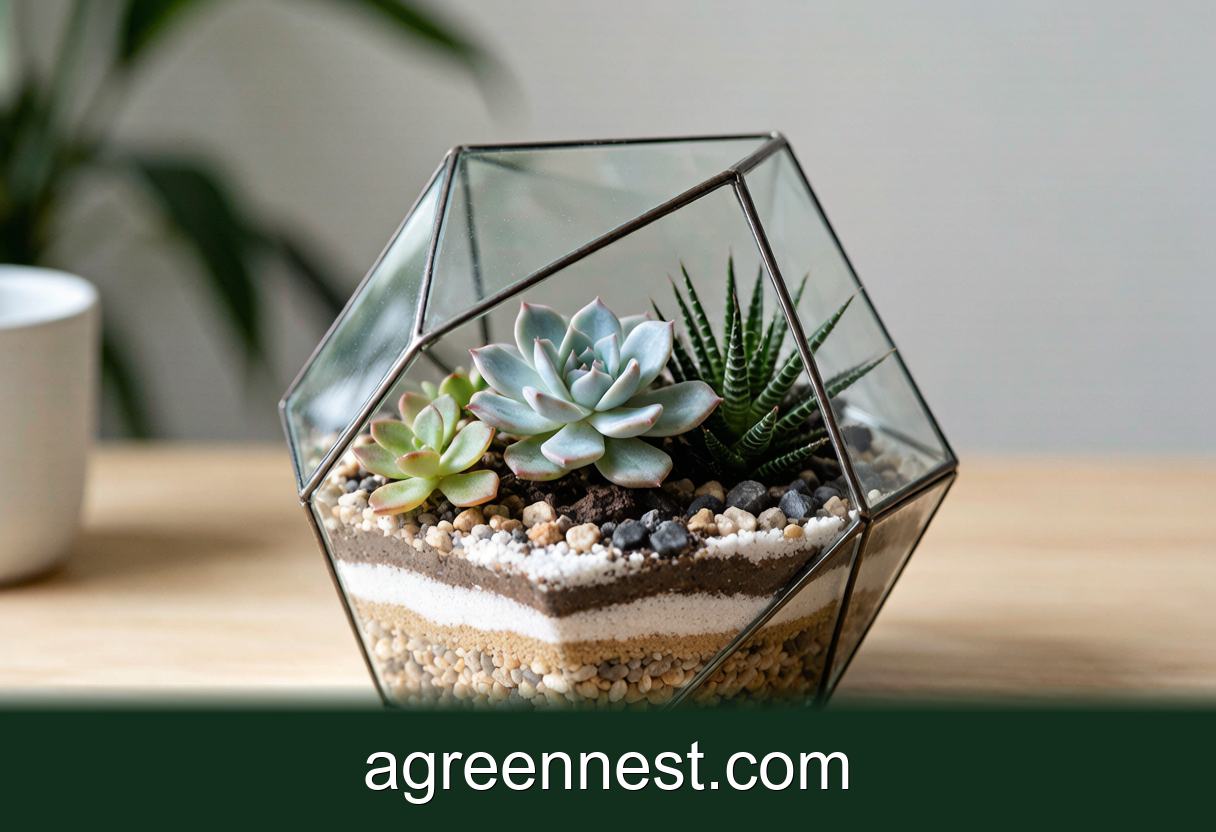
Build a Succulent Terrarium in an Hour is a weekend project with real payoff. Add proper drainage, and set a few hours of direct sun before anything goes in the soil. Check that it is level, seal any wood, and test the fit with an empty pot first, so small build steps now save a lopsided result later.
A succulent terrarium is the cheapest impressive plant project you can build. Three plants, one jar, and about 60 minutes of work. The plants want neglect, and the glass does half the job. This guide keeps the steps short and the numbers exact.
A terrarium is a small closed system. The glass slows water loss, so you water far less than a normal pot. For a beginner this removes the main way plants die, which is overwatering. Pick a jar with a wide mouth if your hands are large, because planting through a narrow neck is fiddly.
What you need
- A clear glass jar with a lid or a narrow neck, at least 500 ml in volume
- Gritty cactus soil, mixed at a ratio of 1 part perlite to 2 parts potting soil
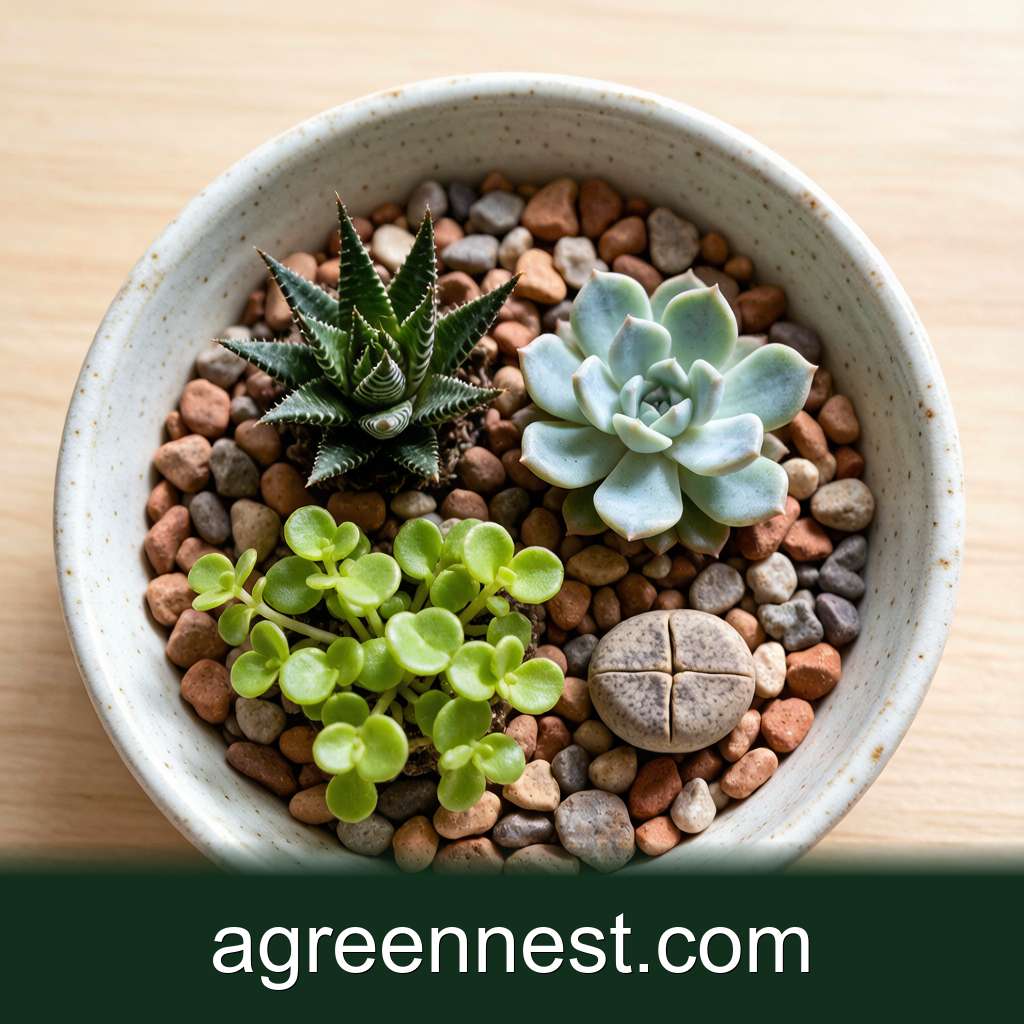
- 2 or 3 small succulents that stay under 8 cm tall, such as Echeveria elegans, Haworthia cooperi, or Lithops lesliei
- Horticultural grit or small pebbles, about 2 to 3 cm deep for the base layer
- A small twig, rock, or piece of driftwood for looks
- A clean cloth and a measuring spoon
No grow light, no pump, no power. That is the whole supply list. Buy the smallest plants you can find, because dwarfs stay in scale with the jar for years.
Prep in 5 minutes
Wash the jar and dry it completely. Trapped moisture is the single biggest cause of failure, so every item going in must be bone dry. Bake the soil mix at 90°C (194°F) for 10 minutes to kill fungus gnat eggs. A 2 to 3 cm layer of grit at the bottom acts as false drainage so the soil above never sits in a puddle. Skipping this layer is the fastest way to rot a succulent from the roots up. Wipe the inside of the glass with the clean cloth so no dust spots the view later. Dust on the glass reads as neglect even when the plants are fine.
How do you build the layers?
- Add soil on top of the grit, mounded slightly higher at the back for a landscape look.
- Dig small holes with a finger and settle each plant root in. Space plants so they are not touching, since crowding invites rot.
- Tuck grit around the stem bases so no wet soil piles against a stem.
- Place the decoration after the plants, not before, so you do not bury them.
- Do not water yet. Leave the lid off for a full day so trapped humidity escapes.
Each step takes under a minute. The whole build fits inside a single lunch break, and the result looks like a designed object rather than a craft project.
Aftercare for week one
Water once, lightly, at the soil, about 15 ml for a jam-jar size, then set the lid on loosely, not sealed. A succulent terrarium wants air, not a swamp. After that, ignore it. Mine gets a splash every 3 to 5 weeks in summer and every 6 to 8 weeks in winter. If condensation fogs the glass for more than 24 hours, remove the lid for a few hours. Constant fog means too wet. Check the jar for the first 7 days, then look at it once a month. Watch the grit layer, not the calendar. When the bottom pebbles look dry for a full week, that is your signal. In a 500 ml jar the total water needed per month is under 60 ml, so a small syringe is the best tool. Pour slow, aim at the soil, and stop the moment the top looks damp.
Which plants will not outgrow the jar?
Stick to dwarfs. Haworthia cooperi stays under 8 cm and tolerates dim light. Echeveria elegans forms a 6 cm rosette and needs bright indirect sun. Crassula ovata minis stay small for years with sparse water. Avoid anything tagged to reach 30 cm, because a tall plant breaks the scale of the jar within a single season. A trailing Senecio rowleyanus adds a spill off the front edge without crowding the top.
What temperature keeps succulents happy?
Most terrarium succulents prefer daytime warmth between 65 and 80°F (18 and 27°C) and a night drop of about 10°F. Keep the jar off a cold windowsill in winter and away from a heating vent in summer. Stable temperatures beat brief extremes. A room you find comfortable is usually a room they tolerate without stress.
How do you fix a terrarium gone wrong?
Brown, mushy leaves mean too much water. Pull the lid, leave it off for 48 hours, and remove the worst leaf with clean scissors. Stretched, pale growth means too little light, so move the jar 30 cm closer to the window. Mealybugs show as white cotton clumps, and you can dab them with a 70% isopropyl alcohol swab once a day for 5 days. Most problems trace back to one cause, water, so change that first before blaming the plants.
Frequently Asked Questions
Can I keep the lid sealed permanently?
Loosely, yes. Fully sealed, no. Humidity climbs and the succulents rot. These are desert plants, not ferns.
Do I need a grow light for the jar?
Only in a dark room. A bright windowsill out of direct sun is enough for these small types.
Mine grew mold. What went wrong?
Too much water plus a tight seal. Remove the lid, let it dry for a week, and cut watering in half. A 1 cm charcoal layer under the soil also helps.
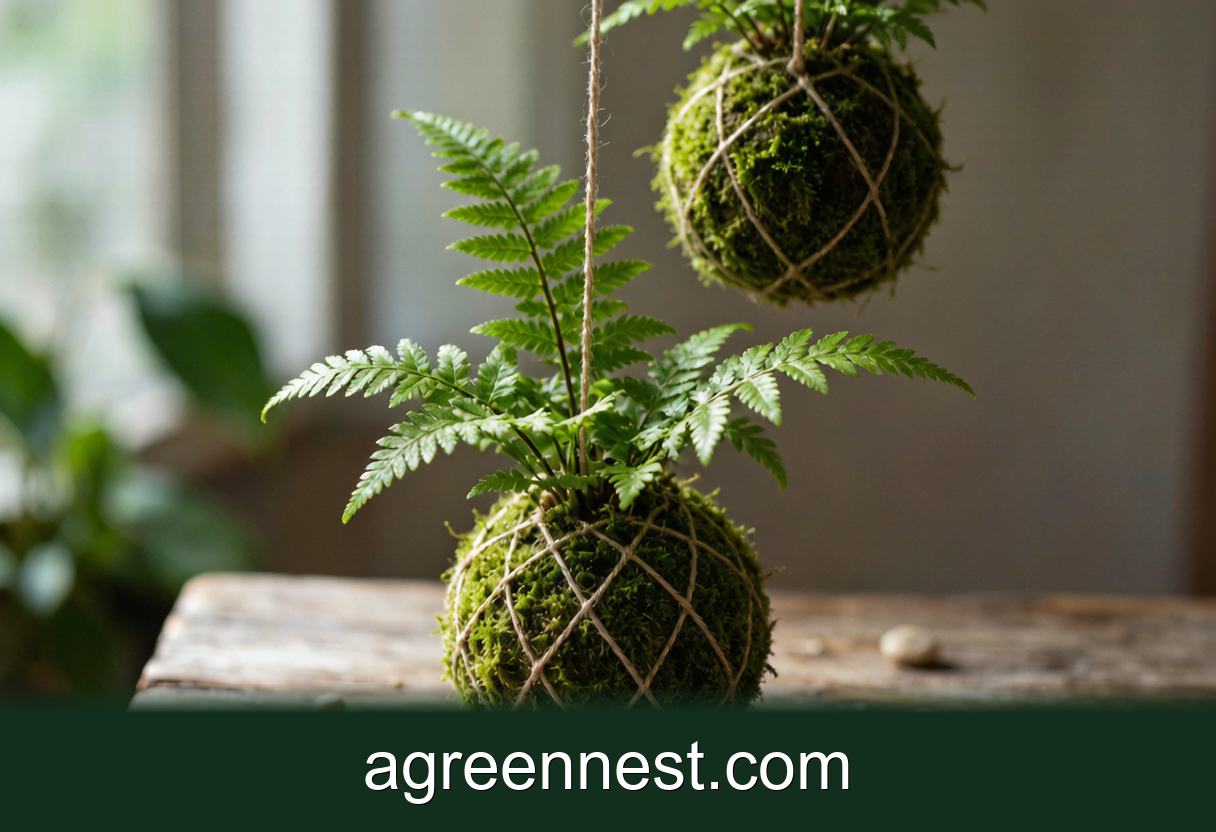
The charm of a succulent terrarium is that it looks finished but asks almost nothing. Build it, water it once, and place it where you will see it, not where you will fuss over it. If the hour went well, a kokedama moss ball is the next project at the same cost and time.
Recommended Tools for DIY Plant Projects Care
Free, no-signup helpers matched to this guide.
Free Ebooks to Explore
Downloadable handbooks — no email required.
Free Ebook
The AGreenNest Succulent Care Handbook
The complete, beginner-to-confident guide to growing fat, happy succulents — 10 chapters and a 20-plant directory.
Free Ebook
Haworthia & Haworthiopsis Care Handbook
A focused guide to the striped, forgiving Haworthia clan.
Sources & further reading
GreenNest authors research and write every guide independently. The external links below are reputable references we recommend for deeper reading — they are not the sources we copied from.
- Michigan State University — Gardening — Michigan State University
- University of Minnesota Extension — U Minnesota Extension
- NC State Extension — Plant Toolbox — NC State Extension
Share Your Plant Story
Grown something tricky, or found a trick that finally worked? Tell us in the comments, or see what other readers are sharing on our Community page. The best reader tips get folded back into our guides.
Join the Conversation
Have a tip or a question about Build a Succulent Terrarium in an Hour? Share it below — comments are saved on our server.