 AGreenNest
Hydroponic Growing
Strawberries (Hydroponics)
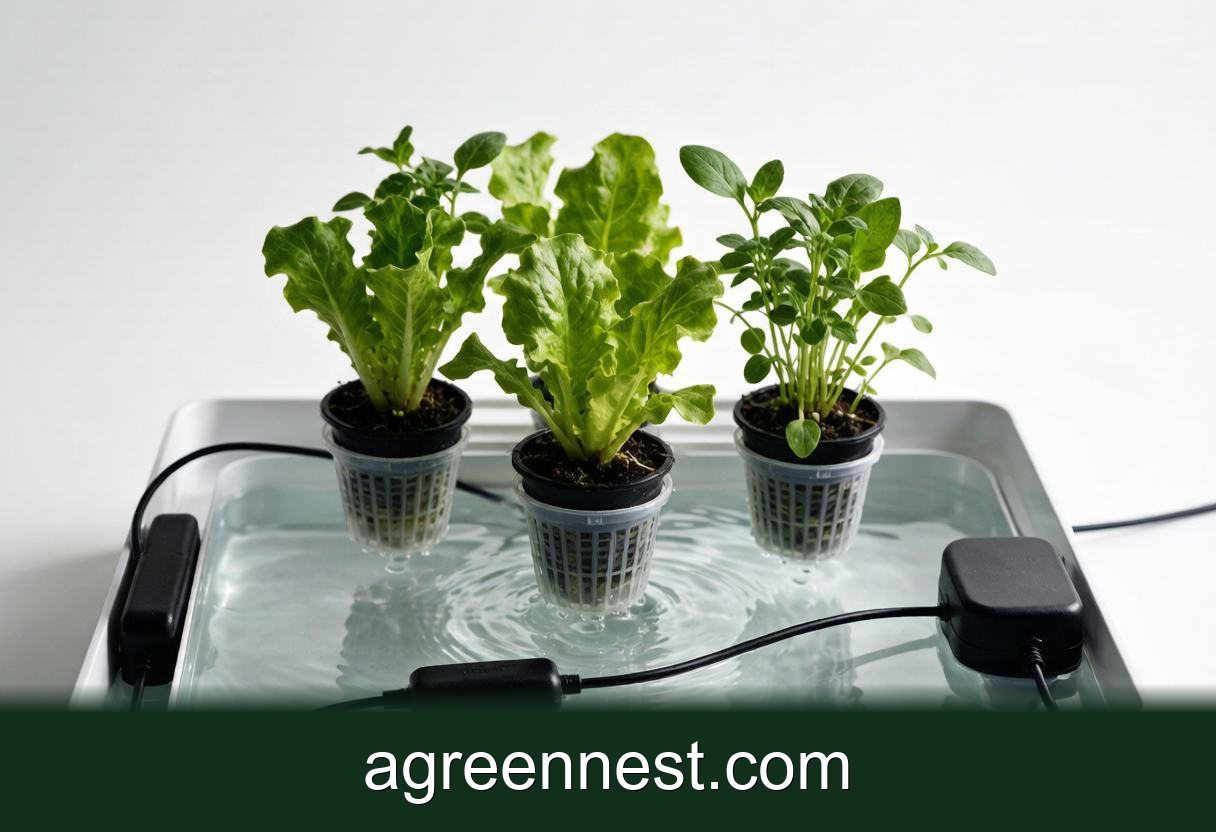
Strawberries (Hydroponics) grows fastest with a 1.5-2.0 EC nutrient solution at 18-22 C. Aim for 1.5-2.0 EC and pH 5.8-6.2, and give a few hours of direct sun (14-16 hours daily). Keep roots dark and aerated, and change the reservoir every 1-2 weeks to avoid salt buildup.
About Strawberries
Fragaria ananassa performs well in a hydroponic system when you pick the right type. Day neutral varieties such as Albion and San Andreas flower and fruit across a long window instead of one spring flush. A healthy mother plant can push out berries for five to seven months under steady light. Expect the first ripe fruit around day 60 to 75 from a rooted runner placed in the channel.
Runners form at week six to eight and you can root them in a separate cup of the same solution to build a second plant for free. A mature plant holds eight to twelve crowns in a good season, and each crown can open three to five flowers at once. More crowns mean more fruit, so keep the mother plant vigorous with a steady feed.
Choose day neutral or everbearing stock over June bearing types. June bearing plants give one big crop and then rest, which wastes the lamp time you pay for. Day neutral plants keep producing as long as the temperature stays in range.
What Nutrient Strength Do Strawberries Need?
Run the reservoir at 1.2 to 1.6 EC during vegetative growth and bump it to 1.8 to 2.2 EC once flowers set. Keep pH in the 5.5 to 6.0 band. Strawberries are calcium hungry, so a weekly dose of calcium nitrate at 0.5 grams per litre keeps the fruit from tip burn. Hold the root zone at 18 to 21 degrees Celsius, that is 64 to 70 degrees Fahrenheit. Above 26 degrees Celsius, or 79 degrees Fahrenheit, pollination fails and berries stay small.
Test EC with a meter each morning before the lights turn on. A reading above 2.4 EC signals salt stress and you should dilute with plain water. Below 1.0 EC the leaves yellow and the runners thin out.
Split your potassium and calcium feeds if tip burn appears despite the right pH. Add calcium nitrate on Monday and Wednesday, then potassium sulphate on Friday, so the two salts never sit together in the reservoir. This simple rotation cleared the burns on my own raft within two weeks.
How Many Hours of Light Do They Need?
Give plants 12 to 14 hours of light daily. A full spectrum bar at 25 to 35 watts per square foot works for a four plant raft. Strawberries need at least eight hours of that as direct equivalent light to set fruit. Short days trigger dormancy and the plant stops flowering.
Watch the canopy temperature under the lamp. Leaf surface above 28 degrees Celsius, or 82 degrees Fahrenheit, scorches the flowers. Raise the light or add a small fan if the tips curl.
When Should You Expect the First Berries?
The first flowers open at day 35 to 45 under 12 to 14 hours of light. Fruit ripens 28 to 35 days after pollination, so plan for the first pick around day 60 to 80. Cool rooms at 18 degrees Celsius, or 64 degrees Fahrenheit, slow this by about a week, while warm rooms at 24 degrees Celsius speed it by a few days. Tag each flower with a bit of tape on the day you pollinate so you can predict the ripe date within three days.
Pick fruit the morning it turns fully red, because berries left a second day on the crown soften and attract fungus. A ripe strawberry comes off with a gentle tug and a sound snap. Forced pulls tear the stem and open a wound that rots the next berry beside it.
Practical Tips
Pollinate by hand. Walk past the flowers once a day and tap each stem or run a soft brush across the centres. Without this step, berries come out small and lopsided even with perfect nutrients. In a home room there is no wind and no bees, so the job falls to you.
Change the reservoir every seven to ten days. Strawberry roots are fine and sensitive to stale solution. Top up with water between changes and keep the EC from creeping past 2.2. Net pots spaced 20 centimetres apart give each crown room and cut the chance of grey mould.
Flush the system with plain pH 5.8 water for ten minutes every third change to clear salt crust on the roots. Use a 2 litre flush per net pot and let it drain before you refill. Skip this and the fine roots coat in white scale that blocks uptake even at 1.5 EC.
Start with three to five plants per square foot of raft. More than that and the canopy stays wet after watering, which invites botrytis. A USB fan for two hours a day drops humidity at the leaf surface and keeps the fruit clean.
Frequently Asked Questions
Q: Do I need pumps and timers?
A: Not always. Passive systems like Kratky need none. Active systems, such as DWC and NFT, do need a pump.
Q: Why are my strawberry leaves pale?
A: Usually the pH is off, so roots cannot absorb the food. Test and correct to 5.5 to 6.0. Pale new growth can also mean low iron, which clears once the pH is back in band.
Q: Can I move a soil strawberry plant to water?
A: You can, but wash the roots clean first. Bare root runners from a nursery transition faster than a pot bound plant pulled from garden soil.
Strawberries ask for more attention than herbs, but the payoff is months of fresh fruit from a spare corner. Start small with our hydroponics guide and the care schedule tool, and keep the root zone near 18 to 21 degrees Celsius with pH 5.5 to 6.0 for steady crops.
Recommended Tools for Hydroponic Growing Care
Free, no-signup helpers matched to this guide.
Free Ebooks to Explore
Downloadable handbooks — no email required.
Free Ebook
The AGreenNest Succulent Care Handbook
The complete, beginner-to-confident guide to growing fat, happy succulents — 10 chapters and a 20-plant directory.
Free Ebook
Haworthia & Haworthiopsis Care Handbook
A focused guide to the striped, forgiving Haworthia clan.
Sources & further reading
GreenNest authors research and write every guide independently. The external links below are reputable references we recommend for deeper reading — they are not the sources we copied from.
- NC State Extension — Plant Toolbox — NC State Extension
- University of Minnesota Extension — U Minnesota Extension
- UA Controlled Environment Agriculture Center — U Arizona CEAC
Share Your Plant Story
Grown something tricky, or found a trick that finally worked? Tell us in the comments, or see what other readers are sharing on our Community page. The best reader tips get folded back into our guides.

Join the Conversation
Have a tip or a question about Strawberries (Hydroponics)? Share it below — comments are saved on our server.