 AGreenNest
Plant Pests & Diseases
Caterpillars on Plants: Chewed Leaves & Quick Fixes
Most Caterpillars on Plants problems trace back to the usual indoor pests, not bad luck. Inspect weekly (leaf undersides, stem joints), quarantine new plants, and treat early with a targeted spray. Good airflow and dry foliage do more than any bottle, since prevention beats the cure every time.
Caterpillars are the chewing stage of moths and butterflies, and they can strip a beloved plant faster than most beginners expect. The damage is easy to spot once you know the signs, and the fixes are simple and family-friendly. Acting at the first hole spares you a much bigger cleanup later. According to entomologists at Texas A&M Aggie Horticulture, the larvae of common household moths pass through several growth stages in just two to four weeks, which explains why a single overlooked worm becomes a full crisis almost overnight.
What Does Caterpillar Damage Look Like?
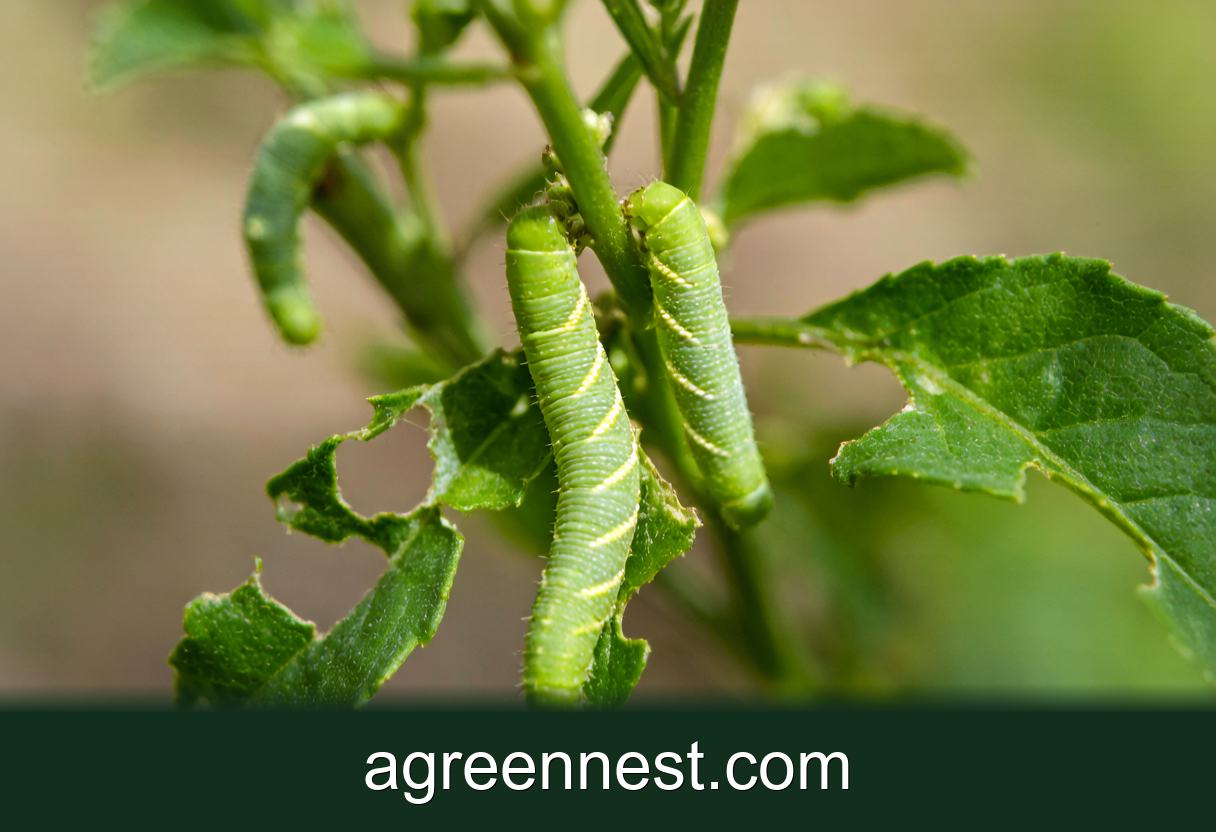
The obvious symptom is irregular holes chewed through the middle or edges of leaves, sometimes leaving only the veins behind. Larger caterpillars can defoliate a small plant in just a few nights if you leave them undisturbed.
Look for the larvae themselves: soft green, brown, or striped bodies curled on the undersides of leaves or along stems. They are often the same color as the plant, so check closely in the morning when they are sluggish and easy to catch.
Small dark pellets called frass are the easiest clue. These tiny droppings gather on leaves below the feeding site and look like coarse black pepper scattered on the foliage, a tell-tale sign that a feeder is at work above.
You may also spot pale yellow eggs stuck in small clusters on the leaf underside, or fine silk webbing on heavy feeders like cabbage whites (Pieris brassicae). Finding eggs early lets you wipe them off before a single leaf is bitten. Oregon State Extension notes that a weekly leaf check during warm months prevents most outbreaks before they start.
Why Do Caterpillars Show Up Indoors?
Adult moths lay tiny eggs on the undersides of leaves, and the hatching larvae start chewing within days. Open windows, patio season, and new outdoor plants are the usual ways eggs arrive indoors, because moths simply fly in during summer evenings.
Warm conditions around 21-27°C (70-80°F) speed up the life cycle, so infestations build quickly in summer. Plants under stress from drought or low light are slower to recover from the nibbling, which makes a weak plant a magnet for more damage.
Caterpillars often move from plant to plant once they run out of food on the first host. A single unnoticed larva can wander a shelf and damage several pots in a week, spreading the problem far beyond the original leaf.
From egg to full-grown caterpillar usually takes two to four weeks depending on the species and temperature. That short window is why a weekly check during warm months keeps an outbreak from exploding into a full invasion, a point the American Phytopathological Society stresses in its pest guidance.
How to Fix It
Hand-pick caterpillars off the plant and drop them into a jar of soapy water. This is the safest method for homes with kids and pets and works well for light infestations, since you remove the pest without any chemical at all.
Spray the foliage with neem oil at 2 tablespoons per 1 gallon (about 4 litres) of water every 7 days to discourage feeding and disrupt the larvae. Coat both leaf surfaces, since caterpillars hide underneath and a missed spot becomes a fresh hole.
For heavier problems, use a Bacillus thuringiensis (Bt) spray, a natural soil bacterium that only harms caterpillars. Mix according to the label and apply every 5 to 7 days; larvae stop eating within 24 to 48 hours and die soon after, making Bt the go-to choice recommended by Texas A&M for food-safe control.
Young larvae are also controlled with insecticidal soap sprayed every 3 to 4 days, which smothers soft-bodied pests on contact. Isolate the plant for 2 weeks so wandering caterpillars cannot reach your other pots during the treatment window.
Check plants with a torch at dusk, because many caterpillars feed at night and hide by day. Wear gloves if you dislike handling them, and rinse leaves after any spray so residue does not build up on edible herbs you plan to eat.
How Do I Stop Caterpillars Coming Back?
Inspect new plants and cut flowers for eggs before bringing them inside, and keep summer windows screened. A quick weekly leaf check catches eggs before they hatch into hungry larvae, and that single habit does more than any spray bottle.
Encourage natural predators outdoors like ladybirds and lacewings, and avoid broad pesticides that kill the good bugs. Remove fallen leaves and frass so survivors have no cover and cannot restart the cycle on fresh growth.
Sticky traps near open windows catch adult moths before they lay eggs, and quarantining new arrivals for 2 weeks gives you time to spot trouble. Consistent checking is the real secret to staying caterpillar-free, according to Oregon State Extension advice.
On patios, a few companion herbs such as basil or strong-smelling mint can confuse egg-laying moths, though they are no substitute for hands-on scouting. Keep daytime temperatures from staying above 30°C (86°F) for long, since heat speeds the whole life cycle and turns one worm into a dozen.
Frequently Asked Questions
Q: Are caterpillars harmful to humans or pets?
A: Most caterpillars on houseplants are harmless to people and pets, though a few hairy species can irritate skin, so wear gloves when handling them.
Q: How fast does Bt kill caterpillars?
A: Bt makes larvae stop feeding within 24 to 48 hours, and they usually die within 2 to 4 days after a thorough spray of the leaves.
Q: Will neem oil get rid of caterpillars completely?
A: Neem oil repels and slows feeding but works best on light infestations; pair it with hand-picking or Bt for a heavy outbreak.
Q: Why do I keep finding holes even after treatment?
A: Old holes stay, so judge success by no new damage and no fresh frass, not by healed leaves, and keep spraying on schedule for two weeks.
Q: Should I quarantine a plant with caterpillars?
A: Yes, isolate it for at least 2 weeks so wandering larvae cannot move to nearby pots while you finish the treatment cycle.
Caterpillars are messy but very manageable with a little routine checking and the right spray. For help naming the exact critter on your leaves, open our pest identifier tool and match the photo in seconds.
Recommended Tools for Plant Pests & Diseases Care
Free, no-signup helpers matched to this guide.
🔍 Free Tool
Pest & Problem Identifier
Pick the symptoms you see and get the likely culprit plus a fix.
Free Ebooks to Explore
Downloadable handbooks — no email required.
Free Ebook
The AGreenNest Succulent Care Handbook
The complete, beginner-to-confident guide to growing fat, happy succulents — 10 chapters and a 20-plant directory.
Free Ebook
Haworthia & Haworthiopsis Care Handbook
A focused guide to the striped, forgiving Haworthia clan.
Sources & further reading
GreenNest authors research and write every guide independently. The external links below are reputable references we recommend for deeper reading — they are not the sources we copied from.
- Aggie Horticulture (Texas A&M) — Texas A&M AgriLife
- Oregon State University Extension — Oregon State Extension
- American Phytopathological Society — APS
Share Your Plant Story
Grown something tricky, or found a trick that finally worked? Tell us in the comments, or see what other readers are sharing on our Community page. The best reader tips get folded back into our guides.
Join the Conversation
Have a tip or a question about Caterpillars on Plants: Chewed Leaves & Quick Fixes? Share it below — comments are saved on our server.